Skip to content


Stability of LiTFSI
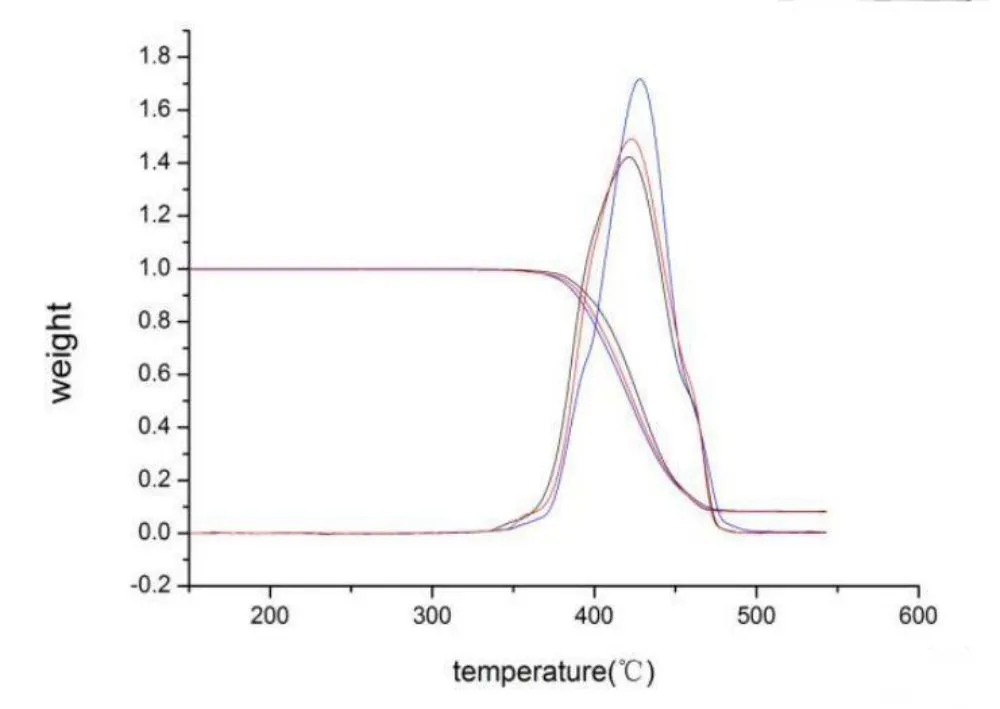
LiTFSI Thermal Loss Overlap Spectrum of Different Batches
It can be obtained that LiTFSI has good thermal stability before 375 ℃. LiTFSI is very easy to absorb water and deliquescence, and must avoid humid environment when using.
At present, LiTFSI as a conductive lithium salt has received extensive attention, which is mainly due to TFSI − highly delocalized negative charge, flexible molecular structure, good thermal stability and chemical stability.
Comparison of conductive lithium salts
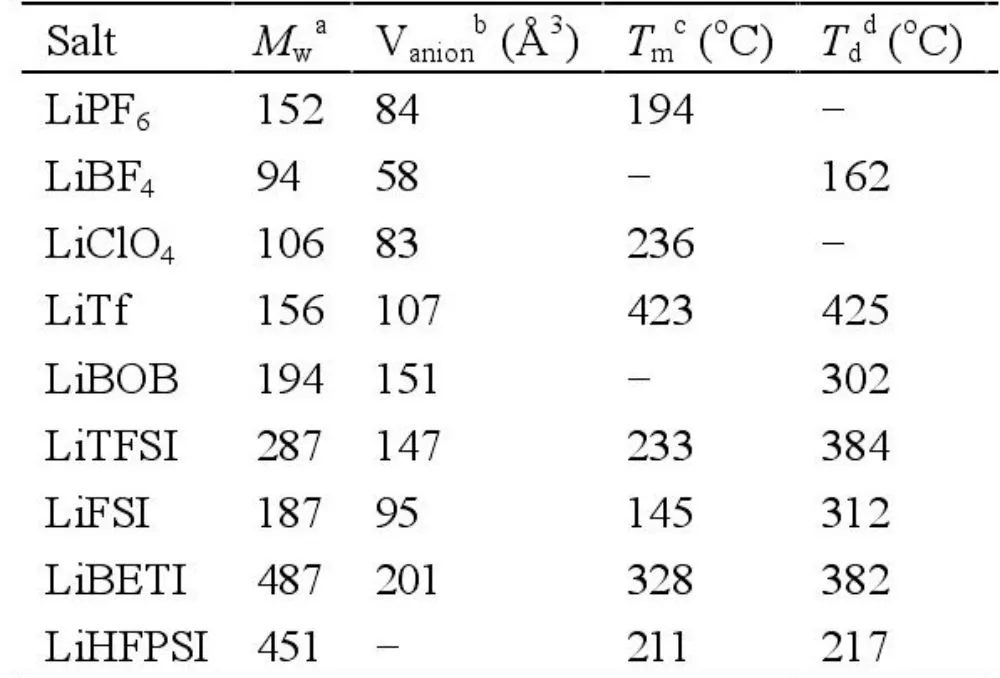
As an essential component of SPEs, conductive lithium salts have a significant impact on the properties of electrolytes. The anionic structures of common lithium salts mainly include lithium halide (LiX, X=F, Cl, Br, I), LiPF6, LiClO4, LiBF4, LiTf, LiTFSI, LiBOB, LiBETI, LiFSI, LiHFPSI.
When LiTFSI is used, vacuum drying can reduce the water content, otherwise LiTFSI will affect the performance of lithium-ion batteries. Especially, bubbles and holes are easily generated in the preparation of polymer based solid electrolyte, so drying is necessary.
The comparison between LiFSI and LiTFSI
The comparison between LiFSI and LiTFSI is the difference between the two terminal groups (- F and – CF3). In comparison, the stability of F-S bond is weaker than that of C-S bond, so the hydrolysis speed of F-S bond is faster, and the heat resistance of F-S bond is not as good as that of C-S bond. When LiFSI is baked to 100 ℃, it will change color obviously, but LiTFSI has no problem.
However, because both are amide lithium salts, they have good solubility, better hydrolysis resistance and temperature stability, but also have the ability to corrode aluminum foil. It may be that F-S bond is relatively easy to break, and the broken fluorine has a certain protective effect on aluminum foil, so the opening potential of LiFSI for aluminum foil corrosion is higher, above 4.35V;
However, LiTFSI is not stable for aluminum foil at about 4.2V. Both are stable and non corrosive to copper foil. LiFSI has also observed the corrosion of stainless steel shell, which is unknown. LiTFSI has no such response. In addition, the presence of LiPF6 can help stabilize the aluminum foil, that is, LIPF6 can passivate the cathode collector to a certain extent, thereby inhibiting the damage of LiTFSI or LiFSI.
This is why LIPF6 is included in most formulas. Of course, you can also find other passivating agents with better effect to match the use of lithium imine salt. The solubility of LiTFSI and LiFSI is even amazing. The solid lithium salt can even absorb water in the air.

The water absorbed for more than ten minutes can make the lithium salt dissolve in it to form a pool of solution at a very fast speed. When drying such lithium salts, it is necessary to strictly ensure the sealing and drying properties, otherwise it is difficult to reach the water standard required by the electrolyte (about 200ppm below).
In addition to water vapor, LiTFSI or LiFSI will also have a relatively strong absorption capacity to the vapor of other small molecule solvents, resulting in the lithium salt mixed with other solvents. Therefore, in the environment where LiTFSI or LiFSI is operated, pollution caused by the absorption of unwanted solvent vapor should be avoided.
When it comes to specific applications, LiTFSI has received considerable attention. It can improve the conductivity of electrolyte. As a small amount of additives, LiTFSI can improve the low-temperature performance of electrolyte, but LiTFSI does not significantly help the high-temperature performance.
With the popularity of LiFSI, it has similar characteristics and slightly better characteristics with LiTFSI, which makes LiTFSI rapidly squeezed out of the lithium electrolyte market. On the contrary, LiFSI has blossomed rapidly in this market, and has been recognized and applied by almost all major electrolyte plants. It is even rare that many companies have simultaneously put into the synthesis and production of this additive.

At present, LiFSI has been basically considered in traditional liquid electrolyte. There is basically no mass production application of LiTFSI in lithium-ion battery electrolyte, however, LiTFSI has good dispersibility and stability in polymers, which makes it useful in polymer matrix electrolytes or in the research of some solid electrolytes.
The dosage at the level of 1-3% is generally regarded as an additive. LiFSI can be used in almost all types of secondary electrolytes, including ternary lithium battery/lithium cobalt/lithium iron phosphate, there is no incompatibility between it and the anode material. It is not easy to decompose and produce gas at high temperatures. At low temperatures, it has good conductivity, good solubility, and good performance in all aspects.
There is no significant weakness, and the cost is being rapidly reduced. It is strange that such additives are not popular. However, due to cost considerations, LiFSI is seldom used in lithium iron phosphate formula and lithium cobalt formula, and most of its applications are mainly in ternary electrolyte.