Skip to content
- Upstream-the price of the four main materials of lithium batteries has been rising
- Midstream-the truth of the rumors of battery manufacturers reducing production and abandoning purchases
- Downstream-The plight of A00 class electric vehicles is particularly prominent
- Breaking the situation-how car companies should deal with rising cost pressures
At present, the chain reaction caused by the increase in the price of upstream raw materials of lithium batteries has been transmitted to other links in the industry chain. This will directly affect the manufacturing lithium ion battery company.
On March 4, data showed that the quotations of some lithium battery materials continued to rise. Among them, battery-grade lithium carbonate rose by 5,500 RMB/ton, with an average price of 500,000 RMB/ton, lithium hydroxide rose by 6,000-7,000 RMB/ton, electrolytic cobalt rose by 3,200 RMB/ton, and nickel beans rose by 6,100 RMB/ton.
As the average price of lithium carbonate rises to 500,000 RMB per ton, what impact will it have on all aspects of the new energy industry chain?
“Science and Technology Innovation Board Daily” reporters interviewed more than a dozen practitioners and industry experts, trying to cut in from the perspectives of the upper, middle and lower reaches, to clear the fog of this “price increase” that runs through the industry chain.

Upstream-the price of the four main materials of lithium batteries has been rising
As the prices of the four main materials of lithium batteries (positive electrode, negative electrode, separator, and electrolyte) continue to rise, “cost” has also become a high-frequency word in the mouths of many practitioners.
Mo Ke, founder and president of True Lithium Research, said, “I don’t know how much lithium prices will rise, but cathode material companies have reached an unbearable level.”
“The entire battery main material and even some auxiliary materials are increasing in price, which has increased the overall cost of lithium ion battery by at least 50%. The development of lithium battery energy storage will also become difficult.” Faced with the rising prices of lithium battery upstream raw materials, some The management of the cathode material company said with a little excitement.
The research shows that in terms of main materials, the prices of electrolytes and cathodes have risen the most. From the beginning of 2021 to February 27, 2022, lithium iron phosphate rose by 332%, and electrolyte prices rose by 189% driven by lithium hexafluorophosphate; driven by metal prices, ternary cathode materials generally rose by more than 100% during the year.
At the same time as the price of upstream raw materials has skyrocketed, the electrolyte link is also facing a lot of pressure. An executive of an electrolyte company told the “Science and Technology Innovation Board Daily” reporter, “The main cost of the electrolyte is lithium hexafluorophosphate. In the past year, lithium hexafluorophosphate has remained high and the profit is very high. In the future, if lithium hexafluorophosphate continues to maintain high profits, the production cost of the electrolyte will be very high.”
The lithium analyst of Shanghai Ganglian New Energy Division said, “The four main materials are trying to pass prices to battery companies to balance production costs, while battery companies can only pass prices to car companies under cost pressure.”
Midstream-the truth of the rumors of battery manufacturers reducing production and abandoning purchases
With the rise in raw material prices, there have been market rumors recently that CATL and some lithium iron phosphate manufacturers have lowered their production plans for March. Some media confirmed to CATL that this news is not true.
In this regard, the lithium analyst of Shanghai Ganglian New Energy Division said, “It is reported that the battery production plan was finalized a year ago, and the operability of production reduction is relatively weak, and it is not conducive to seizing market share. Of course, material procurement issues and price transmission issues. All will force battery companies to reduce production.”
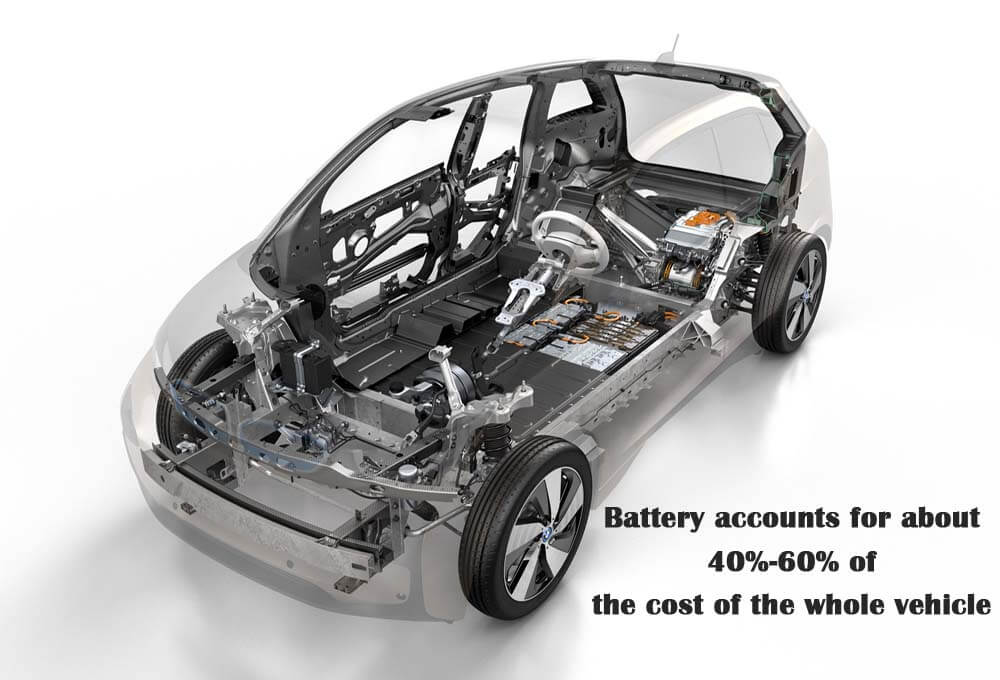
“Battery accounts for about 40%-60% of the cost of the whole vehicle. With the increase in the prices of the four main materials of lithium batteries, the pressure on the procurement cost of battery suppliers will increase, profits will decline, and there may even be losses.” An analysis by a researcher at the University’s Automotive Industry Innovation Research Center.
Research shows that, if combined with the impact of bargaining power, procurement volume, etc. on the actual procurement cost, combined with the hedging of performance and technological progress and cost price increases, on the whole, the cost increase of raw material prices transmitted to the power battery side is about 20%-25%.
With the average price of battery-grade lithium carbonate reaching a high of 500,000 RMB / ton, an analyst from the business community said, “The continuous rise in lithium carbonate prices has led to increased pressure on downstream enterprises to surge in costs, and the acceptance of high lithium prices has decreased. The upstream and downstream games are heating up.”
It should be noted that in the current industry chain, excessive prices seem to have triggered the emergence of some boycotts.
Mo Ke, founder and president of True Lithium Research, revealed, “In terms of mid-stream and downstream applications, some battery and material manufacturers, represented by leading companies, have called for a collective boycott, and will not buy lithium carbonate that exceeds 500,000 RMB/ton. At the same time, It sent a signal that the production schedule for March was lowered.”
Xinyu Information analysis believes that the lithium carbonate price of nearly 500,000 RMB/ton has squeezed the confidence of the third and fourth echelon battery factories to get the goods. From the perspective of cost accounting, it has reached the limit value of the enterprise, and some iron and lithium manufacturers have begun to decrease. Get the goods and reduce the output.
An executive of an electrolyte company said: “There are many orders for power and energy storage, and they are long-term orders. There are relatively few cases of abandoning the purchase of lithium carbonate. But this mainly depends on the ability of battery manufacturers to transmit prices to the downstream. If the price If the transmission cannot continue, perhaps most manufacturers can only tide over the difficulties by reducing production.”
Downstream-The plight of A00 class electric vehicles is particularly prominent
“It’s hard to live with new energy vehicles now, especially A00-class electric vehicles. I regret that I didn’t buy one last year. The subsidy has been withdrawn, but the cost is rising, and the car is losing money.” An ORA salesperson said with emotion.
On February 24, Dong Yudong, CEO of ORA brand, announced that “black and white cats will stop accepting orders” and said, “Although ORA brand has advantages in the industrial chain behind it, it still brings huge losses to the company! Taking Mao as an example, after the price of raw materials rose sharply in 2022, the loss of a single black cat will exceed 10,000 RMB. It is a helpless move to stop taking orders. Wait until the second half of 2022.”
It is reported that the production cost of the three-electric system of the black and white cats accounts for about 55%-60% of the cost of the whole vehicle. After Euler announced that the black and white cats would stop accepting orders, they immediately raised the price of the good cat GT models by 12,000 RMB. , the adjusted price starts at 147,000 RMB.

In this regard, the lithium analyst of Shanghai Ganglian New Energy Division said, “The impact of upstream raw material price increases is gradually increasing, and products in all links are forced to pass down due to cost compression. In the process of transmission, there will be games between the two sides. This also means that each link may not be able to withstand the impact of price increases through transmission, resulting in the reduction or suspension of production of its own products.”
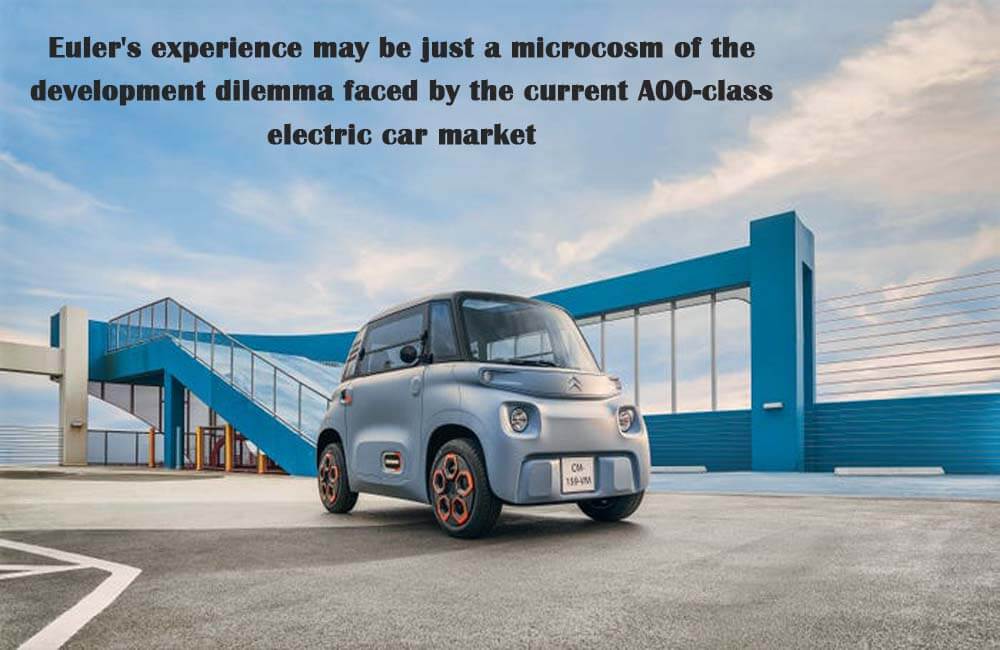
And Euler’s experience may be just a microcosm of the development dilemma faced by the current A00-class electric car market. According to statistics, there are currently three types of models in the A00 class car market, which are: below 40,000 RMB, 40,000 to 60,000 RMB, and products above 60,000 RMB. For low-priced models in the A00-class car market, the pressure from rising costs may be even heavier.
According to Cui Dongshu, secretary general of the National Passenger Vehicle Market Information Association, “the increase in the price of electric car battery raw materials has brought great pressure on small cars. New energy vehicle companies, mainly small cars, will upgrade their products, and at the same time, they should consider how to reduce costs and coordinate resources. “
Breaking the situation-how car companies should deal with rising cost pressures
The founder of True Lithium Research said, “The price increase initiated by the resource side last year was quickly transmitted to the battery. It took almost a year for the battery side to be transmitted to downstream applications such as OEMs.”
At present, with the decline of subsidies and the rise in raw material prices, many new energy vehicle companies have increased their terminal prices, such as: Great Wall Motors, Tesla, BYD, SAIC, Xiaopeng Motors, etc. Insiders can’t help but sigh: “If the price of an electric car below 200,000 RMB is not raised, it will be a loss of selling one car.”
The lithium analyst of Shanghai Ganglian New Energy Division said, “In the operation of the industrial chain, there are still long orders, and the price of long orders is still lower than the spot market price, so there is a phenomenon of selling a car and losing a car, but that’s not the case with all of them.”
At the same time, Cui Dongshu, secretary general of the National Passenger Vehicle Market Information Association, said, “With the decline of subsidies for new energy vehicles and the sharp rise in the price of basic resources such as lithium mines, new energy vehicle companies are facing certain cost pressures.
However, the market price of new energy vehicles is not expected to rise significantly, and car companies should be able to defuse the pressure and continue to maintain the rapid growth of new energy vehicles in 2022. Judging from market feedback, users also have certain expectations for price changes after the decline of new energy. “
Regarding the pressure brought by car companies due to rising costs, Cui Dongshu suggested: improving product technical indicators to obtain more subsidies, increasing the scale of bicycle sales and reducing costs, improve the battery supplier structure, innovate battery technology, resolve the profit of the industry chain itself, and increase the standardized recycling of used batteries.
“In general, the profit of the new energy vehicle industry is concentrated in the upstream or the terminal, which is not conducive to the development of the entire industry. Only when the entire industry chain ultimately benefits and progresses together can the industry move forward better. “That’s what many people in the industry say.