Skip to content

UPS vs Battery Backup: Which One Is Better for Your Needs?
Sudden power outages can be a real hassle, especially when you are working on your computer, need a stable internet connection, or are relying on other important devices. To overcome this problem, many people consider using an Uninterruptible Power Supply (UPS) or battery backup as a power backup solution. At first glance, the two seem similar because they both provide electricity during a power outage, but there are actually important differences between them.
This article will discuss UPS vs Battery Backup in detail-from their definitions, main differences, advantages and disadvantages, to tips on when to use a UPS and when a battery backup is sufficient. This way, you can more easily determine the best choice for your daily needs and work requirements.


What Are UPS and Battery Backup Means?
Before discussing the differences further, it is important to understand what UPS and battery backup mean. Both function as backup power sources when the power goes out, but they have different working mechanisms and purposes.
UPS
A UPS is a backup power supply device that can start working within seconds when the main power goes out. Its main function is not only to keep devices running, but also to protect them from electrical disturbances such as surges, voltage drops, or current fluctuations. For this reason, UPSs are often used in offices, servers, or medical devices that cannot be allowed to shut down suddenly.
A UPS typically consists of an internal battery, an inverter, and a control system that ensures a stable power supply. Although its capacity is limited, a UPS provides enough time to save data, close applications, or start a generator if necessary.
You also can read this for more insight:
Battery backup
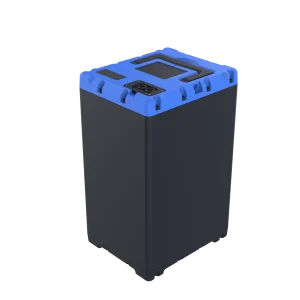
A battery backup is a power backup device that supplies electricity when the main power source is interrupted. Unlike a UPS, a battery backup is usually simpler and focuses only on providing additional power, without complex electrical protection features.
This device is often used for light daily needs, such as keeping WiFi routers, CCTV, or small electronic devices running during power outages. Battery backup can last longer than a UPS for low-power devices, but it does not respond as quickly as a UPS in protecting sensitive devices.
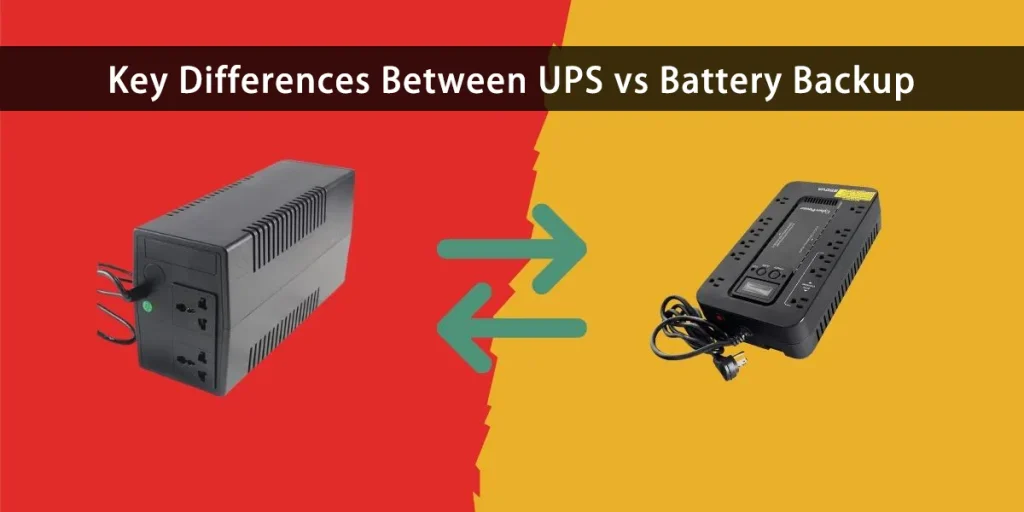
Key Differences Between UPS vs Battery Backup
UPS and battery backup differ in several important ways, despite both being used to supply backup power. When deciding which device best meets your needs, these distinctions are often the primary factors to consider.
- Response Time: during a power outage, a UPS is designed to respond instantly—within milliseconds. In contrast, battery backup systems typically require a slightly longer activation time to power the device.
- Electrical Protection: Besides providing backup power, a UPS protects devices from voltage fluctuations, surges, and outages that can damage sensitive electronics. These added protections are typically not found in standard battery backup systems.
- Duration and capacity: A UPS typically lasts 5 to 30 minutes, which is sufficient to protect devices or save critical data. In the other hand, backup battery is not suitable for high-power devices but can last longer for smaller devices, such as CCTV cameras or routers.
- Complexity and cost: UPSs offer advanced protection features, which increase their complexity and cost. In contrast, battery backups are simpler, more portable, and usually more affordable.
In summary, battery backups are more common for small devices due to their simplicity and durability, whereas UPSs are superior for their response time and electrical protection.
You can also read this article for another comparison of UPS: UPS vs EPS
Pros and Cons of UPS vs Battery Backup
Every device has its own advantages and disadvantages. To make comparison easier, here is a brief explanation of the advantages and disadvantages of UPS vs battery backup:
- UPS
Pros: fast response without interruption when the power goes out, equipped with protection against power surges and fluctuations, and ideal for sensitive devices such as computers, servers, and medical equipment.
Cons: more expensive, limited battery capacity (only a few minutes), larger size, and requires regular maintenance. - Battery backup
Pros: affordable, streamlined, portable, and built to last for small devices, such as routers, CCTV systems, or gadgets.
Cons: lacks extra power protection, causes a brief power supply delay, and is unsuitable for high-power devices.
When to Use a UPS and Battery Backup?

- UPS
A UPS is typically used when devices cannot be allowed to shut down suddenly, such as servers, work computers, or medical equipment. In these situations, a UPS plays a crucial role in keeping data safe, allowing users time to take emergency measures, such as saving files or activating a generator.
Additionally, a UPS is often used in offices or businesses that require stable electricity to maintain productivity. - Backup Battery
Battery backup is ideal for basic daily needs. For example, it keeps CCTV, security systems, and WiFi running during power outages. Because it uses less power, small devices such as portable gadgets or emergency lights can also depend on it.
In short, UPS is more ideal for professional needs and sensitive devices, while battery backup is more practical for light daily use.
You can also read this article for more insight: uses of ups
Factors to Consider Before Choosing: UPS vs Battery Backup
There are a number of crucial factors to take into account before choosing between UPS vs battery backup to make sure your decision meets your needs:
First, budget
UPS units are more expensive due to their enhanced protection. If you have basic needs and a limited budget, a battery backup is a practical option.
Second, type of device being protected
A UPS is recommended for sensitive equipment such as servers, workstations, or medical devices. For WiFi, CCTV, or other small devices, a battery backup is sufficient.
Third, required backup duration
A UPS typically provides 5 to 30 minutes of backup, which is usually enough to safely shut down or save data. Low-power devices may benefit from longer battery backup durations.
Fourth, level of electrical protection
Battery backups provide only a power supply, while UPS units also protect against power surges and fluctuations. If your device is vulnerable to electrical damage, this distinction is important.
Which is Better: UPS or Battery Backup?
To answer “UPS vs battery backup: which is better?” depends on your specific needs. A UPS is the preferred choice if you require reliable protection for sensitive equipment, as it provides rapid response and maintains electrical stability. It is ideal for servers, workstations, businesses, or medical devices that cannot tolerate power interruptions.
Conclusion
Both UPS and battery backup serve as backup power solutions, but they have different roles. UPS excels in response speed and electrical protection, making it more suitable for sensitive devices or professional needs that cannot afford sudden power outages. On the other hand, battery backup is simpler, more affordable, and ideal for small devices that must remain on during power outages.
Ultimately, choose a UPS if you require security, stability, and protection for critical devices. For cost-effective backup of small devices, a battery backup is sufficient.
FAQS
How long do UPS and battery backup last?
A UPS usually lasts around 5 to 30 minutes, just enough time to save your work, shut down devices properly, or switch to another power source. Meanwhile, a battery backup can run longer for small, low-power devices like WiFi routers, CCTV, or emergency lights.
Is UPS more expensive than battery backup?
Yes, a UPS is generally more expensive because it not only provides backup power but also protects devices from power surges, fluctuations, and sudden outages.
When should you use a UPS, and when is a battery backup sufficient?
A UPS is best for sensitive and critical equipment, such as computers, servers, or medical devices, where even a few seconds of downtime can cause serious problems. However, a battery backup is sufficient for lighter daily needs, such as keeping your WiFi, CCTV, or small gadgets running during power outages.