

In 2022, the scale of China’s camping market will reach 52.8 billion RMB.
In 2023, after the epidemic is released, the outdoor camping market is expected to usher in exponential growth. At the same time, in order to improve the camping experience, people are eager to add more entertainment and leisure methods such as cooking, watching movies, games, etc., and these, in the scene of outdoor camping, can only be satisfied by mobile energy storage power supply.
According to relevant data, it is estimated that in 2026, the purchase demand for mobile energy storage power supplies in the field of outdoor activities will exceed 13.55 million units, and the scene penetration rate will reach 15.9%.
Market demand of household energy storage industry
At present, China’s energy storage market is mainly based on the needs of enterprises. The incentive policies continue to increase, the installed capacity of energy storage has increased, and the industry demand space is broad.
According to relevant data, as of the third quarter of 2022, the cumulative installed capacity of energy storage in China was 50.3GW, +36% year-on-year, of which the cumulative installed capacity of lithium batteries was 5.9GW, an increase of 15% compared to the end of 2021. The cumulative installed capacity in the world in 2021 will be 209.4GW, +9.58% year-on-year, of which lithium battery will be 23.2GW, +76% year-on-year.
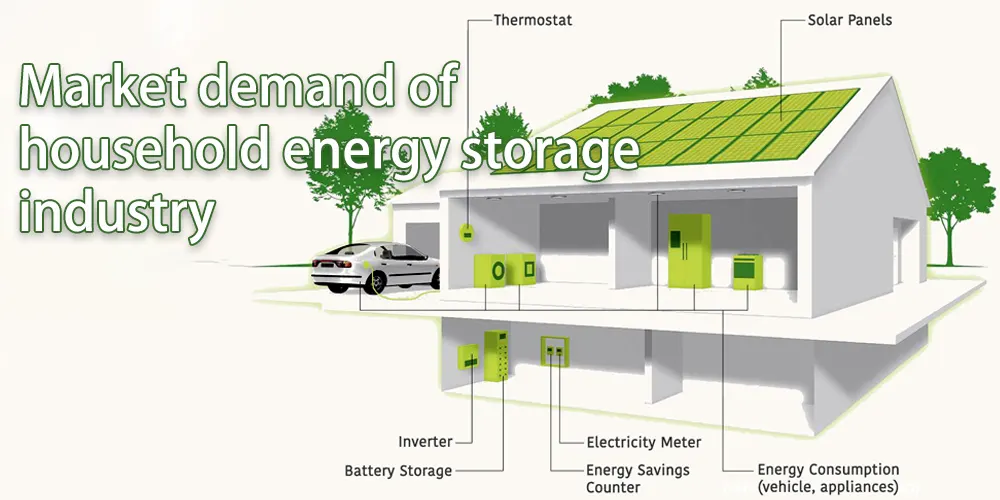
The home energy storage market in China is still in its infancy. However, affected by many uncertain factors such as power outages and tiered electricity prices, household energy storage has attracted attention. The potential market demand for mobile energy storage and household energy storage is rapidly being released, and it is foreseeable that there will be huge market potential in the future.
Due to the soaring price of energy and electricity in Europe, North America and other regions, as well as the high and poor stability of electricity prices in countries or regions such as Africa, the application of household photovoltaic + energy storage can increase the level of self-generation and self-consumption of electricity, and delay and reduce the risk of electricity price increases. At the same time, stable power support is obtained, so the demand rises rapidly.
Energy storage for home users suddenly exploded in the global market. Continuously rising energy and electricity prices have promoted the rapid application of powerwall manufacturers in the world. In Europe, the number of household battery energy storage systems installed in 2022 has exceeded 420,000 sets, and the battery size has exceeded 9GWh. It is expected to increase by 300% to 32.2GWh by the end of 2026, and the number of households with solar storage systems will reach 3.9 million.
With current high electricity prices, solar and energy storage can help reduce electricity bills, so the installation of home battery energy storage systems hits a new high every year. In 2021, the top five European home battery markets – Germany, Italy, Austria, the UK and Switzerland – account for 88% of batteries installed in Europe, with Germany leading the way with a 59% share.
What is home energy storage?
Home energy storage system, also known as household energy storage, is similar to a micro energy storage power station, and its operation is not affected by the pressure of urban power supply.

During the off-peak time of electricity consumption, the battery pack in the home energy storage system can charge itself for backup power peak or power outage. In addition to being used as an emergency power source, the home energy storage system can also balance the electricity load, thereby saving household electricity expenses.
Home energy storage systems are currently mainly combined with photovoltaics, forming hybrid, coupled, and off-grid home photovoltaic + energy storage systems. As the cost of energy storage on the user side continues to decline, and electricity prices in major regions such as Europe continue to fluctuate at high levels, it is expected that the average annual growth rate of global household energy storage demand will exceed 60%, and the demand for new installed capacity will reach 48GWh in 2025.
Insights into the prospects of the household energy storage system industry
Faced with soaring electricity costs and unstable grid operations, more and more households are deploying residential solar power generation facilities and home energy storage systems to achieve energy independence. This home energy storage ecosystem can enable home users to generate, store and manage clean energy more efficiently and economically than ever before.
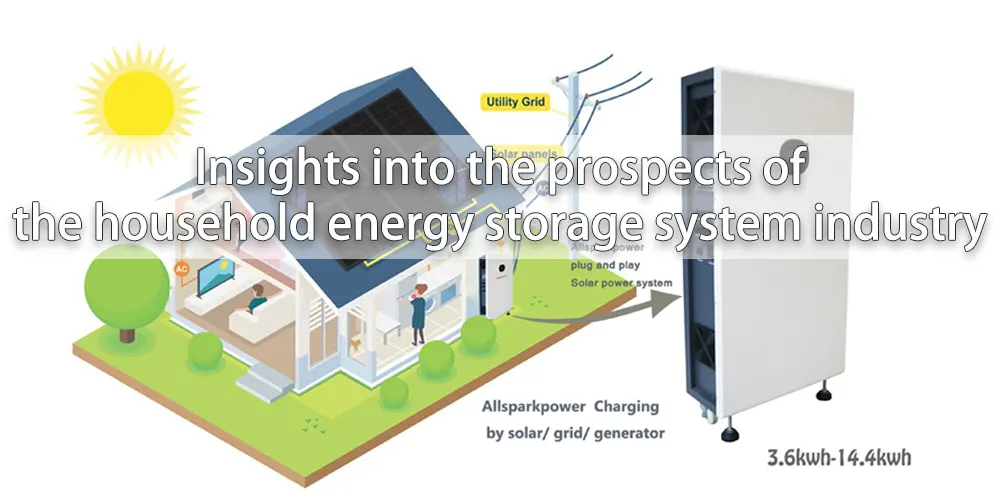
From 2021 to 2025, the growth rate of new energy storage in overseas households will remain above 60%. By 2025, the total capacity of new overseas user-side energy storage will be close to 50GWh. The global household energy storage market size in 2020 is 7.5 billion U.S. dollars, and the Chinese market is 1.337 billion U.S. dollars, equivalent to 8.651 billion RMB. In 2027, it is expected to reach 26.4 billion U.S. dollars and 4.6 billion U.S. dollars respectively.
The demand for household energy storage has also surged due to the popularity of smart homes. Most smart home appliances and furniture have relatively high power consumption and utilization rate, which requires safer and recyclable electricity for support.
In addition, in the coming 5G era, the requirements for data transmission are getting higher and higher, and the energy consumption of smart homes is increasing. Therefore, with the popularization of smart homes, household reserve power will also become a rigid demand.
Future outlook
New battery technology: Future home energy storage will continue to develop. With the development of new battery technologies such as solid state battery, sodium-ion batteries, and flow batteries, the performance and efficiency of home energy storage systems will be further improved.
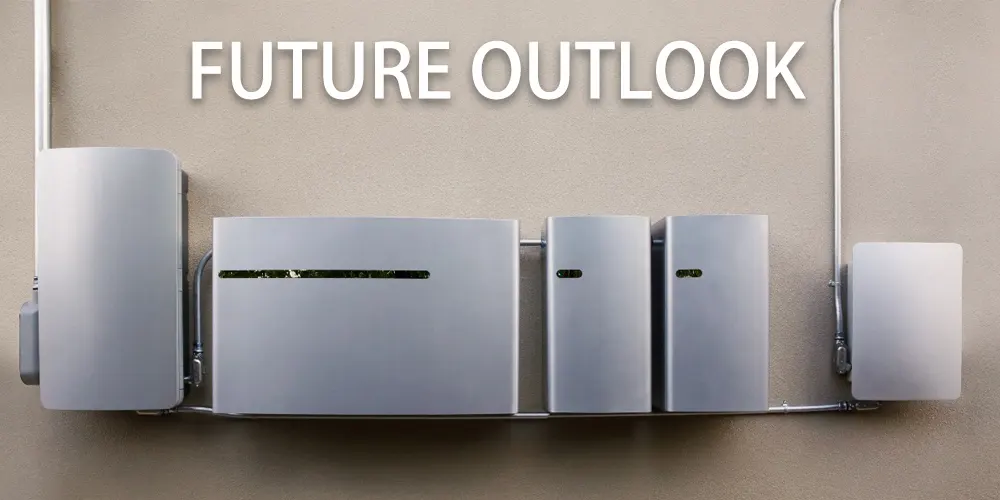
Smart energy management system: With the development of the Internet of Things and artificial intelligence technology, the home energy storage system will be seamlessly integrated with the smart home system, making home energy management more intelligent and automated.
Energy sharing and virtual grid: The development of home energy storage systems will promote energy sharing and the establishment of virtual grids, so that household energy can be interconnected, excess energy storage can be shared, energy utilization efficiency can be improved, and carbon emissions can be reduced.
Hydrogen energy storage technology: Hydrogen energy is considered as a clean energy with great potential. In the future, with the development of hydrogen energy storage technology, household energy storage may introduce hydrogen energy technology to achieve more efficient and environmentally friendly energy conversion and storage.