Skip to content
Will a Power Inverter Drain My Battery? Factors, Lifespan, and Prevention Tips
“Will a power inverter drain my battery?” is a common question among those who are new to using inverter battery. This is a genuine concern, especially when the battery serves as the sole energy source for an RV, a backup power system, or an off-grid system. Because they can convert DC power from batteries into AC current, which is used by practically all home appliances, inverters are important devices. On the other hand, using inverters incorrectly can damage batteries or even accelerate their loss of power.
This article will cover how inverters operate, what causes batteries to drain quickly, and offer useful advice for extending battery life, even when using heavy appliances like a 3000W inverter.


What Does a Power Inverter Actually Do?
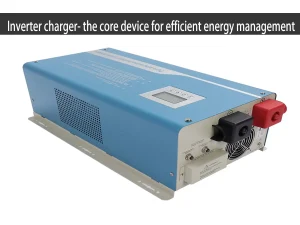
Power inverters, in simple terms, are devices that convert direct current (DC) from a battery into alternating current (AC), which is commonly used in household appliances. TVs, portable refrigerators, laptop chargers, and other household equipment need 110V or 220V AC electricity, whereas a 12V or 24V battery produces DC electricity. A “bridge” connecting the two is provided by the inverter.
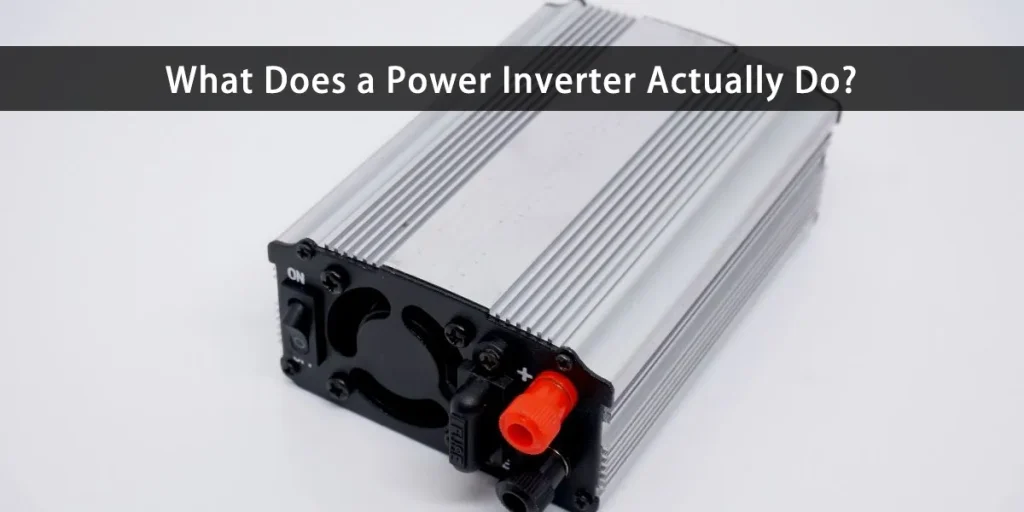
There are two types of inverters commonly used:
- Modified sine wave inverters are less expensive; however, they might not be appropriate for sensitive electrical devices.
- The electrical output of pure sine wave inverters is more reliable and safer for use with all equipment, including sensitive electronics such as laptops, refrigerators, and small medical devices. However, they are more costly.
You can read these articles for more insight:
Will a Power Inverter Drain My Battery?
Your battery may be drained by a power inverter, but how quickly this occurs will depend on how you use it. Power is taken from the battery and transformed into AC electricity by an inverter.
The battery will run out faster the more power you ask of the inverter.
The battery may last a long period, for example, if the inverter is only used to charge a cell phone or power LED lights. However, the battery can drain in a few hours if you plug in heavy items, such as a large TV, portable refrigerator, or other electrical appliances that consume a lot of electricity.
Therefore, the answer to the question “Will a power inverter drain my battery?” is not a simple yes/no; rather, it depends on the battery capacity, inverter size, and the type of load
Factors That Affect How Fast Your Battery Drains
To understand if a power inverter will drain your battery, consider several factors that influence battery drain speed:
- Battery capacity: the longer the inverter can be used before the battery runs out, the larger the battery capacity (e.g., 12V 100Ah vs. 12V 200Ah).
- Inverter power: it is apparent that a 3000W inverter uses more energy than a modest 300W or 500W inverter. The battery is safer when the inverter power is high, but it is only used for a short period of time. However, the battery will quickly drain if it is compelled to operate at maximum load.
- Type of equipment used: Cell phone chargers and LED lights have a minimal impact on the battery. However, large appliances like pumps, microwaves, and freezers can quickly drain the battery.
- Inverter efficiency: over time, pure sine wave inverters use more battery power because they are often more stable and efficient than modified sine wave inverters.
- Battery condition: it goes without saying that new batteries will last longer. The battery will certainly drain more quickly if it is old or often runs out of power.
Using a Power Inverter with the Battery Only vs While Charging
When answering the issue, “Will a power inverter drain my battery?” one important consideration is the battery’s state, including whether it is being used by itself or while being recharged.
- Battery only (without charging)
The battery will quickly run out of power if the inverter is powered solely by the battery without any external charging inputs, such as a solar panel or generator. The battery will discharge more quickly with a higher load. - Battery during charging
The battery will last longer if it is charged during the day, using a source such as a generator or solar panel. To prevent the battery from running out right away, the energy used for charging serves to “offset” the inverter’s power usage.
How Long Will a 12V Battery Last With a 3000W Inverter?
Many people are curious about this, but the answer depends on the battery’s capacity and the load. For example, with a 12V battery rated at 200Ah, you get about 2400 watt-hours (12V × 200Ah = 2400 Wh). If you run a device that uses power inverter 3000w, the battery will run out in less than an hour.
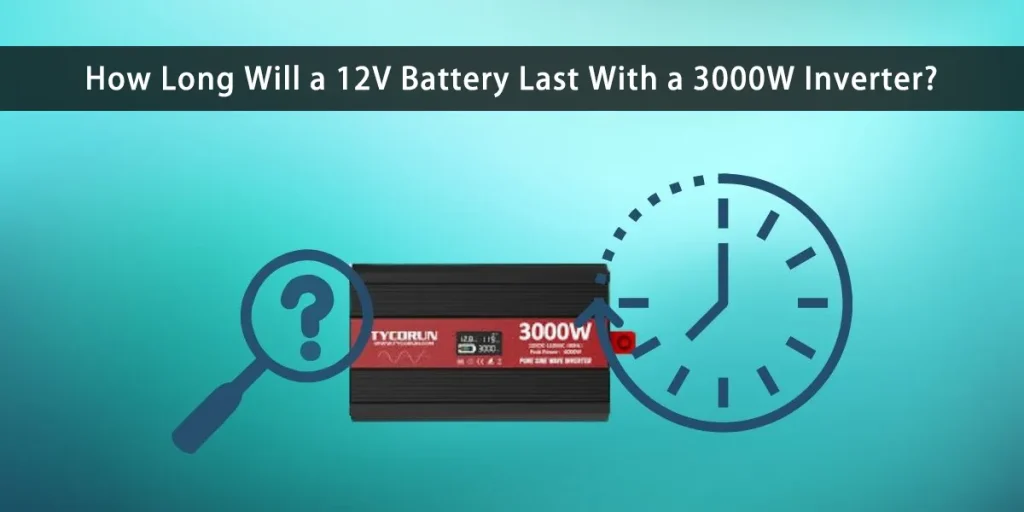
This calculation is idealized, though. Inverter efficiency, typically 85-90 percent, affects the result. Never fully drain the battery, as it shortens battery life. So, real time will likely be only 30 to 40 minutes. For smaller loads, such as a light or a TV at 300 watts, the same battery can last 6 or 7 hours.
So, the answer to the question “Will a power inverter drain my battery?” is actually yes. However, the rate at which this happens depends on the battery’s capacity, the inverter’s size, and the type of device connected to it.
Ways to Prevent Excessive Battery Drain
Many people worry that a power inverter will drain their battery if used for too long. This concern can be managed if you know how to extend battery life. Here are some practical tips you might use:
First, use a battery with the right capacity. The required capacity rises with the size of your load. Ensure your battery matches your power requirements.
Second, use a high-efficiency inverter. The efficiency of high-quality inverters is often 90% or greater. The battery is more efficient when its efficiency is higher, since less energy is lost as heat.
Third, consider using an additional charging system. When using an inverter, consider using solar panels or an external charger. By doing this, the battery can be recharged while it is in use.
Fourth, avoid letting the battery run completely empty. The battery’s lifespan may be reduced if it is fully drained. Make it a practice to recharge as soon as your device’s capacity begins to drop, rather than waiting until it reaches 0 percent.
Fifth, only connect devices that are absolutely necessary. Do not turn on heavy loads unless absolutely necessary. In this case, the battery lasts longer and power consumption stays minimal.
Sixth, consider using an additional charging system. When using an inverter, consider using solar panels or an external charger. By doing this, the battery can be recharged while it is in use.
Conclusion
In conclusion, the response to the question “Will a power inverter drain my battery?” is relative. Batteries can be drained by inverters; however, the rate at which this occurs varies depending on the battery’s size and condition. The battery can last a long time if it is only used for tiny gadgets like cell phone chargers or LED lights. On the other hand, the battery may drain in a few hours or even minutes if it is used for large devices, such as 3000W devices or portable refrigerators.
The good news is that there are several strategies to prevent the battery from draining quickly, including selecting the appropriate battery capacity, using a high-efficiency inverter, and adding a solar-powered charging source. Without reducing battery life, an inverter can be a dependable solution to everyday electrical needs with proper maintenance.
FAQS
How long will a 12V battery last with a 1000-watt inverter?
Usually between 30 minutes to 1 hour when used at full load, depending on the battery capacity and inverter efficiency. If only used for light loads, it can certainly last longer.
What is the weakness of an inverter?
The main weakness of an inverter is that it can drain the battery quickly if not adjusted to the capacity. In addition, inverters also generate heat and require high efficiency so that not much power is wasted.
Which is better inverter or generator?
Inverters are more suitable for practical, quiet, and environmentally friendly use, especially when combined with batteries or solar panels. Generators are superior for large power needs over long periods of time, but they are noisier and consume more fuel.