Skip to content
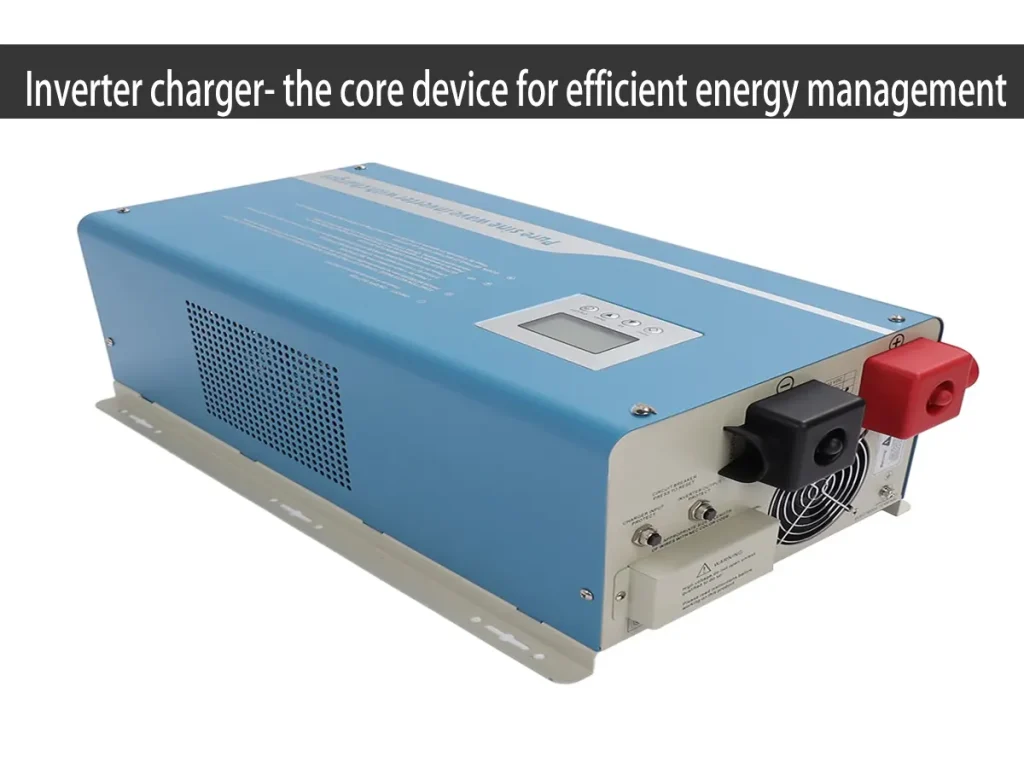

The inverter charger can be charged by an external power source, usually using AC power as input. During the charging process, the power of the AC power source is converted into DC power through rectification and filtering, and stored in the built-in battery. Parameters such as the capacity and voltage of the built-in battery need to be designed and selected according to actual needs. The battery also needs to be protected during the charging process, such as overcharge protection and over-discharge protection, to extend the battery life.
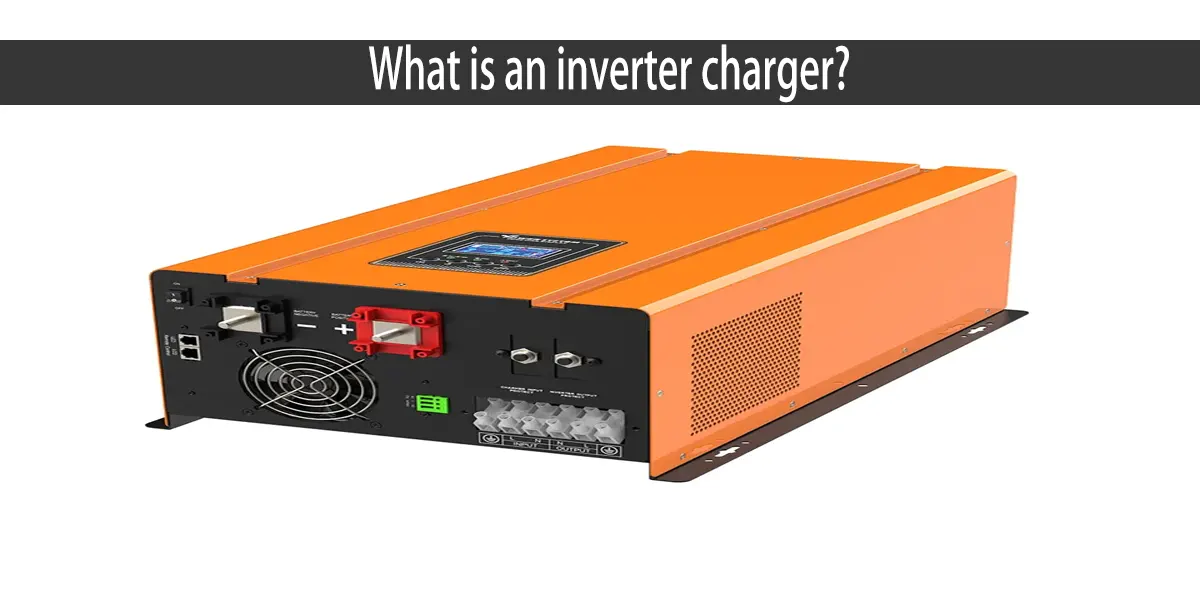
Inverter function
It can convert DC into AC, like AC to DC converter and the output AC can be of different voltages and frequencies to meet the needs of different electrical appliances.
Charging function
It can charge different types of batteries, such as lead acid battery, lithium batteries, etc. It can adjust the charging current and voltage according to the characteristics of the battery to achieve safe and efficient charging.
Protection function
- Overvoltage protection: When the input or output voltage exceeds the set safety range, the inverter charger will automatically stop working to prevent the device from being damaged by excessive voltage.
- Undervoltage protection: If the input voltage is too low, it may affect the normal operation of the device or damage the device. At this time, the charger inverter will stop working or take corresponding protective measures.
- Overload protection: When the power of the connected appliance exceeds the rated power of the inverter charger, it will automatically cut off the output to avoid safety accidents caused by overload.
- Short circuit protection: Once a short circuit occurs at the output end, the device will quickly cut off the inverter circuit to protect itself and the connected appliances.

Inverter Principle
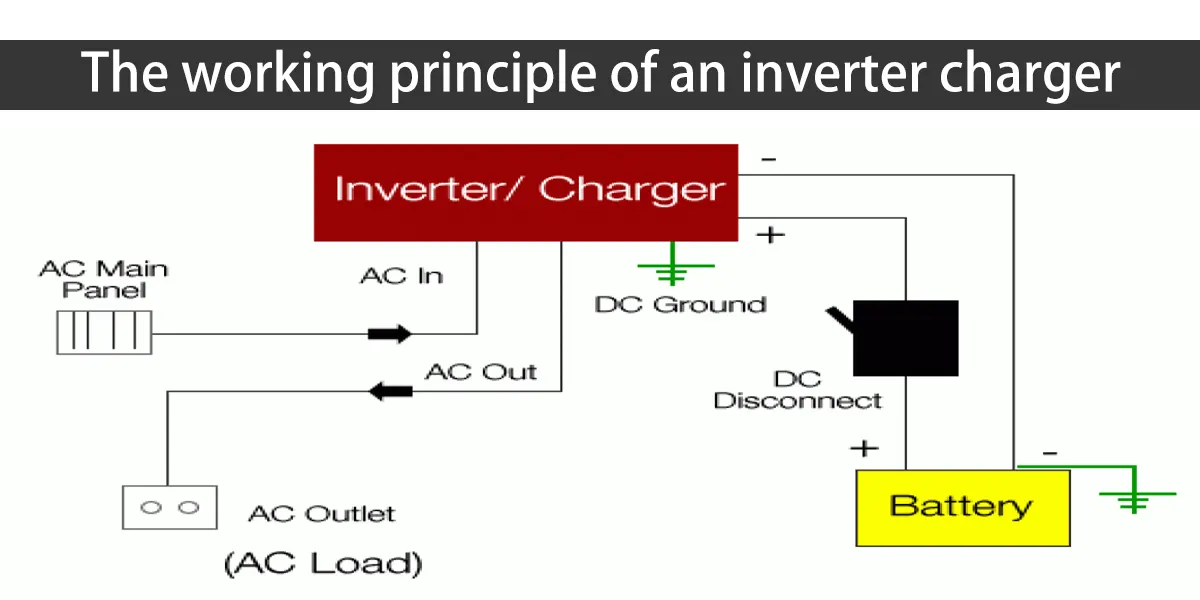
The inverter charger mainly realizes the inverter function through electronic circuits. First, after the DC power enters the circuit, it is converted into high-frequency pulsed DC power through a high-frequency switch tube (such as MOSFET or IGBT). These high-frequency pulsed DC power are then converted through the transformer to increase or decrease the voltage to the required value. Finally, the high-frequency pulsed AC power is converted into a smooth AC output through the filter circuit.
Charging Principle
When charging, the AC input power first passes through the rectifier circuit to convert the AC power into DC power. Then, the charging control circuit adjusts the battery charge current and voltage according to the type and status of the battery. For example, for the charging of lead-acid batteries, the charging control circuit will provide a larger charging current at the beginning of charging according to the battery power, and gradually reduce the charging current as the battery power increases until the battery is fully charged.
Emergency power supply
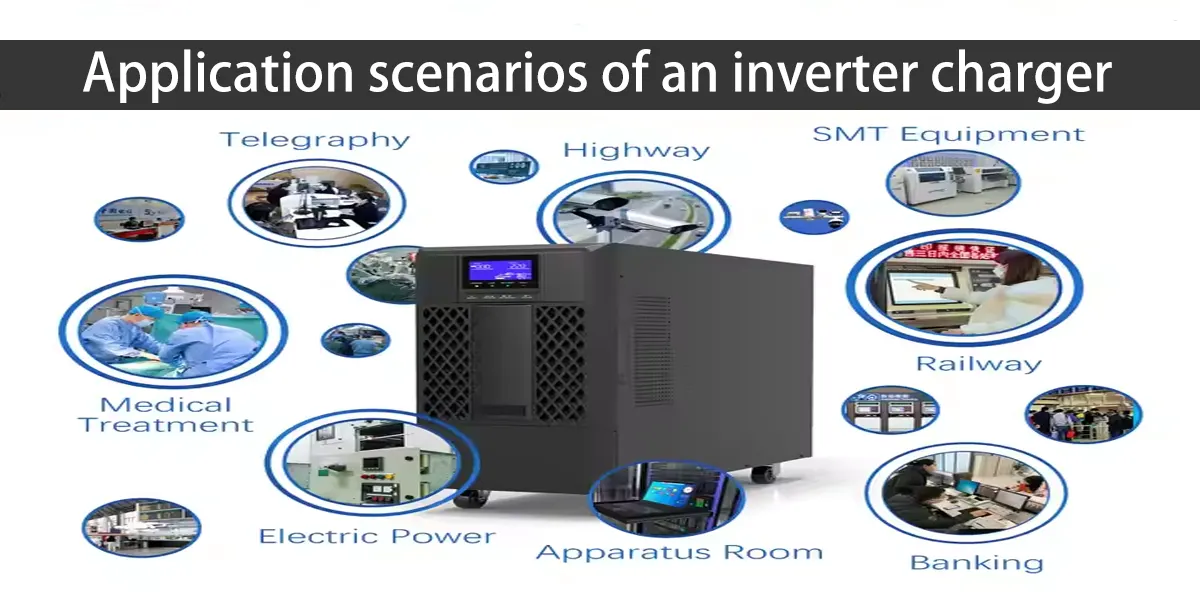
In emergency situations such as power outages or natural disasters, it can use high power battery (such as solar cells, batteries, etc.) to provide power support for important electrical equipment, such as medical equipment, communication equipment, etc., to ensure basic life and emergency rescue needs.
Industrial application
In some industrial sites without mains power supply, such as remote construction sites and field exploration, it can convert the DC power provided by the generator into AC power to power tools, lighting equipment, etc., and can charge the backup battery to improve the reliability of power supply.
Mobile office
For people who often need to work in a mobile environment, such as business travelers, it can convert the DC power of the mobile power supply into AC power to power office equipment such as laptops and printers, making it convenient to work anytime and anywhere.
When choosing an inverter charger, you need to consider the following factors.

- Power demand: According to the power size of the required power supply equipment, select an inverter charger with corresponding power to ensure stable power supply.
- Input and output voltage: Clarify the specifications of the required input and output voltages as well as the stability and fluctuation range of the voltage.
- Conversion efficiency: A high-efficiency inverter charger can reduce energy waste and increase battery life.
- Battery compatibility: Understand the battery types supported by the inverter charger, such as lead-acid batteries, lithium batteries, etc., as well as the adjustment range of charging current and voltage.
- Protection function: Choose an inverter charger with overvoltage, undervoltage, overload, short circuit and other protection functions to ensure the safety of the equipment and battery.