Skip to content
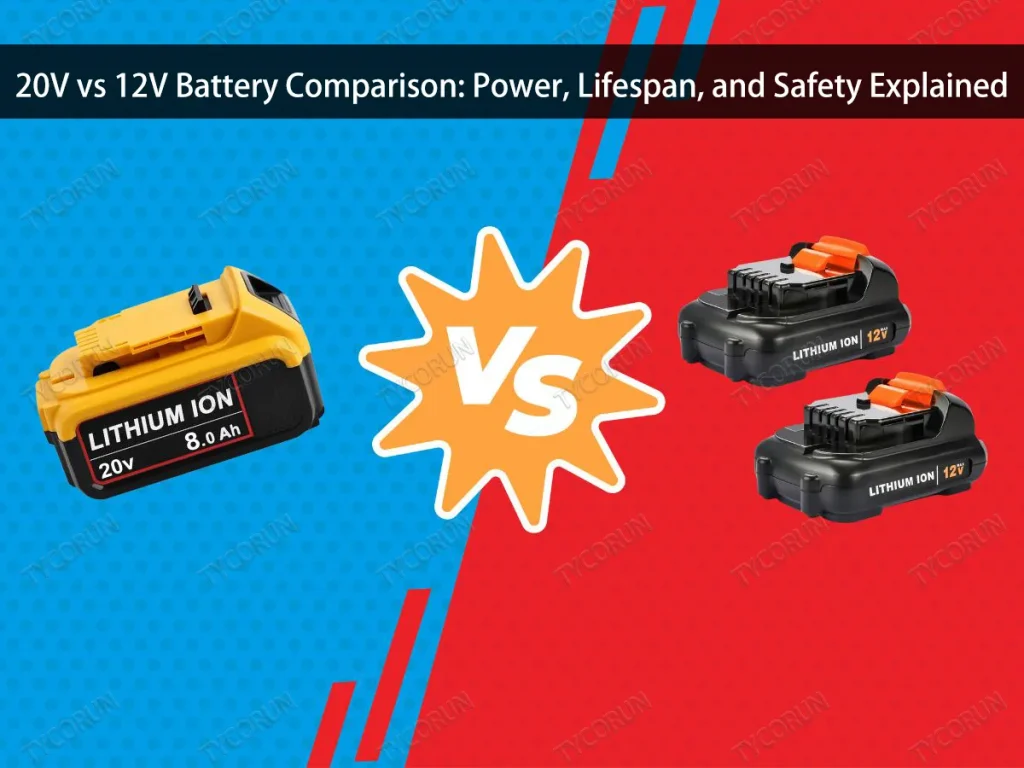
20V vs 12V Battery Comparison: Power, Lifespan, and Safety Explained
If you frequently use power tools or portable devices, you have probably heard of the 20V vs 12V battery comparison. Although it may appear to be primarily a voltage variation at first, this difference has a significant impact on the performance, longevity, and suitability of each battery type.
In this article, we will discuss the primary differences between 20V and 12V batteries, including their power output, durability, and recommended applications. This makes it easier for you to choose the battery that best matches your demands.


What Are 20V and 12V Battery Means?
In simple terms, a battery’s voltage rating informs users of the amount of electricity it can supply to a device. Especially for power tools and portable electronics, the 20V vs 12V battery is the most popular choice. Although they are power sources, they differ greatly in terms of size, performance, and application.
20V Battery
Mid-range to professional power tools typically use 20V batteries, which have a nominal voltage of 20 volts. These batteries provide more power, making them suitable for demanding tasks such as cutting hard materials or prolonged use. They also deliver longer usage between charges, although they are generally heavier and larger than 12V batteries.
12V Battery
A 12V battery is a lightweight and practical option with a nominal voltage of 12 volts. It is often found in vehicles, small electronic devices, and basic cordless drills. Due to their compact size and affordability, 12V batteries are ideal for light-duty tasks such as simple home projects or chores. However, they do not provide as much power as 20V batteries.
You can read this for more insight:
Main Differences Between 20V vs 12V Battery

- Voltage & Power: 20V is obviously more powerful, making it suitable for heavy-duty tasks. Meanwhile, 12V has a lower power limit but is more energy efficient.
- Size & Weight: 12V batteries are often lighter and smaller, making them more portable. Because 20V batteries have a bigger capacity, they are typically larger.
- Usage Duration: 12V batteries are better suited for short-term use, while 20V batteries can be used for longer periods between charges.
- Price: Due to their longevity and performance, 20V batteries are generally more expensive than 12V batteries.
Therefore, when comparing a 20V vs 12V battery, it is essential to consider the user’s comfort, needs, and budget in addition to the numbers.
You can read these articles for more comparison battery’s voltage:
6v vs 12v battery
20 volt battery vs 40 volt
20v Lithium Ion Battery vs 18v
Power and Performance Comparison
The capacity of a 20V vs 12V battery to power electronics is one of the primary differences between the two.
- Power Output: 20V batteries offer a higher power output, making them ideal for prolonged tool use or demanding tasks. In the meantime, 12V batteries are well-suited for small jobs and home improvement projects that don’t require additional power.
- Runtime: 20V batteries typically last longer before needing to be recharged because of their larger capacity. On the other hand, 12V batteries drain more quickly when used with high-power instruments.
- Efficiency: Because 12V batteries require regular recharging, they are less effective than 20V batteries for heavy-duty tasks, but they are more energy-efficient for light work.
This comparison makes it clear that the battery selection should be based on the tool’s power requirements as well as the sort of work being done.
Compatibility and Applications
Compatibility with the device is a crucial factor to consider when selecting a battery. Comparing a 20V vs 12V battery involves more than just power; it also involves the type of equipment that can be utilized.

- 20V battery: ideal for e-bikes, mid-range to professional power tools, and other high-power equipment. This battery’s high voltage prevents it from being used in 12V devices.
- 12V battery: suitable for basic cordless drills, home appliances, and small projects. These batteries are practical and lightweight, but offer limited power.
- Cross-Compatibility: Always consult the manufacturer’s instructions before replacing a battery. Using a battery with an incompatible voltage may cause device damage and present safety risks.
Through an understanding of compatibility and applications, you can select a battery that meets your requirements without compromising safety or performance.
Lifespan and Maintenance
If both are properly maintained, the longevity of a 20V and 12V battery is actually rather similar. The primary distinction is the type of job and how often battery use occurs.

- Lifespan: 20V batteries often last longer in demanding applications due to their greater capacity. The performance of 12V batteries may decline quickly if used beyond their intended limits.
- Maintenance: to prolong battery life, avoid overcharging, keep batteries in a cool, dry location, and use the original charger.
- Usage tips: 12V batteries are more practical for occasional use. By contrast, 20V batteries may provide more consistent performance over time for frequently used devices.
In short, as long as they are used and maintained correctly, both 20V and 12V batteries have a long lifespan.
Safety Aspects
Safety considerations are important when deciding between a 20V vs 12V battery. Variations in voltage also mean into variations in the dangers related to usage.
- Overheating: 20V batteries may overheat more rapidly during heavy-duty use. For light-duty applications, 12V batteries are generally safer but can also face issues if used excessively.
- Compatibility Risks: installing a 20V battery in a 12V tool may damage it and even put the user at risk. Always use batteries according to the manufacturer’s instructions.
- Charging Safety: use the original charger to avoid overcharging battery. If 20V and 12V batteries are charged recklessly on a regular basis, they may get damaged or perform worse.
- Storage: to avoid damage, keep batteries out of direct sunlight and in a cool, dry location.
Therefore, as long as they are used and maintained appropriately, both 20V and 12V batteries are safe to use.
Conclusion
When comparing 20V vs 12V battery, the main difference goes far beyond voltage. A 20V battery is better suited for heavy-duty or professional tasks due to its higher power output and longer runtime, whereas a 12V battery is more economical, lighter, and ideal for small projects or routine home use.
The best option essentially depends on your needs, spending limit, and the type of tools you use. A 20V battery will provide the additional performance you need if you frequently handle demanding tasks. However, a 12V battery is the better choice if portability and affordability are more important to you.
FAQS
Can a 20V battery be used in a 12V tool?
No, you cannot use a 20V battery in a 12V tool, as it is not a compatible voltage and can damage the tool's motor and electronics.
Which is more suitable for beginners, 20V or 12V?
A 12V system is often more suitable for beginners due to its lighter weight, smaller size, and lower cost, making it easier to handle for light-duty tasks
Is the price of a 20V battery much more expensive than a 12V battery?
A 20V battery is often more expensive than a 12V battery, as higher voltage batteries typically require more components to handle the increased power and are designed for more demanding, heavy-duty tasks.