 Skip to content
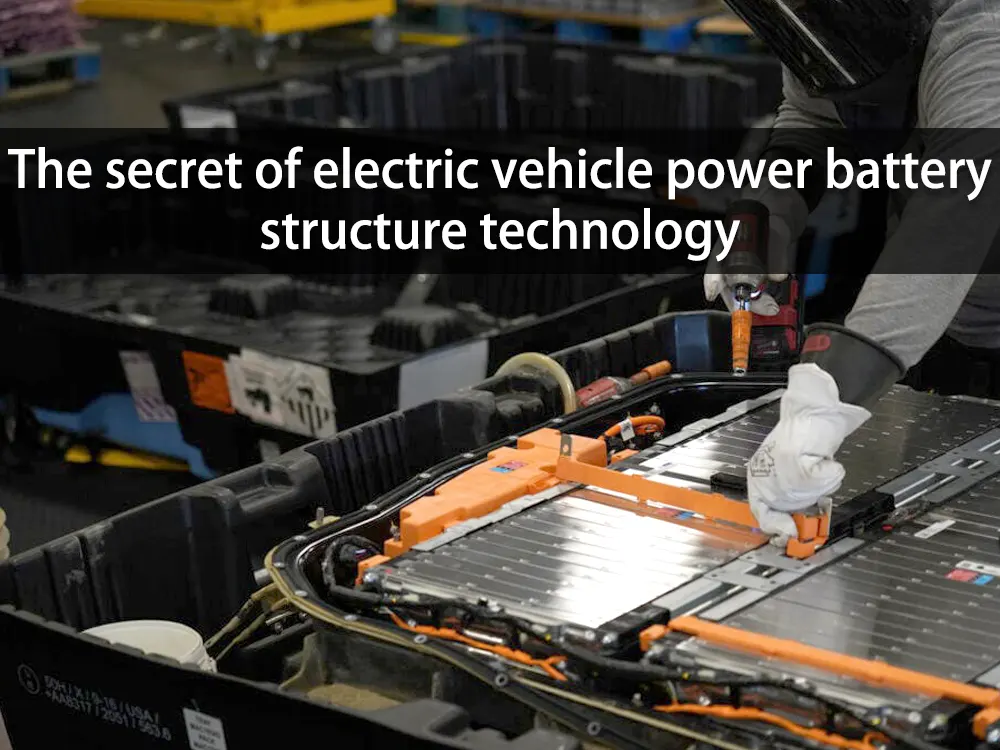


Battery pack
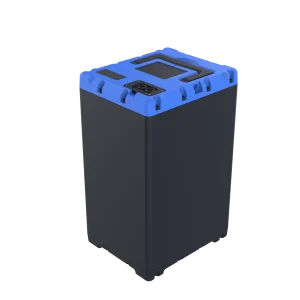
A battery pack is generally composed of a battery module, a thermal management system, a battery management system (BMS), an electrical system, and structural components.
Battery module
The battery module can be understood as the intermediate product of the battery cell and the pack formed after the combination of lithium-ion cells in series and parallel, and the addition of a single battery monitoring and management device. Its structure must support, fix and protect the battery core. Its basic composition includes:
Module control (commonly known as BMS), battery cells, conductive connectors, plastic frame, cold plate, cooling pipes, pressure plates at both ends, and a set of fasteners that hold these components together. In addition to gathering the single cells and providing a certain pressure, the pressure plates at both ends are often designed on the fixed structure of the module in the battery pack.
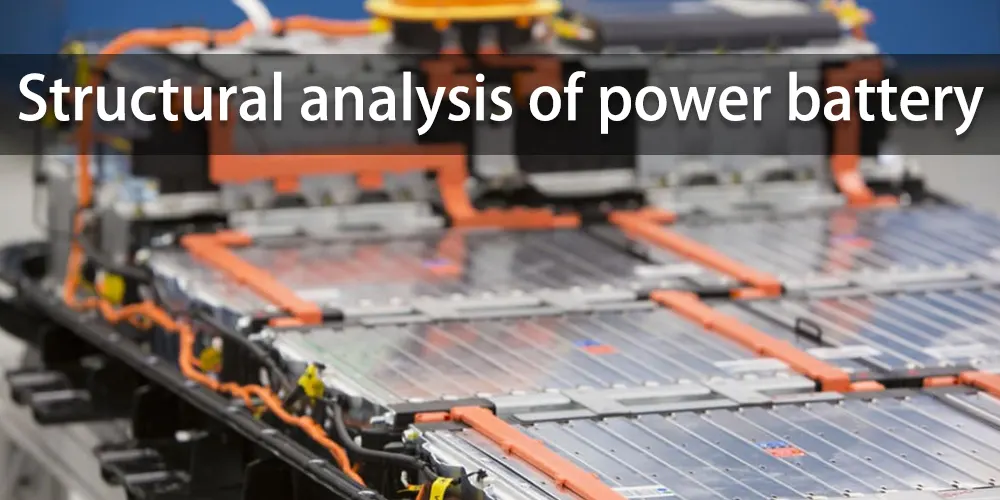
The module is designed to facilitate battery management by BMS, improve battery safety, and facilitate maintenance and repair.
Battery cell
The battery cell is mainly composed of cathode, anode, separator and electrolyte. The main working principle is to realize charging and discharging by the migration of lithium ions between the cathode and the anode. The charging process requires external energy, that is, grid power, which is equivalent to storing the grid’s power in the battery. The discharge process can be completed spontaneously, which releases the stored energy.
Lithium tram batteries are mainly divided into three categories according to the material system: lithium manganese oxide, ternary lithium battery, and lithium iron phosphate. These three types of batteries have their own advantages and disadvantages, and they also have different applications in the market.
Lithium manganese oxide: High temperature performance, cycle performance, and storage performance are poor. Manganese is easy to decompose under high temperature conditions, and the service life of the battery pack is short and difficult to store.
Ternary lithium battery: High and low temperature, cycle, safety, storage and electrical performance of each item are relatively average. The volume specific energy is high, the material price is moderate and the performance is stable.
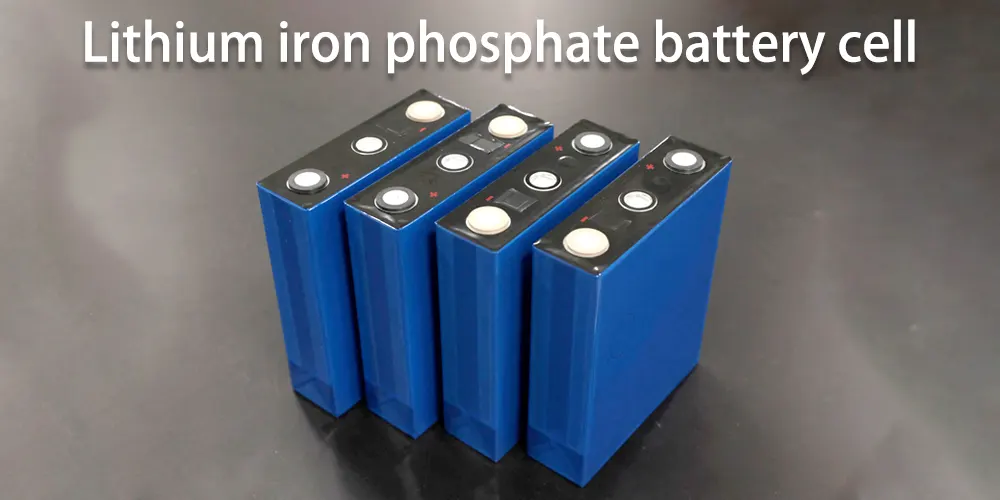
Lithium iron phosphate: Good safety performance, low conductivity, low volume specific energy. However, the cost of materials is high, and the low-temperature performance is poor, which cannot meet the needs of electric vehicles in winter.
Introduction to BMS
BMS is a battery management system, a system that monitors and manages batteries. Through the collection and calculation of parameters such as voltage, current, temperature and SOC, and then control the charging and discharging process of the battery, realize the protection of the battery and improve the management system of the comprehensive performance of the battery. It is an important link connecting the vehicle power battery and electric vehicles.
There are three main functions of BMS:
● By measuring the state of charge of the power battery, the remaining power is provided to the driver, so as to remind the driver to charge the electric battery in time;
● The second is to monitor and manage the battery temperature, detect the temperature of the battery when it is working, and use a blower or heat sink to ensure that the battery works in the best condition;
● The last is to realize the balanced management of the battery. Due to the factory manufacturing error, or the difference in ventilation during use, and the electrochemical performance conversion is different, the battery voltage and remaining power are detected to prevent overcharging.
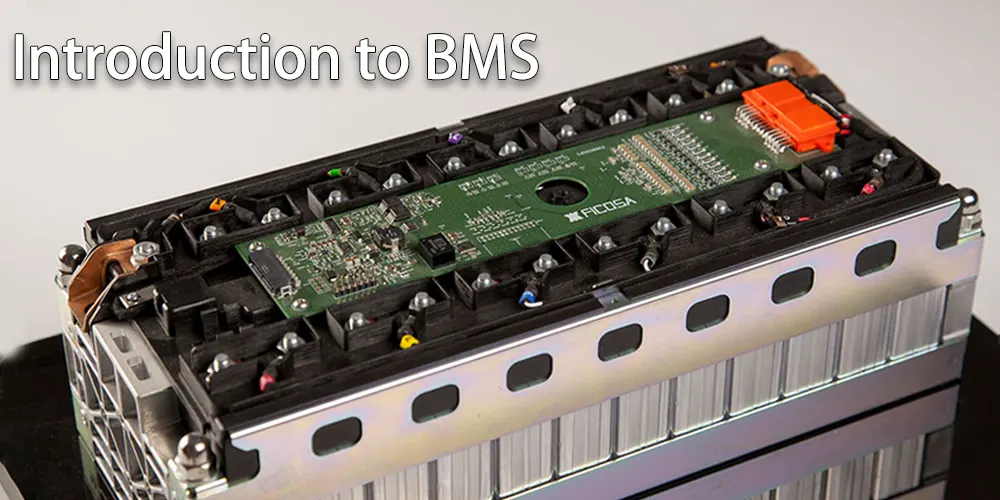
In the process of BMS development, the hazard analysis of BMS includes hazard events such as overvoltage (overcharge), undervoltage, overtemperature and overcurrent. For example, overvoltage may be a relatively serious event, especially overcharging the battery for a long time will lead to battery performance degradation and irreversible damage, and even lead to battery deformation and leakage.
Then, the goal of BMS system safety design is to be able to detect battery overcharge in time, and through reasonable hazard analysis and evaluation, consider designing safety mechanisms from the aspects of single point failure and potential failure, and finally make appropriate and timely processing.
Battery development trends
Cobalt-free battery
The full name of the ternary lithium battery is a ternary polymer lithium battery, which refers to a lithium battery in which the cathode material uses nickel-cobalt lithium manganese oxide (NCM) or nickel-cobalt lithium aluminate (NCA) ternary cathode material. Among them, cobalt, which is mainly used to stabilize the layered structure of materials and improve material cycle and rate performance, is an indispensable noble metal in ternary batteries.
For a long time, the price fluctuation of cobalt has greatly affected the price of ternary materials. However, more than half of the world’s cobalt is produced in Congo (Kinshasa), and the excessive concentration of resources has also exacerbated the vulnerability of the global cobalt supply chain.
The cost problem has always been a stumbling block to the development of the electric vehicle market, and the power battery, which is the core cost, has always been hoped to reduce the cost as soon as possible. After reducing the proportion and content of cobalt in ternary lithium batteries, the cost of the whole vehicle will be reduced accordingly, and the impact of cobalt price fluctuations on enterprises will also be weakened, which will help promote the development of the electric vehicle market.

Solid state battery
Solid state battery is a type of battery technology. Unlike lithium-ion batteries and lithium-ion polymer batteries that are commonly used today, a solid-state battery is a battery that uses solid electrodes and solid electrolytes.
Since the scientific community believes that lithium-ion batteries have reached their limits, solid-state batteries have been regarded as batteries that can inherit the status of lithium-ion batteries in recent years. The solid-state lithium battery technology uses a glass compound made of lithium and sodium as a conductive substance to replace the electrolyte of the previous lithium battery and greatly increase the energy density of the lithium battery.
Solid electrolytes have a high electrochemical stability window and can be used in conjunction with high-voltage electrode materials to increase the energy density of batteries.
Blade battery
The blade battery is a brand-new design concept. While using long batteries, it saves the intermediate module link and directly installs the batteries into the battery system. In this way, the weight and cost are effectively reduced, which is similar to CATL’s CTP.
At the same time, BYD’s battery structure design draws on the principle of honeycomb aluminum plates, and uses structural glue to fix the battery cells between the two layers of aluminum plates, allowing the battery cells themselves to act as structural components to increase the strength of the entire system.
CTP or CTC
The CTP technology is called Cell To Pack. By canceling the module design, the battery cells are directly integrated into a battery pack, and the battery pack is integrated into the body floor as a part of the vehicle structure.
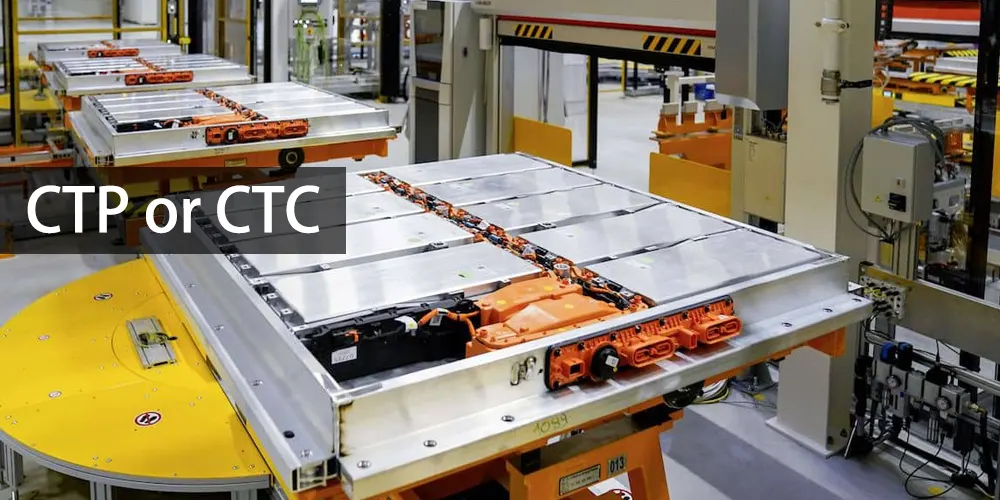
This method reduces the side plates, end plates (module structural parts) of the module itself, and the beams, longitudinal beams and other materials originally used to separate the modules and help the modules connect. The entire battery structure is greatly simplified, the space is released, the capacity of the battery pack of the same size is expanded, and the mass of the battery pack is reduced, which leads to an increase in the energy density of the battery and a reduction in cost.
BYD blade battery vs CATL CTP
The full name of CTC technology is Cell to Chassis. This technology integrates the battery cell and the chassis, and then integrates the motor, electronic control, and vehicle high voltage such as DC/DC, OBC, etc. through an innovative architecture, and optimizes power distribution and reduces energy consumption through an intelligent power domain controller. CTC will enable the cost of new energy vehicles to directly compete with fuel vehicles, with greater seating space and improved chassis passability.
In a sense, CTC can be understood as a further extension of CTP. Its core is to save the module and packaging process, and directly integrate the battery cells into the chassis of the car to achieve a higher degree of integration.
Traditional technology vs CTP vs CTC
The emergence of CTC will break through the limitation of PACK and directly involve the chassis of the car. This is the most critical core component of the vehicle, and it is the core advantage accumulated by vehicle manufacturers through long-term development. It is difficult for battery companies/professional PACK companies to develop independently. So now some battery suppliers are starting to plan chassis development.





1 thought on “The secret of electric vehicle power battery structure technology”
I like it! good content!
Comments are closed.