Skip to content
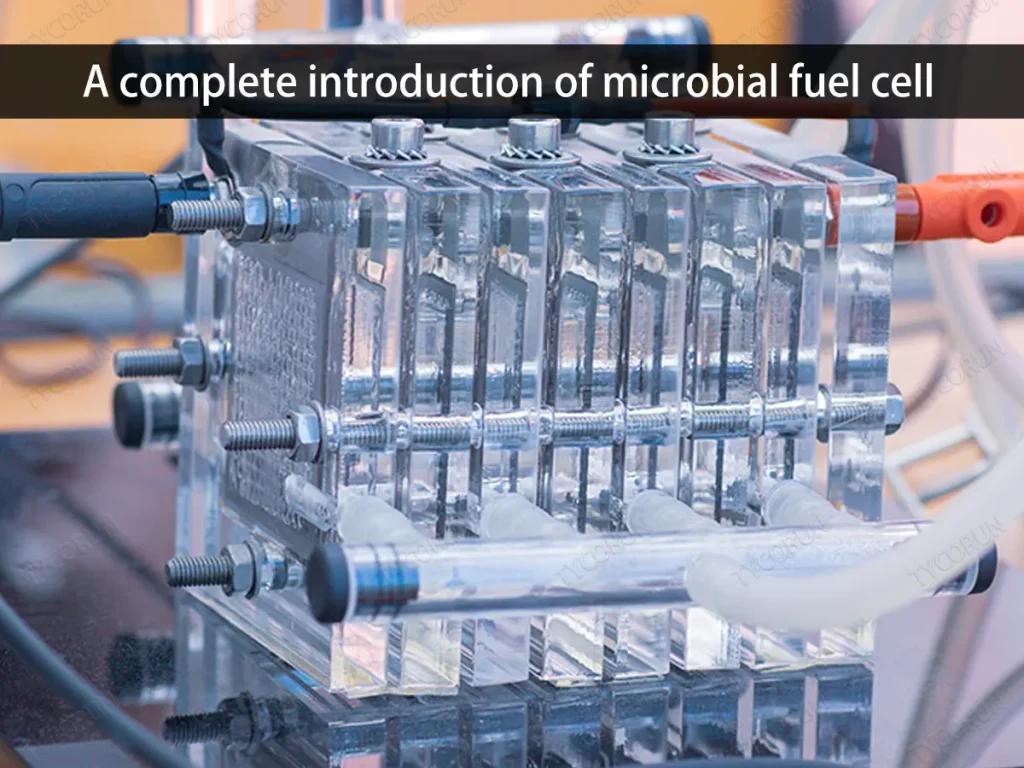

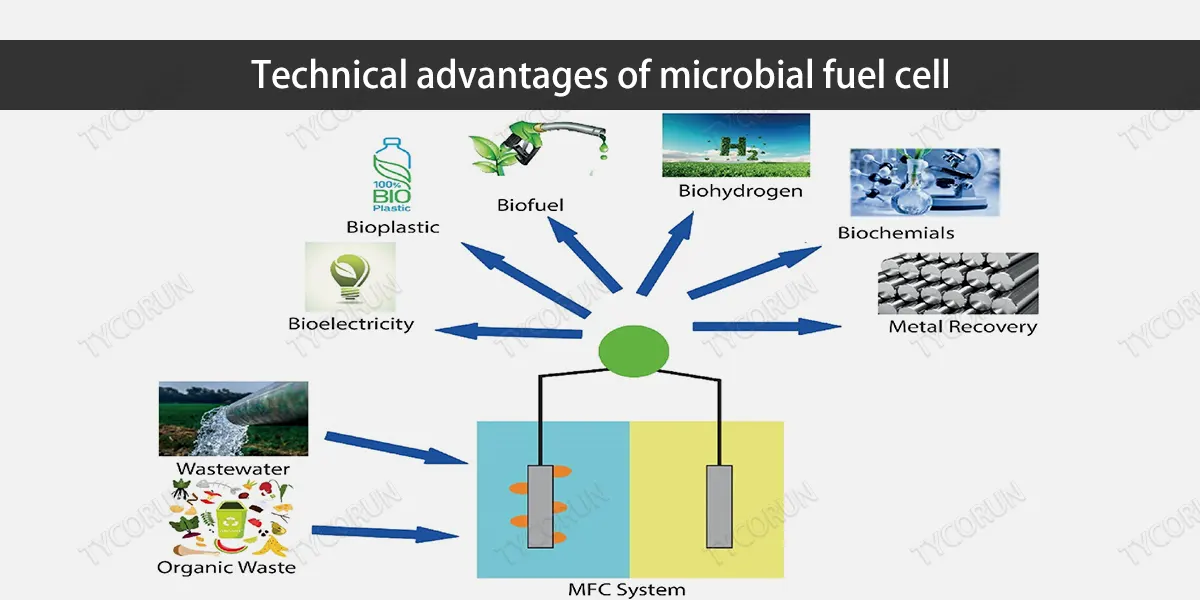
Microbial Fuel Cell (MFC) is an environmentally friendly and renewable energy technology that directly converts organic substances into electricity through the metabolic activities of microorganisms. Simply put, it is the use of microorganisms to decompose organic matter in wastewater to generate electricity, which not only purifies the water quality, but also generates energy, realizing the win-win situation of energy recovery and environmental protection.
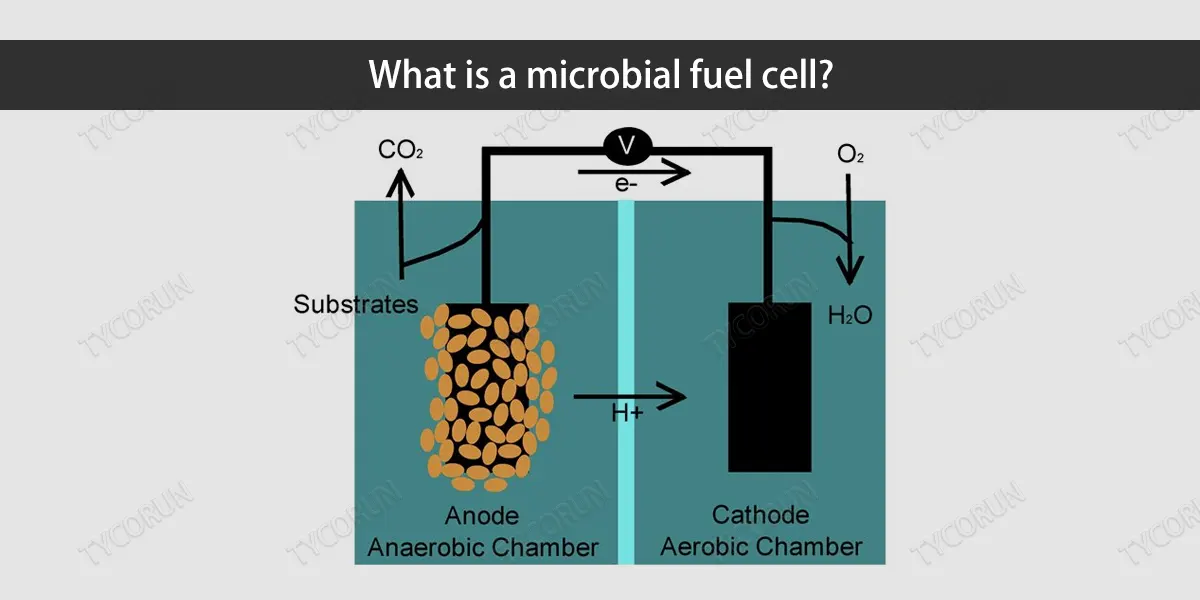
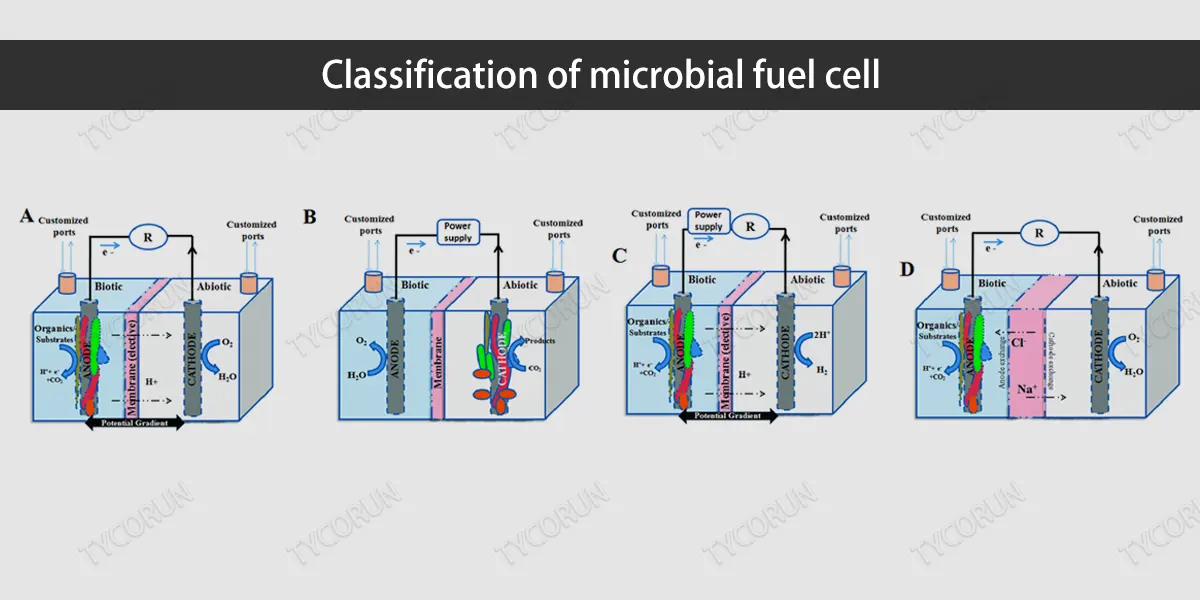
Microbial fuel cells contain cathode and anode chambers, and the two chambers are separated by a proton exchange membrane; this kind of microbial fuel cell is called a double-chamber microbial fuel cell, while the microbial fuel cell without separation is called a single-chamber microbial fuel cell. According to the difference in the way of electron transfer, microbial fuel cells can be categorized into direct microbial fuel cells and indirect microbial fuel cells.
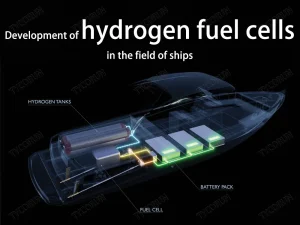
Similarly, there are other types of fuel cell, such as solid oxide fuel cell(SOFCs), which operate at high temperatures and use a solid ceramic electrolyte to produce electricity, and hydrogen fuel cell, which use hydrogen gas as a fuel source and typically employ a proton exchange membrane to generate electricity efficiently. Each of these fuel cell technologies offers distinct advantages and applications based on their operating conditions and energy sources.
- No energy intake from outside sources is required, which is low cost and economical;
- The anodic anaerobic and cathodic aerobic environments make MFC sludge production less than conventional anaerobic digestion and activated sludge methods;
- Mild application conditions, suitable for treating a variety of wastewater at room temperature and pressure;
- It has a broader application value in power-poor areas, so it has a broad prospect in wastewater treatment.
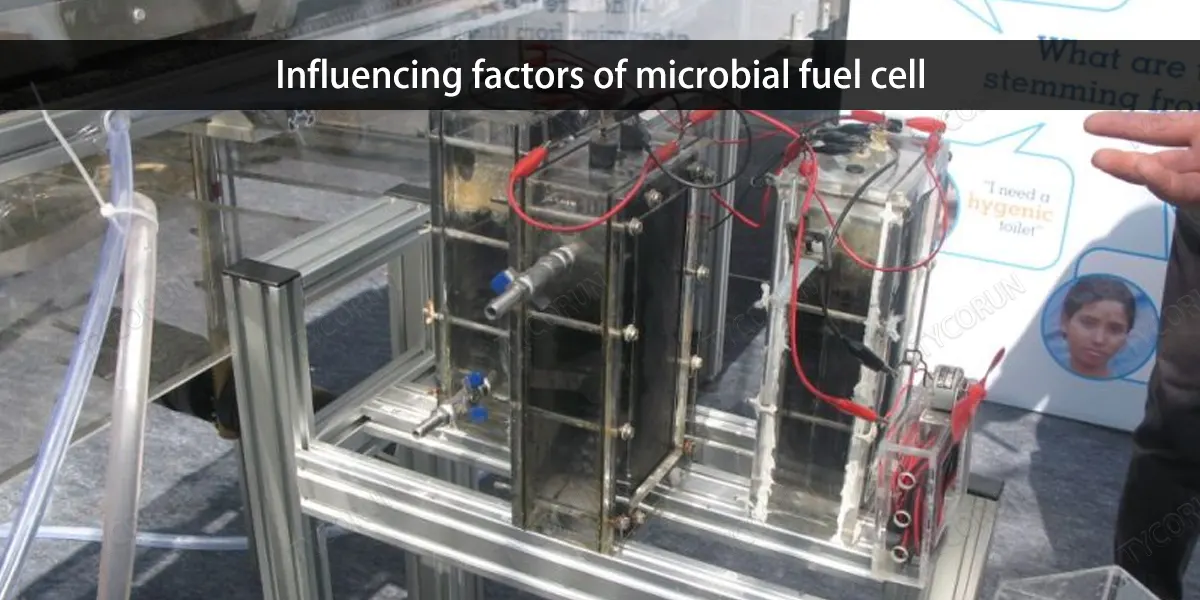
The parameters that affect the efficiency of MFC are cell configuration design, electrode spacing, electrode properties, catalyst (microorganism) type, substrate type and composition, pH, temperature and other operating conditions. Among the various influencing factors, MFC configuration, electrode material and microorganism type are the key to improve MFC.
For electrode materials, low-cost electrode materials with high reactive active sites, high porosity, good biophilicity, and promotion of oxygen reduction reaction are used for MFC to improve its efficiency. In addition, microorganisms, as catalysts for MFC, are the core components of MFC and play a key role in the treatment of MFC wastewater and the enhancement of power density. Different microorganisms utilize different ranges of substrates, which leads to significant differences in the ability of MFC to produce electricity and purify wastewater.
At present, MFC is commonly used in wastewater denitrification, desulfurization, removal of organic matter and heavy metals, and the more researched microbial flora are nitrifying flora, denitrifying flora and sulfate-reducing flora.
Domestic wastewater, wastewater from the food industry, paper mills, textile mills, breweries/distilleries, mining, heavy industry, etc. can be used as the reaction substrate for MFC systems to purify the water while producing electricity.
The weak current generated by MFC can be used as a signal to create MFC-type biosensors, which have been widely used to detect biochemical oxygen demand (BOD), heavy metal ions, and toxic and hazardous substances.MFC sensors analyze the type and concentration of toxic substances through the change of electrical signals, and some sensors rely on the current generated by the independent continuous operation of the sensor for up to five months.

In nature, there are a large number of aromatic compounds that are difficult to be degraded, and aromatic compounds may induce cancer in some cases. A two-compartment MFC system made by controlling a toroidal electric field was able to remove about 88.3% of phenol by reacting for 30 h in an open circuit.
MFC technology can also be used to remove antibiotics from the environment. Existing MFCs can remove cefazolin sodium at a rate of 1.2-6.8 mg/L per hour without affecting current generation.
A researcher studied a saline anode microbial fuel cell (SA-MFC) for the treatment of farm wastewater containing 4% salt. At an organic loading of 1.25 gCOD/L, it had a TCOD (Total Chemical Oxygen Demand) removal rate of about 92 % and a maximum power generation of 369 HW per square meter.