Skip to content
LiPo Battery 3S vs 4S - Which One Is Better?
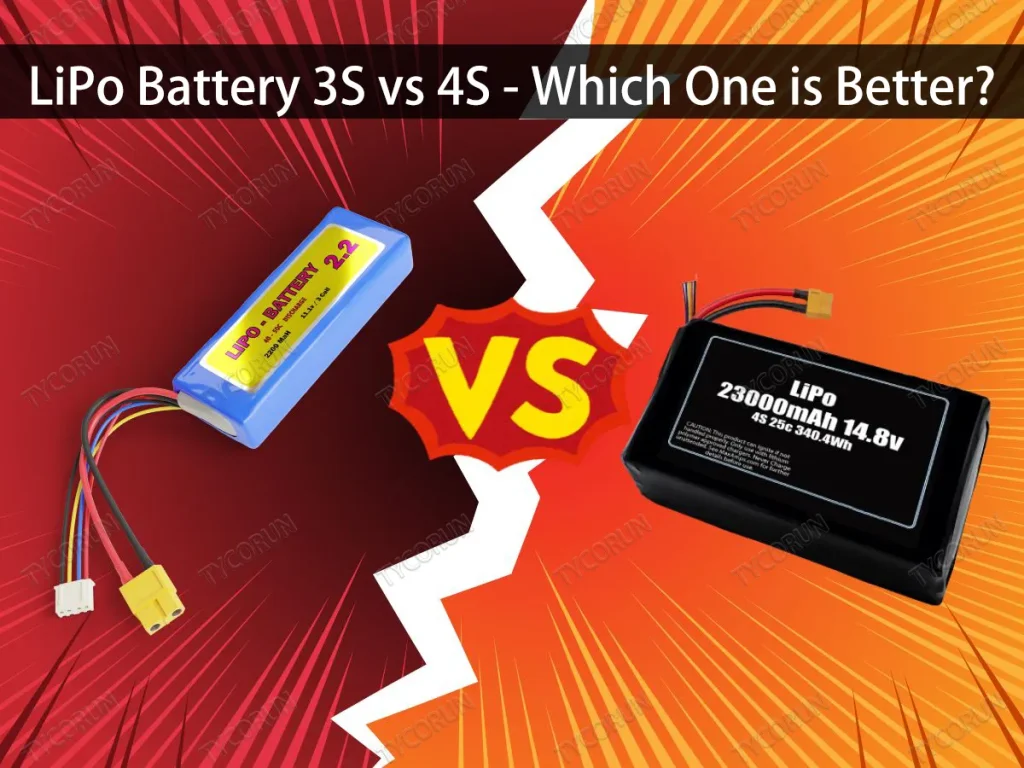
Because they are light and can give off a lot of power quickly, li polymer battery (LiPo) is the most popular way to power drones, remote control cars, airplanes, and FPV racing quads. But choosing to go with a LiPo battery 3S or 4S is one of the most common questions that both beginner and experienced users have.
Knowing the numbers is not enough to comprehend the differences between LiPo batteries 3S vs 4S. Especially if you wish to find a balance between cost, safety, and performance. This article will discuss the differences between these two batteries, their advantages and disadvantages, and which one is best for what you need.

What are LiPo Battery 3S and 4S?
LiPo Battery 3S
LiPo Battery 4S
LiPo Battery 3S vs 4S: Key Differences
- Power output and voltage
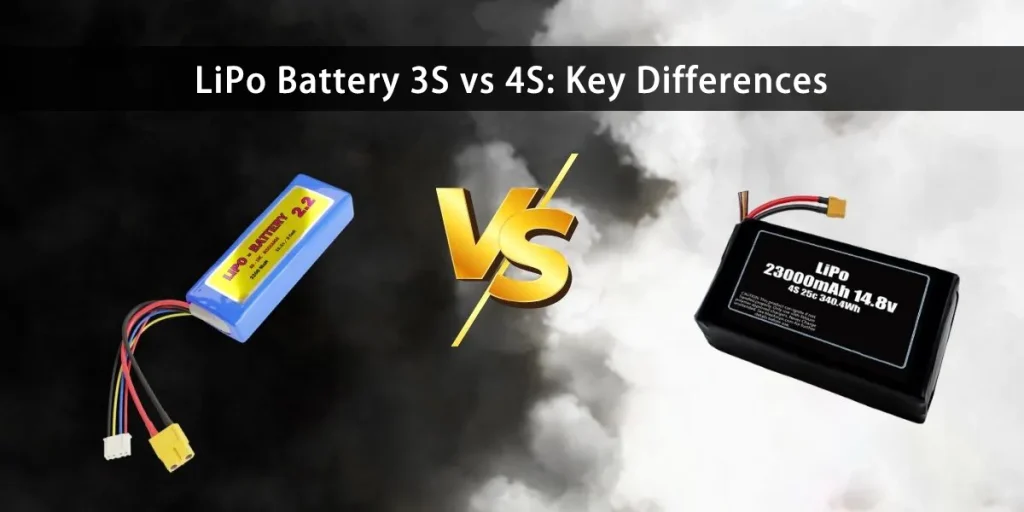
About 11.1V is provided by a 3S battery, and 14.8V by a 4S battery. In comparison to 3S, a 4S setup’s higher voltage converts into more power, faster acceleration, and better performance. - Speed and responsiveness
One of the most clear differences between LiPo batteries 3S and 4S is speed. While 4S batteries give a stronger response and are popular in FPV racing drones, 3S batteries are smooth and stable. - Weight and size
Usually, a 4S LiPo weighs a little bit more than a 3S. This may have an impact on handling and flying duration, particularly in smaller drones or remote control aircraft. - Efficiency and power consumption
A 4S battery may run motors more effectively at lower current with higher voltage, but if it is pushed hard, it will drain faster. In casual use, a 3S battery is more tolerant and often lasts longer. - Cost and compatibility
Price is an additional factor when comparing LiPo batteries 3S and 4S. Usually, 4S batteries are more costly and need higher voltage-supporting parts (electronic speed controllers, motors). With entry-level systems, 3S batteries are more affordable and simpler to use.
In short, voltage, performance, and suitability are the main differences between LiPo batteries 3S and 4S. While 4S is intended for those who need greater speed and power, 3S can be the more affordable and safe choice.
You can also read these article for more insight:
How Does LiPo Battery 3S and 4S work
Understanding how LiPo batteries actually work is helpful for identifying the differences between LiPo battery 3S vs 4S models. Each of the several types of lithium batteries, lithium polymer batteries making up the 3S and 4S is connected in series and has a nominal voltage of 3.7V. The overall voltage grows with the number of connected cells. A 3S battery connects three cells in series, resulting in 11.1 volts, while a 4S battery connects four cells in series, producing 14.8 volts.
The motors is powered by this voltage, which passes through the electronic speed controller. More electrical energy is available to improve performance at higher voltages. Because of this, a LiPo 4S battery often gives higher thrust and faster speed than a 3S, while the 3S offers smoother control and longer runtime.
Pros and Cons of LiPo Battery 3S and 4S
- LiPo battery 3S
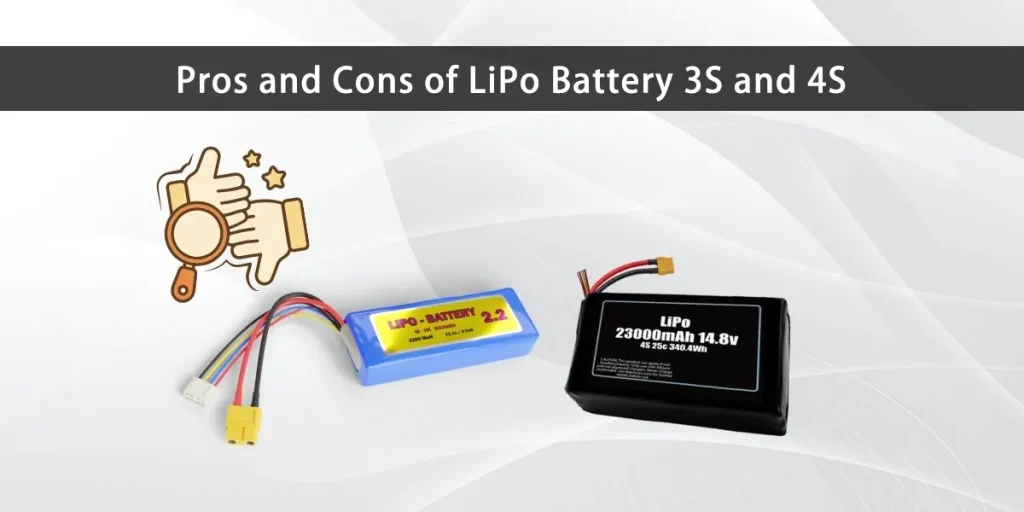
Pros: Longer flight duration with less power usage, better handling for recreational flying, and lower expenses. Additionally, it lessens the stress on motors and electronic speed controllers, extending component life.
Cons: It is less suitable for high-performance setups due to its slower speed and lower speed as compared to 4S, as well as its limited capacity for aggressive movements or big loads. - LiPo battery 4S:
Pros: Stronger power, greater speed, and more responsive control are all provided by higher voltage, which makes it ideal for freestyle FPV and racing. Additionally, it performs better with heavier setups.
Cons: usually to be heavier and more expensive than 3S, shortens flying time owing to increased power use, and puts more pressure on electronic speed controllers and motors.
Which is Better: LiPo 3S or 4S?
There is no right or wrong answer when it comes to LiPo battery 3S vs 4S selection because it actually depends on your needs. If you prefer cost, smoother handling, and longer flight duration, a 3S battery is the best option. Beginners, casual FPV pilots, and anybody else looking for a dependable configuration without overloading their components will find it especially perfect.
However, if you want speed, responsiveness, and better performance, a 4S battery is the preferred choice. For heavier RC setups, freestyle FPV, or racing drones, its higher voltage provides better handling and faster acceleration. But the price is more, your system is under more stress, and the flight time is shorter.
Tips for Choosing the Right LiPo Battery
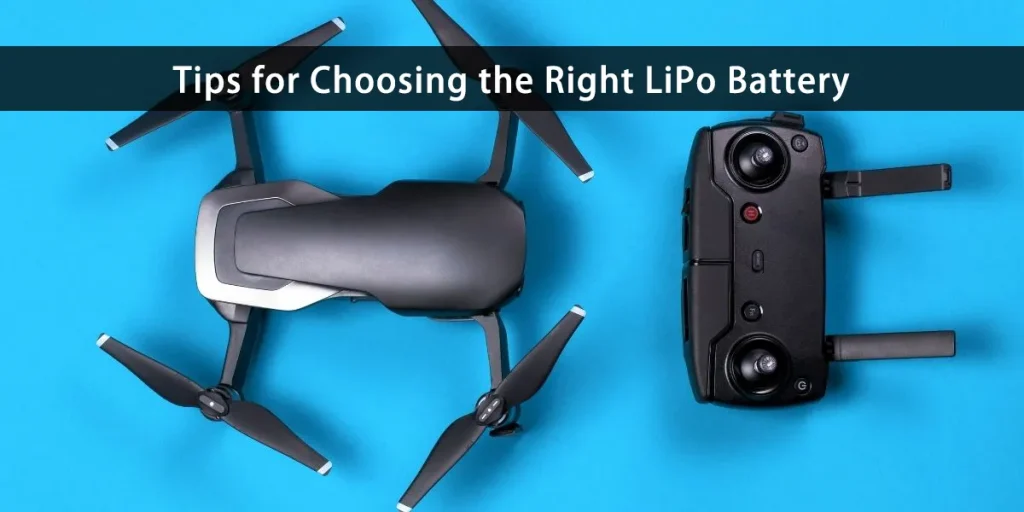
- A 3S battery is typically more manageable and forgiving if you’re beginner or just flying for enjoyment. 4S may be preferred by experienced pilots wanting speed and aggressive performance.
- Always verify that your motors, electronic speed controllers, and frame are rated for 3S, 4S, or both in order to determine device compatibility. Component damage may result from using the incorrect battery.
- Use 3S for smoother cruising and a longer flight duration. 4S is the better choice for racing, freestyle, or transporting larger loads.
- A 3S battery is typically less expensive, both initially and in terms of lowering component wear. Although 4S battery is more powerful, It is typically more expensive.
- Stability and flying duration may be impacted by heavier batteries. Verify that the additional weight of a 4S pack can be supported by your drone or remote control equipment.
You may make an informed decision about whether a LiPo battery 3S vs 4S is best for your setup and flying style by carefully considering these aspects.
Conclusion
The LiPo battery 3S vs 4S decision ultimately comes down to your setup’s top priorities. Beginners or casual fliers who prefer smoother handling, longer flying times, and a less expensive or component-stressing choice are better off with a 3S battery. Experienced pilots that require greater power, speed, and responsiveness for racing, freestyle FPV, or larger remote control builds, on the other hand, prefer to use a 4S battery.
The most suitable battery for your flying style and equipment can be chosen by knowing the variations in voltage, performance, cost, and compatibility. Whether you choose 3S or 4S, the important thing is to match your choice to your goals, whether they be raw performance, endurance, or balance.
FAQS
Does 3S last longer than 2S?
No, a 3S battery does not inherently last longer than a 2S battery; it depends on the mAh (capacity) of the battery.
Which will fill first, 4S or 3S?
Neither the 3S nor the 4S LiPo battery will necessarily "fill" first; rather, the one with the same or smaller capacity will fill first, as they both charge to their respective full voltages.
How long will a 4S LiPo battery last?
A 4S LiPo battery generally lasts for 200-300 charge cycles, though its lifespan in terms of time can vary significantly depending on usage and maintenance, with some well-maintained batteries lasting 1.5 to 2 years or more.