Skip to content
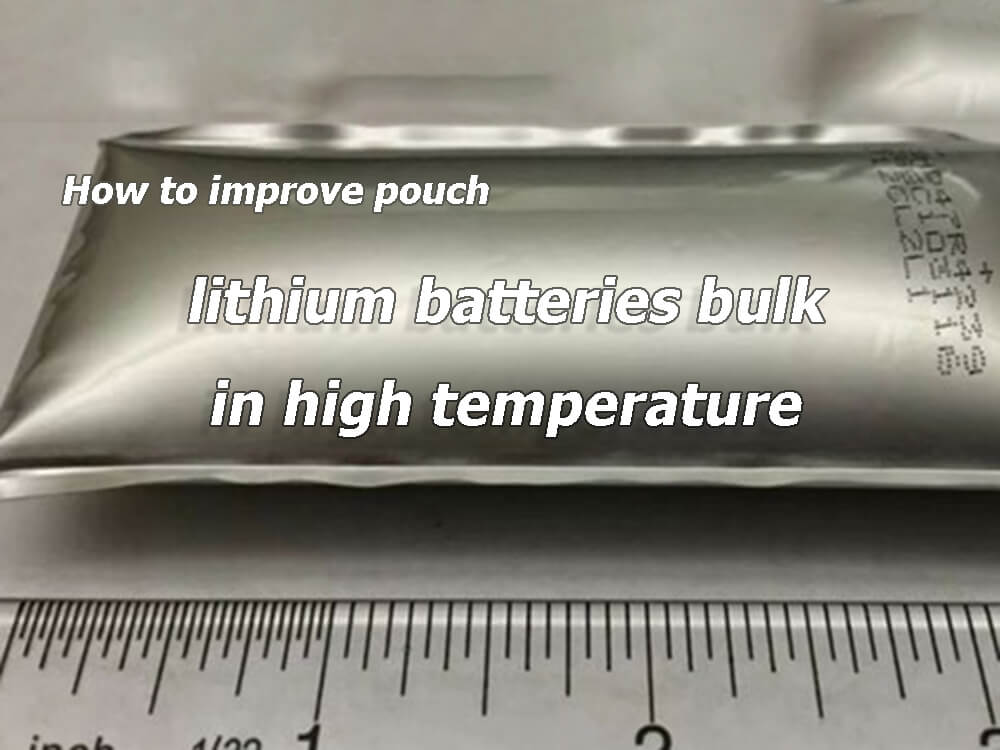



And the main manufacturing companies are Top 10 pouch battery manufacturers, and Top 10 lithium battery aluminum-plastic film manufacturers. Due to the influence of the use environment, season, regional climate, etc., high temperature inevitably occurs during actual use, which can easily lead to the disadvantages of batteries bulk and electrical performance of the pouch lithium battery.
Through the evaluation of electrolyte and process optimization, it is determined that the combination of 3% VC content additive improved electrolyte and process optimization can significantly improve the inhibition of high temperature batteries bulk and continuous damage to electrical properties of pouch lithium batteries.
Experiment
Formulation and design
Positive electrode (oil system): lithium cobalt oxide: conductive agent (SP): binder (PVDF-HSV900) = 96:2:2 (mass ratio); negative electrode (water system): graphite (Ningbo Shanshan FSN-4): Thickener (CMC): Binder (SBR)=95.5:1.5:3.0 (mass ratio); Diaphragm: 16 μm Celgard diaphragm; Electrolyte: Guangzhou Tianci. According to the above formula and design, it was wound and assembled into 494147 pouch square battery.
Different content of VC additives
Trial production of improved electrolyte batteries with different contents of VC additives.
The Tianci TC-E233H type electrolyte was used, and 0%, 1.5%, 3%, and 4.5% of VC additives were added to make it into four types of electrolytes. Batteries B, C, and D of four schemes are used for subsequent tests (scheme A is the comparison group). Note: Process steps after liquid injection: ①Stand at room temperature for 8h→②Forming→③Stand at 40℃ for 24h→④Degassing and sealing→⑤Flat pressure→⑥Distribute volume.
Trial production of battery optimized by process technology
The process flow of the pouch lithium battery after liquid injection is: ①Standing at room temperature for 8 hours→②Forming→③Standing at 40℃ for 24h→④Degassing and sealing→⑤Flat pressing→⑥Volume separation; optimize the process of step ①4 The rest of the group steps remain unchanged.
Group 1: stand at room temperature for 8 hours (control group); group 2: stand at 60°C for 8 hours; group 3: stand at 85°C for 8 hours; group 4: stand at 100°C for 8 hours; used for subsequent tests (electrolyte solution) Option A is used to add 0% VC).
Trial production of the battery with the best solution
Based on the optimal percentage content of VC electrolyte obtained in Section 1.2 above and the optimal resting temperature in Section 1.3 as conditions, the battery of the optimal solution was remade for subsequent test evaluation.
Experiments and conclusions
Experiment of the improved electrolyte battery
Experimental steps: Take the four schemes A to D in Section 1.2, ① test the initial capacity and thickness; ② fully charge; ③ put it in an 85 ℃ incubator for 48 hours; ④ take it out and cool it to room temperature, and re-measure the capacity and thickness;
Repeat from ② to ④ until all the bulk batteries cut-off test; compare the cycle of the first bulk batteries, capacity loss rate and batteries bulk rate of the four schemes. It can be seen from Table 1 that schemes C and D have strong anti-high temperature bulk batteries, and batteries bulk occurs only when they are exposed to 85 ℃ for 48 h in the third week;
It can be seen from Figure 1 that the cell batteries bulk rates of Schemes C and D after weekly high temperature impact are much smaller than those of Schemes A and B;
It can be seen from Figure 2 that the capacity loss of the battery with VC added in the electrolyte is larger than that without VC, and with the increase of VC addition, the capacity loss also increases.
Table 1 Cycles corresponding to the first bulk batteries of electrolyte batteries with different VC contents
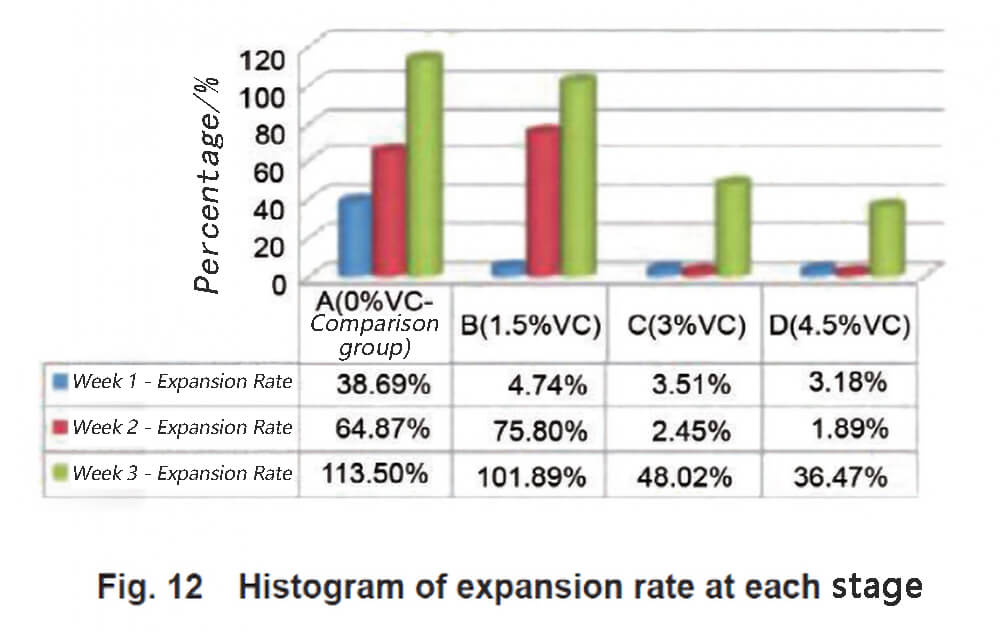
Figure 1. Histogram of batteries bulk rate after thermal shock in each stage
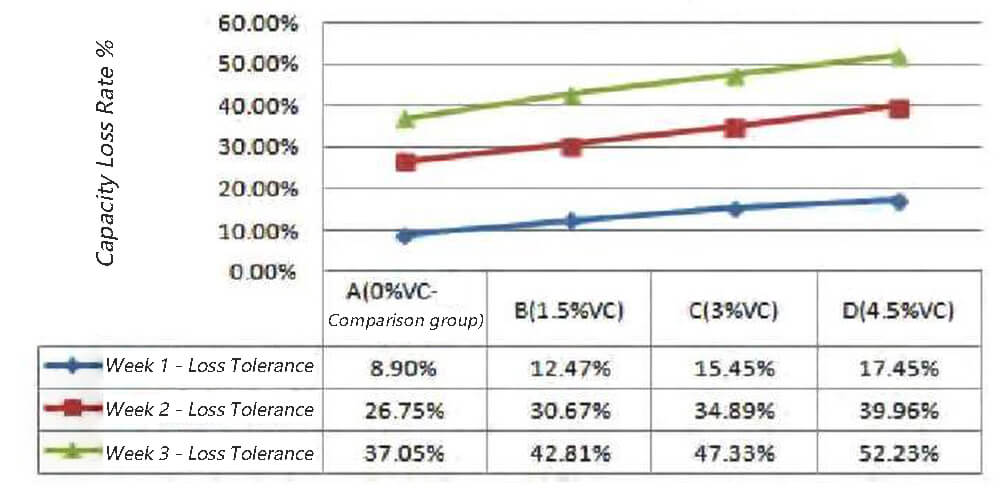
Figure 2. Line chart of cell capacity loss rate after thermal shock at each stage
VC improves the ability to resist high temperature batteries bulk, but the capacity loss after high temperature impact also increases compared with that, which can be explained from the characteristics of VC:
As a new type of organic film-forming additive and overcharge protection additive for lithium-ion batteries, VC has good high and low temperature performance and anti batteries bulk function, which can improve the capacity and cycle life of the battery.
When the battery cells are stored and impacted at a high temperature of 85 °C, the negative electrode SEI protective film will inevitably appear “damaged and VC re-repair to form a film”. If there is no VC in the electrolyte, the film will continue to be damaged, and the negative electrode carbon and the electrolyte will be adversely affected. The gas produced by the reaction causes the cell to swollen battery.
If there is VC, the VC will continue to repair the damaged SEI film, so that the negative carbon and the electrolyte will not produce gaseous side reactions, but the repair process will inevitably consume the effective lithium in the electrolyte, resulting in irreversible capacity loss. Loss has increased.
Combining the results in Table 1, Figure 1 and Figure 2, Scheme C (adding 3% VC to the Tinci TC-E233H model electrolyte) is the best scheme for the experiment in Section 2.1.
Experiment of process optimization battery
Experimental steps: 1. Test the initial capacity and thickness of the 4 batteries in Section 1.3;
Repeat from ② to ④ until all the bulk batteries cut-off test; compare the cycle and capacity of the first bulk batteries in the four schemes. Combining the results in Table 2, Figure 3 and Figure 4, the third group (after liquid injection, let it stand at 85°C for 8h in an oven, and then put it on the cabinet) is the best solution for the experiment in Section 2.2.
It can be seen from Table 2 that standing at high temperature for 8 hours after injection is beneficial to the battery’s resistance to high temperature batteries bulk in the later stage. Although bulk batteries occurred in the second week in 2, 3 and 4, the 3 and 4 groups were more beneficial in comparison;
It can be seen from Figure 4 that the average capacity of the battery is reduced after the liquid injection at high temperature, and the capacity of the fourth group is seriously low. capacity, but also led to lower capacity.
Because the SEI protective film is not formed on the negative electrode of the battery before the formation after the liquid injection, under this condition, some components in the electrolyte will undergo a slow side reaction with the negative electrode to produce gas, which will change from normal temperature to high temperature.
It can accelerate the process of catalyzing the side reaction of this part of the gas-producing substances, so that the reaction can be exhausted to the maximum extent, so as to avoid the gas production during the cyclic thermal shock at 85 °C for 48 h in the later stage, thereby causing batteries bulk.
Due to the accelerated catalysis at high temperature, the side reactions increase with the increase of temperature, and the irreversible capacity increases accordingly. Therefore, the average capacity decreases continuously after the volume separation in the later stage. When the temperature is 100 °C, the
Other components of the electrolyte may also be decomposed due to heat, resulting in a serious low capacity. If the temperature continues to increase, it will easily lead to the failure of the electrolyte, and the electrical performance of the battery will deteriorate sharply in the later stage.
Table 2 Periodic table corresponding to the first batteries bulk at different standing temperatures after liquid injection.
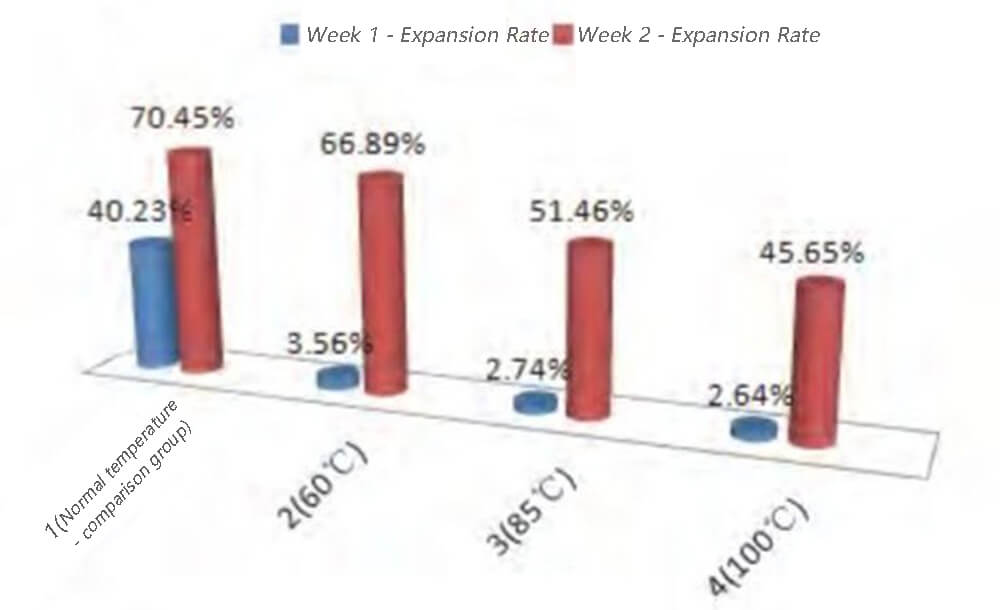
Figure 3. Histogram of cell batteries bulk rate after thermal shock at each stage of the 4 battery packs
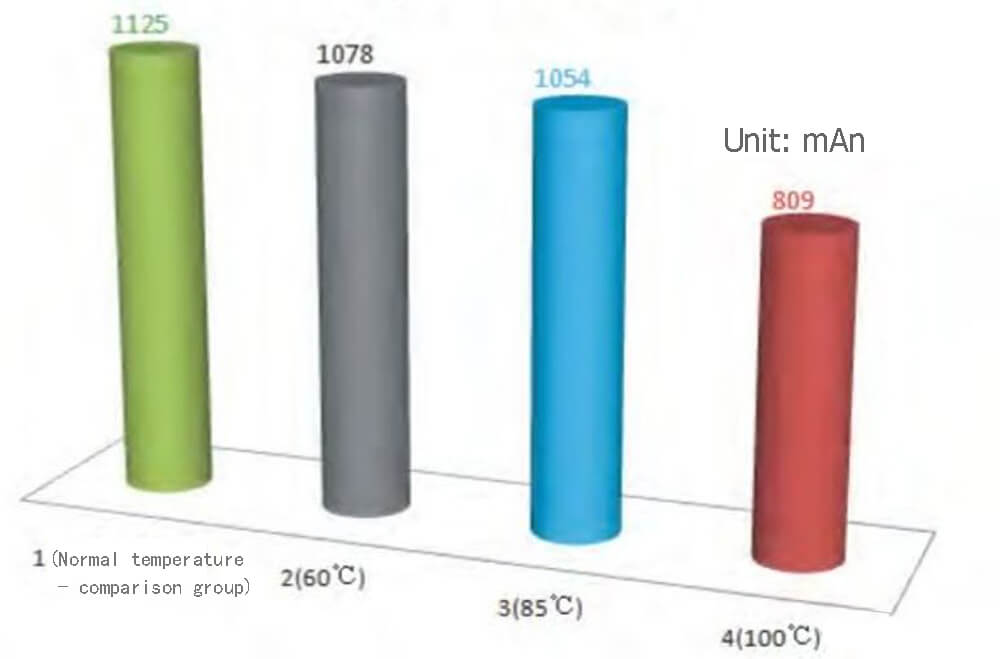
Figure 4 Histogram of the average capacity of four groups of batteries
Experiment of the best solution battery
Add 3% VC additive to Tianci TC-E233H type electrolyte. After the battery is wound and injected with liquid, ① stand at 85°C for 8h → ② form → ③ stand at 40°C for 24h → ④ degassing and sealing → ⑤ flat pressure → ⑥ minutes Allow;
That is, combining the best solutions in the experiments in Section 2.1 & Section 2.2, a battery was fabricated, and the cycle of initial batteries bulk, capacity loss rate, and batteries bulk rate were evaluated after repeated thermal shock at 85 °C for 48 h;
Then take the new battery after the capacity distribution, and repeatedly shock it again at 85 °C for 48 hours. The shock cycle must be the week before the first batteries bulk cycle (for example, if the first batteries bulk occurs for the 5th time, then take the 4th week). 0.5C evaluates the cycling performance near the edge of batteries bulk after thermal shock.
It can be seen from Table 3 that the new battery made by combining the best scheme of the experiments in Section 2.1 & Section 2.2, its high temperature resistance is stronger, and it can ensure that it is not flatulent after repeated impact at 85 °C for 48 h for 3 times, and the batteries bulk rate is also within 1% to 5%.
Table 3 Data on each item of repeated impact at 85℃ for 48h
It can be seen from Figure 5 that the new battery was repeatedly charged for 3 times at 85 °C for 48 h after the capacity was taken, and the simulation caused thermal shock close to the edge of batteries bulk. The 300-cycle capacity retention rate of the battery was still >85%, and the cycle performance was good.
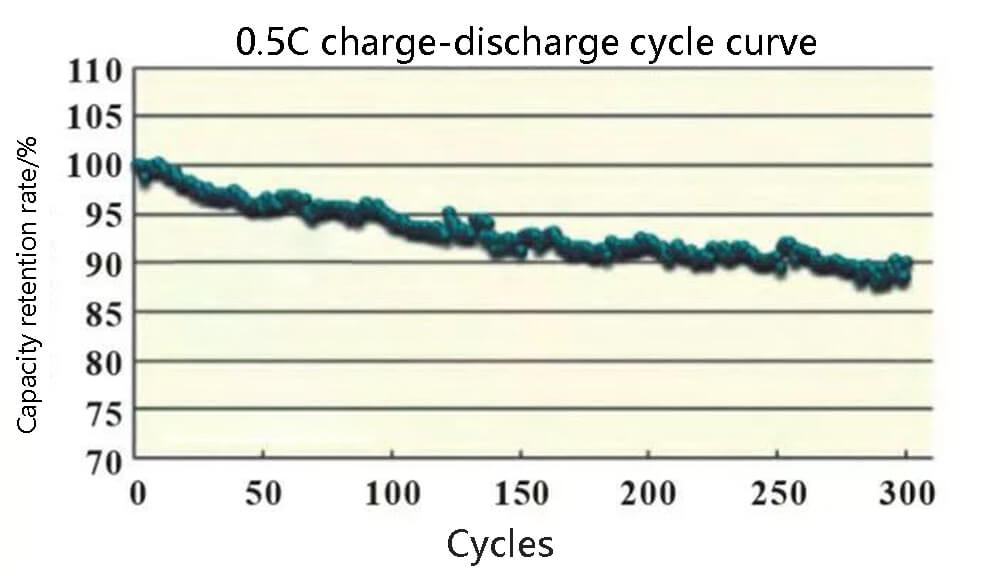
Figure 5 Cycling curve after 3 thermal shocks
Conclusion
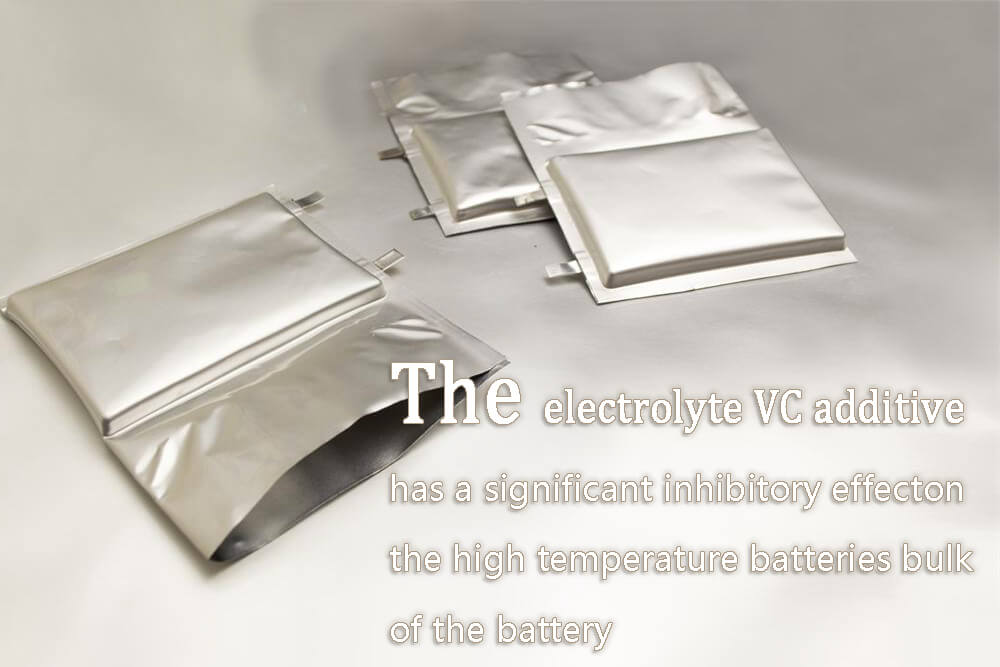
(1) The electrolyte VC additive has a significant inhibitory effect on the high temperature bulk of the battery, and adding 3% more in the Tianci TC-E233H model is the best value;
(2) Optimize the process technology, and optimize the standing at room temperature for 8 hours after injection to 85 °C for 8 hours, so as to maximize the reaction of the material components in the electrolyte that react with the negative electrode to produce gas.
It avoids re-reaction and gas production during the later thermal shock, thereby causing batteries bulk, and also has a significant inhibitory effect on the high temperature batteries bulk.
(3) By combining the method of “adding 3% VC to the TC-E233H type electrolyte and injecting the liquid, it is changed to 85 °C for 8 h before forming”, the obtained pouch square lithium battery is resistant to high temperature and heat. Stronger impact capability.
It can reach 85 °C for 48 h for 3 times without batteries bulk, and the battery still has excellent cycle performance of >85% for 300 cycles at 0.5C after being subjected to 3 thermal shocks.
Seeing this, if you want to know about high temperature resistant batteries, you can learn about aluminum shell batteries. Aluminum shell batteries have the characteristics of good heat dissipation and high pressure resistance.