

Atomic layer deposition (ALD) is a technique that deposits thin films on substrates in a self-limiting manner by alternately exposing precursors and reactants to introduce reactive gases. The self-limiting nature of ALD technology means that after the reaction of the precursor on the film surface reaches saturation, the excess precursor will not continue to react, which makes ALD films have characteristics that are difficult to match with films prepared by other technologies.

First, ALD films can achieve uniformity over a large area and precise control of film thickness; second, ALD films have good step coverage, so thin films can be deposited on complex surface substrates such as high aspect ratio structures; in addition, some flexible substrates are sensitive to temperature, and ALD technology can achieve substrate deposition at a lower temperature, which makes it possible to deposit thin films on flexible substrates.
With the increasing demand for low-cost and environmentally friendly energy, rechargeable lithium-ion batteries (LIBs) play an important role as reliable energy storage devices in electric vehicles, portable electronic devices and space satellites. The active components of batteries include positive electrode, negative electrode, electrolyte and separator, which play an important role in the function of lithium-ion batteries. The main problem of lithium-ion batteries is the degradation of electrolyte and electrode materials and their components during charging and discharging.
Atomic layer deposition (ALD) technology can deposit uniform thin films with controllable thickness and composition at the atomic level. It can deposit various metal films on the surface of active electrodes and solid electrolyte materials to generate protective layers at the electrode interface. ALD technology has great potential to revolutionize the future of the battery industry.
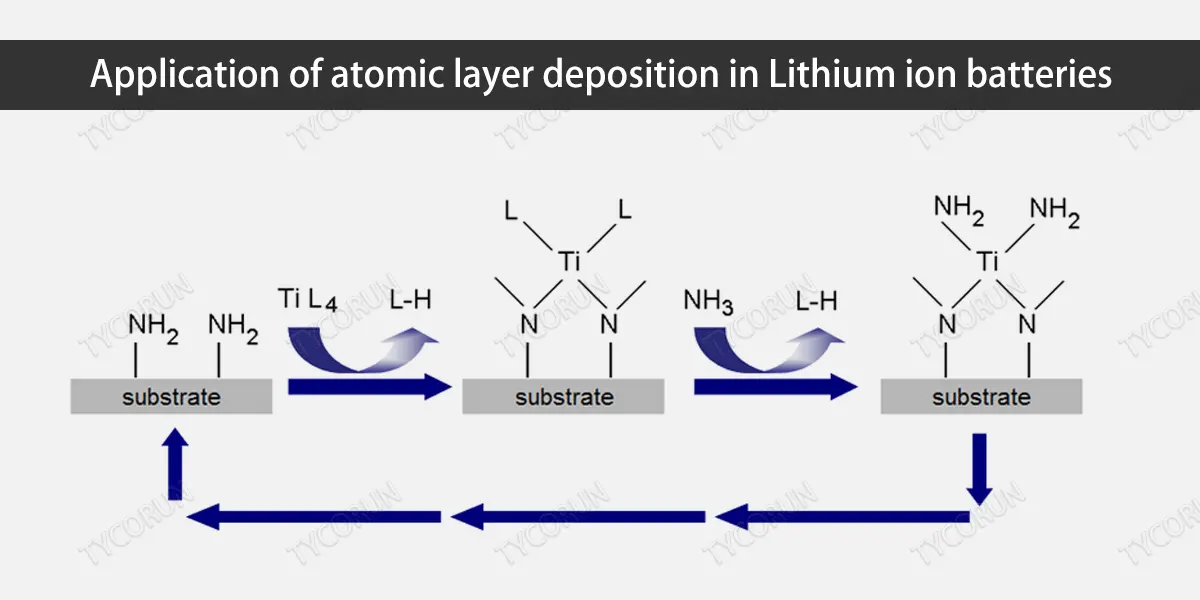
In lithium-ion batteries, metal oxide films can be deposited on electrodes to improve the electrochemical performance of the battery. For example, ALD technology is used to deposit TiO2 films on nitrogen-doped CNTs (carbon nanotubes), which improves the electrochemical efficiency as the negative electrode of lithium-ion batteries. After 50 and 100 ALD cycles of TiO2 on CNTs, the specific capacity reached 275 mAh/g and 312 mAh/g, respectively. The specific capacity of ALD-coated CNTs after 60 cycles is more than 1.7 times that of graphite, and the electrochemical energy storage level is greatly improved.
In recent years, the application of ALD technology in the field of lithium-ion batteries has gradually attracted attention, especially for improving the energy capacity and service life of batteries.

ALD technology is applied to the preparation of negative electrode materials for lithium-ion batteries. For example, ZnO and Al2O3 are deposited on graphene in sequence as negative electrode materials for lithium-ion batteries. As can be seen in the figure below, the Al2O3-coated material effectively suppresses the capacity decay of the material in the first 10 cycles of charge and discharge. After 100 cycles, the specific capacity of the material with the best coating effect is about twice that of the original material.
Forge Nano recently announced that its subsidiary Forge Battery has begun providing prototype battery samples made with ALD coating materials to customers for testing. The company claims that its proprietary ALD formula “Atomic Armor” can improve the energy storage capacity of battery electrodes and extend the service life of batteries.
ALD can increase the energy density of batteries by depositing a protective film on battery electrode materials, while reducing the expansion and contraction of electrodes during charging and discharging, thereby slowing down the mechanical aging of batteries. This technology also allows batteries to contain a higher proportion of silicon in the negative electrode, thereby improving the energy storage capacity of the battery in battery energy storage system and EV battery technology productivity.
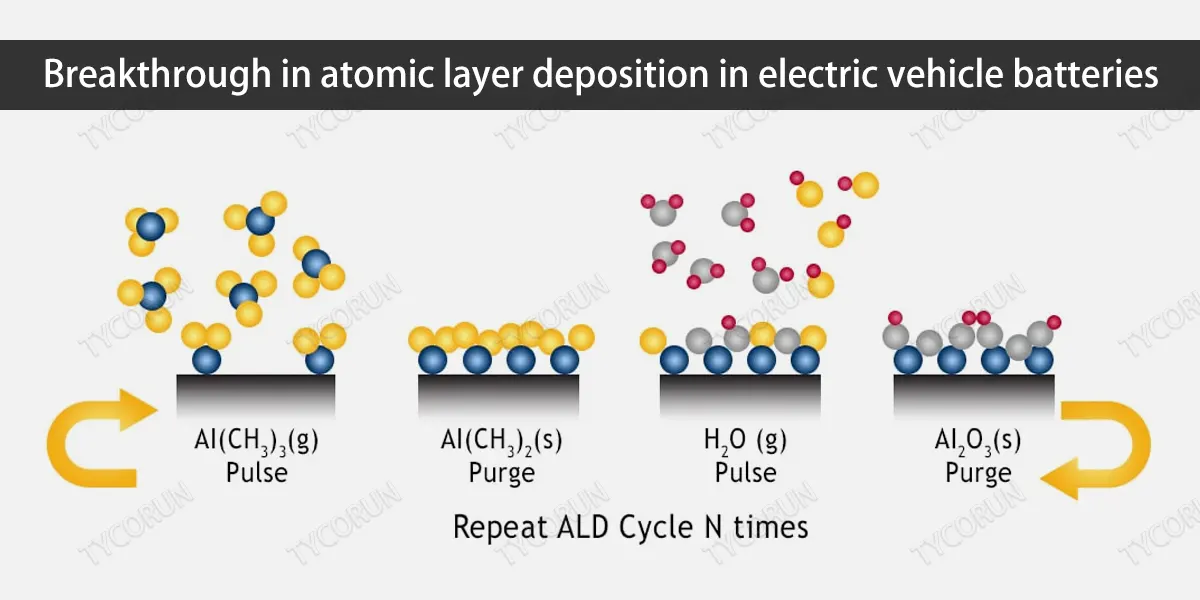
Picosun said that its ALD technology has been used to manufacture negative electrodes coated with nickel oxide, which has more than twice the energy storage capacity of traditional graphite negative electrodes and three times the energy density. Although third-party testing and verification are still underway, preliminary data revealed by Forge Nano show that the coating-enhanced battery has an energy density increase of about 15% compared with similar batteries currently on the market.
Forge Nano is hoping that all players in the battery production chain – from manufacturers of negative and positive electrodes to Tier 1 battery suppliers and even electric vehicle manufacturers – will see its ALD technology as an essential step in battery manufacturing. To this end, the company is building a 25,700 square meter “super factory” in North Carolina, which is expected to produce 1 GWh of “atomic armor” enhanced lithium-ion batteries per year by 2026.