Skip to content
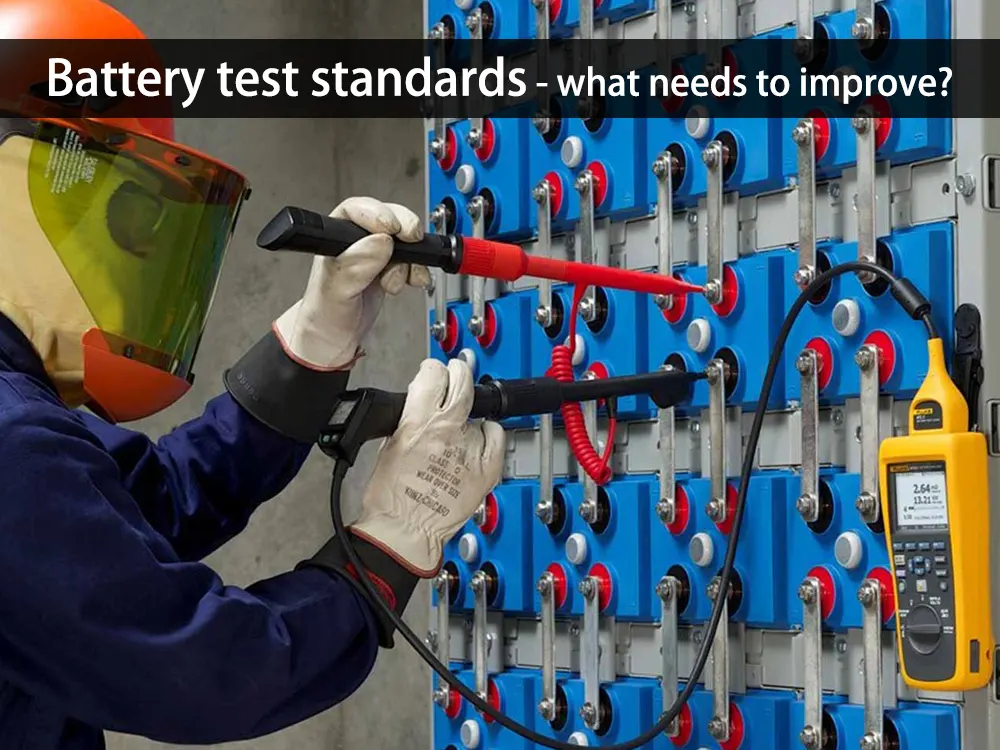

The US standards system includes UL 2580 for battery reliability and safety, SAE J2464 and J2929 for battery abuse testing, and SAE J2380 for vibration testing.
Other organizational standards include Germany’s VDA 2007 for performance and reliability testing of lithium-ion battery systems, and the Economic Commission for Europe’s R100.2 for electric vehicle safety and reliability requirements.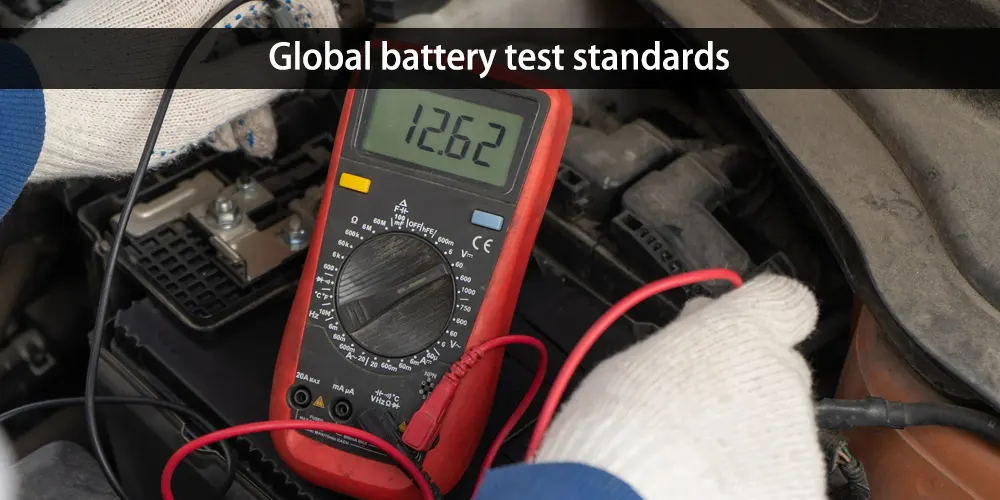
China’s GB/T standard covers requirements such as cycle life, safety, and electrical performance, while the “Technical Conditions for Safety of Electric Buses” includes higher technical requirements such as thermal runaway and expansion tests.
Battery test standards analysis
Scope of application
IEC 62660 series, QC/T 743, GB/T 31486 and GB/T 31485 are for battery cell and module level tests, while UL2580, SAE J2929, ISO12405 and GB/T 31467 series are for battery pack and battery system tests test.
In addition to IEC 62660, other battery test standards in global basically involve battery pack or system-level testing. SAE J2929 and ECE R100. 2 even mention vehicle-level testing.
This shows that the formulation of global battery test standards takes more account of the application of batteries in complete vehicles and is more in line with the needs of practical applications.
If you want to know about power batteries, you can click our top 10 power battery companies to learn more.
Test item content
On the whole, all test items can be divided into two categories: electrical performance and safety reliability, and safety reliability can be divided into mechanical reliability, environmental reliability, abuse reliability and electrical reliability.
Mechanical reliability, which simulates the mechanical stress of the vehicle during driving, such as vibration simulates the bumps of the vehicle on the road.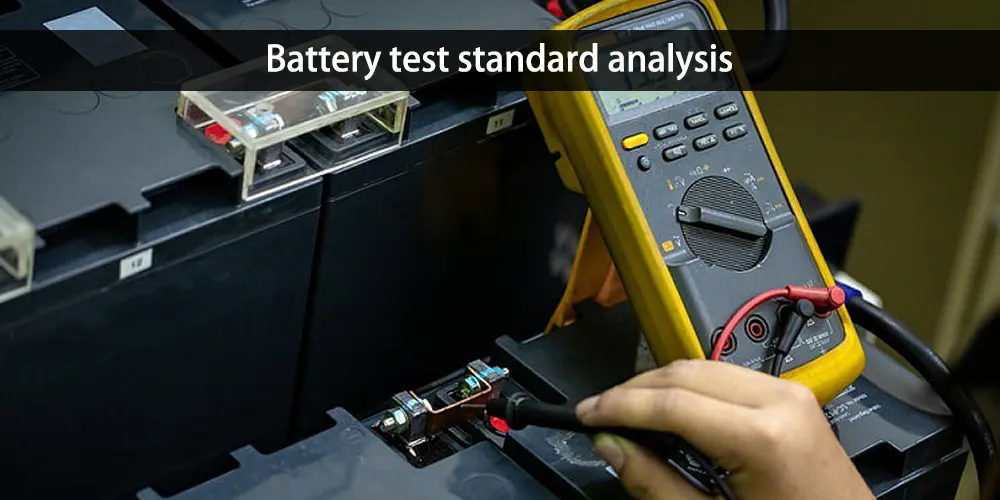
Environmental reliability, simulates the tolerance of the vehicle in different climates, such as temperature cycle simulates the vehicle’s temperature difference between day and night is large or when driving back and forth in cold and hot areas
Abuse reliability, such as fire, examines the safety of the battery when it is subjected to improper use
Electrical reliability, such as protection test items, mainly examines battery management Whether the system (BMS) can play a protective role at critical times.
In terms of battery cells, IEC 62660 is divided into two independent standards, IEC 62660-1 and IEC 62660-2, which correspond to performance and reliability tests respectively.
GB/T 31485 and GB/T 31486 are evolved from QC/T 743. In GB/T 31486, vibration resistance is classified as a performance test, because this test item is to investigate the impact of battery vibration on battery performance.
Compared with IEC 62660-2, the battery test items of GB/T 31485 are more stringent, such as adding acupuncture and seawater immersion, etc.
In terms of testing battery packs and battery systems, whether it is electrical performance or reliability, American standards cover the most test items.
In terms of performance testing, DOE/ID-11069 has more test items than other standards, including hybrid pulse power characteristics (HPPC), operating set point stability, calendar life, reference performance, and impedance spectroscopy, etc.
Strictness
For the same test item, the test methods and judgment criteria stipulated in different standards are also different.
For example, for the state of charge (SOC) of the test sample, GB/T 31467.3 requires the sample to be fully charged; ISO 12405 requires the power battery SOC to be 50%, and the energy battery SOC to be 100%.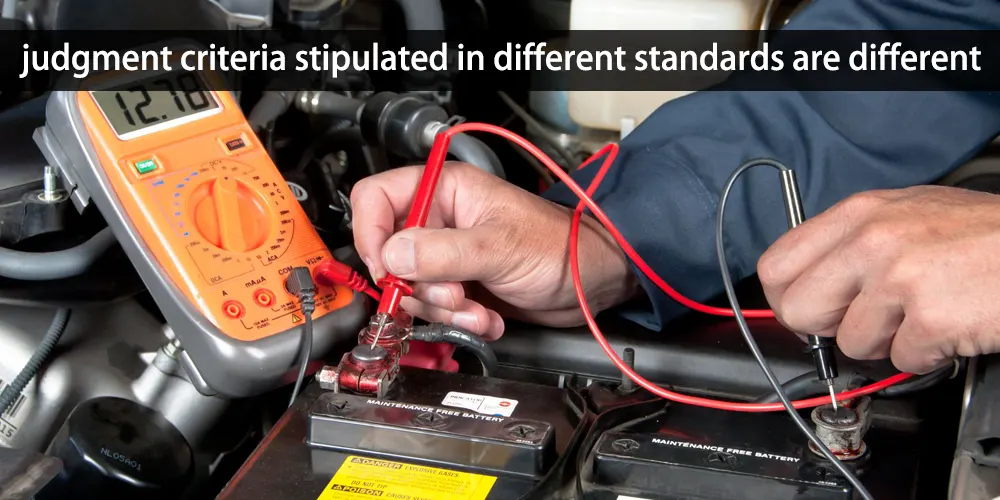
ECE R100.2 the SOC of the battery is required to be above 50%; UN38. 3 has different requirements for different test items, and some test items also require cycled batteries.
In addition, it is also required that high simulation, thermal test, vibration, impact and external short circuit must be tested with the same sample, which is relatively stricter.
For vibration testing, ISO 12405 requires the sample to vibrate at different ambient temperatures. The recommended high and low temperatures are 75°C and -40°C, respectively. Other standards do not have this requirement.
Insufficiency of the existing Chinese battery test standards
Although the formulation and release of relevant national standards has filled the gap in China’s power lithium-ion battery combination system and has been widely adopted, there are still deficiencies.
In terms of test objects: All standards only stipulate the test of new batteries, and there are no relevant regulations and requirements for used batteries.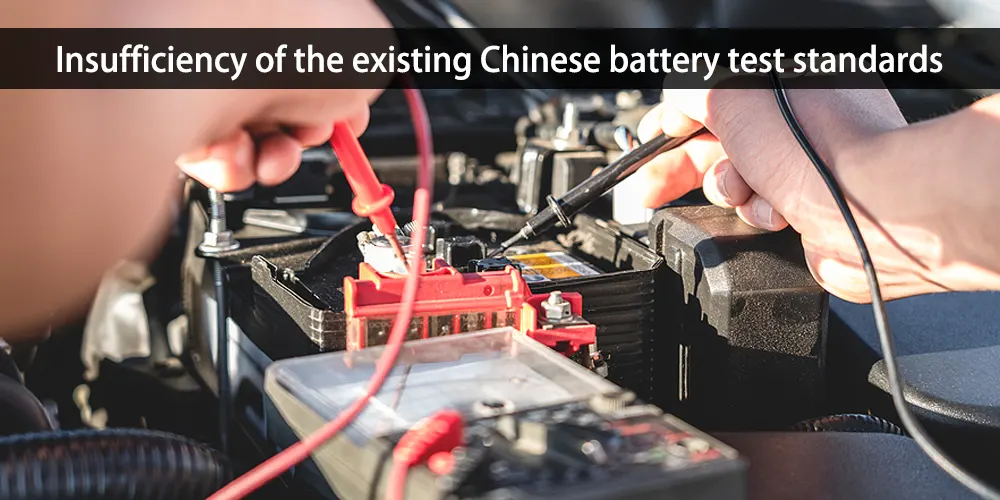
There is no problem with the battery when it leaves the factory, which does not mean that it is still safe after a period of use, so it is necessary to use it for different times. The battery is subjected to the same test, which is equivalent to a regular medical examination.
Judgment of results: The current judgment basis is relatively broad and single, only the regulations of no leakage, no shell rupture, no fire and no explosion, lacking a quantifiable evaluation system.
The European Committee for Automotive Research and Technology Development (EUCAR) divides the hazard degree of batteries into 8 levels, which has certain reference significance.
In terms of test items: GB/T31467. 3 lacks test content on thermal management and thermal runaway of battery packs and battery systems, and thermal safety performance is crucial to batteries.
How to control the thermal runaway of a single battery and make thermal runaway not sprawling, is of great significance.
In terms of test methods: the cycle life test of battery packs and battery systems takes too long, which affects the product development cycle and is difficult to perform well. How to develop a reasonable accelerated cycle life test is a difficulty.
Summary
Battery test standards are a crucial part of ensuring the safety and reliability of battery products. It is important to understand the global landscape of these standards as well as the deficiencies in existing standards.
It is essential to have a quantifiable evaluation system, include test items for used batteries, and test thermal management and thermal runaway of battery packs and battery systems.
Battery test standards can be improved through continuous updates and development, which will enhance the safety level of power batteries.