
The four stages of lithium battery charging
Trickle charge (low voltage pre-charge), constant current charge, constant voltage charge and charge termination.
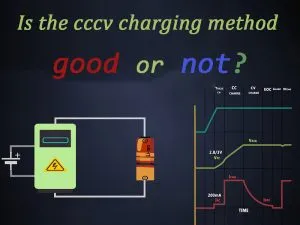
Stage 1: Trickle charge – Trickle charge is used to first pre-charge a fully discharged battery cell (recovery charge). The battery is first charged using a constant current of up to 0.1C when the battery voltage is below about 3V.
Stage 2: Constant current charging – when the battery voltage rises above the trickle charge threshold, the charging current is increased for constant current charging.
The current for constant current charging is between 0.2C and 1.0C. The current during constant current charging does not need to be very precise, quasi-constant current is fine.
Stage 3: Constant voltage charging – when the battery voltage rises to 4.2V, constant current charging ends and the constant voltage charging stage begins.
The current is based on the saturation level of the cell and as the charging process continues the charging current is slowly reduced from its maximum value and when reduced to 0.01C the charge is considered to be terminated. For optimum performance, the voltage regulation tolerance should be better than +1%.
Stage 4: Charge termination – There are two typical methods of charge termination: using a minimum charge current judgement or using a timer (or a combination of both).
The minimum current method monitors the charge current during the constant voltage charging phase and terminates charging when the charge current is reduced to the range of 0.02C to 0.07C. The second method timed from the start of the constant voltage charging phase and continued charging for two hours before terminating the charging process.
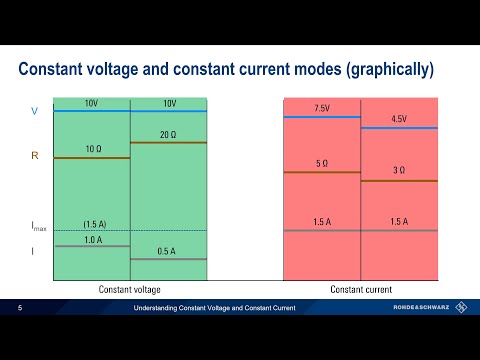
Why use constant current charging?
A typical way of charging a ternary lithium battery is to first detect the voltage of the battery to be charged, if the voltage is below 3V, a pre-charge is to be carried out first with a charging current of 1/10 of the set current, after the voltage rises to 3V, the charging process enters into constant current charging.
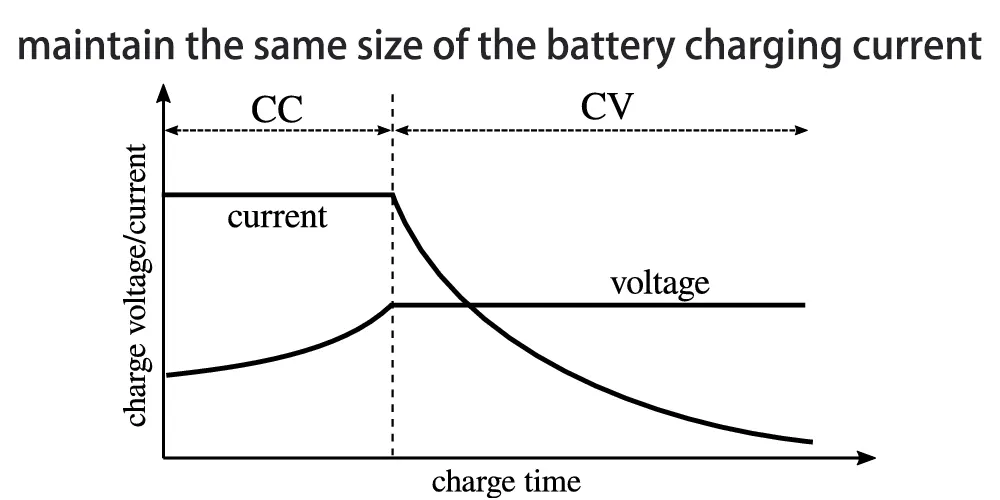
Throughout the charging process, the power supply charging voltage is generally adjusted or the resistor value in series with the battery is changed to maintain the same size of the battery charging current.
The advantage of this method is that it is simple to control and is suitable for charging batteries in series with multiple cells. Constant current charging, therefore, is often used as a link in the stage charging.
Can the charging time be reduced by increasing the current?
When charging at high currents, the internal polarisation of the Li-ion battery becomes severe and its voltage rises more rapidly, quickly reaching the charge cut-off voltage.
Although it appears that the constant current charging phase is much shorter, it does not actually charge much, so the time in the constant voltage charging phase increases accordingly, so the total charge cycle time is not reduced.
Advantages of constant current charging
Constant current charging can extend the life of the battery. When batteries are charged using fluctuating currents or voltages, this can stress the battery and thus shorten its service life. With constant current charging, the battery is charged at a controlled rate, thus reducing stress and extending battery life.
Another advantage of constant current charging is that the charging time can be optimized. When batteries are charged using fluctuating currents or voltages, it can take longer to fully charge the battery.
With constant current charging, the charging time is somewhat less than that required with fluctuating currents, as the battery is charged at a controlled rate. This is particularly beneficial in time-critical applications, such as electric vehicle charging stations or home solar panel used in remote areas.
Everything need to know about using constant current charging
Constant current charging is a popular technique for charging batteries efficiently and safely. This method of charging maintains a constant current throughout the charging process, reducing the stress on the battery and extending its life. However, to ensure you make the most of constant current charging, here are some considerations.
Battery compatibility
Before using constant current charging, it is important to ensure that the battery you are charging is compatible with this charging method. Not all batteries can withstand constant current, and some may be damaged or even destroyed as a result.
The best way to ensure you are using the correct charging method is to consult the battery manufacturer’s recommendations. For example, lithium-ion batteries are commonly used in electronic devices and can be charged using the constant current method. However, other types of batteries (e.g. lead-acid batteries) may not be compatible with this charging method.
Current limit
When using constant current charging, it is important to set the current limit appropriate for the battery you are charging. Charging a battery at too high a current can damage the battery, while too low a current can result in a slower charging time.
The current limit is usually expressed as a multiple of the battery capacity, where C is the battery capacity in ampere-hours. For example, a battery with a capacity of 2000mAh would have a C value of 2. It is recommended that a current limit between 0.1C and 0.5C is used.
Temperature monitoring
Constant current charging generates heat, which can affect the performance and life of the battery. It is important to monitor the battery temperature during charging to ensure that it remains within a safe range.
Most constant current chargers have a built-in temperature sensor that monitors the temperature of the battery and adjusts the charge rate accordingly.
Why do I need constant voltage charging?
Ideally, during charging, a few units of electrons pass through the external circuit and a few units of Li ions pass through the diaphragm and become embedded in the cathode. In this state, the voltage of the battery = anode voltage – cathode stage voltage.
However, in practice this is not the case. In practice, when the external circuit is switched on for constant current charging, the electrons run rapidly through the external circuit from the anode to the cathode, while the movement of the Li ions is somewhat impeded, so there is a lag in the movement of the Li ions.
At the charge cut-off voltage is reached, by which time the battery is cut off from charging. After the cut-off, the Li ions that have not been fully de-embedded will gain electrons and continue to exist in the anode material when the circuit is disconnected.
The excess electrons accumulated at the cathode will be lost when the circuit is disconnected. At this point, the actual voltage of the battery is lower than the cut-off charge voltage.
In practice, this is reflected in the fact that the constant current charge is not fully charged. Therefore, constant current charging needs to be followed by constant voltage charging, in order to bring the Li-ion battery’s storage capacity into full play.