Skip to content


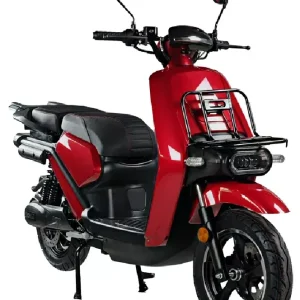
China’s exports of low-priced electric vehicles have already increased tensions with other countries, especially the United States and the European Union, which recently imposed new import tariffs on Chinese electric vehicles. Chinese electric vehicle manufacturers may compete with electric vehicle and fuel vehicle manufacturers in overseas markets, including Europe, which may make electric vehicles cheaper.
Driven by growing demand in other parts of the world and the strong competitiveness of Chinese automakers, electric vehicle exports will grow fastest in absolute terms and as a share of China’s total production, reaching 4.9 million units by 2030 (accounting for more than 20% of total production) and 9 million units by 2035 (more than 25%). About half of them are exported to the EU, and most of the rest are exported to the UK and Asia-Pacific.

Unlike the development of the electric vehicle industry, Chinese battery exports more than tripled between 2023 and 2030, and APS grew fourfold, due to investment in new battery production around the world and the growth of Chinese-produced electric vehicle exports. Given that China’s battery demand is growing faster than this, China’s battery export share will steadily decline from about 20% in 2023 to about 15% for STEPS and 18% for APS in 2035. The export share of APS is higher than that of STEPS because regions without a strong battery industry have higher demand, alongside a growing need for improved EV charging speed.
As the cornerstone of the EU economy, its automotive industry produced 12.1 million vehicles in 2023, of which 2.4 million were electric vehicles. In 2023, the total EU car imports were 3.3 million, of which more than 20% were electric vehicles. In terms of share, the main import sources are China (accounting for one-fifth of total imports), Turkey, Japan, South Korea and Morocco. EV battery size is also a key factor in these imports.
Since 2017, developing the EU’s Chinese lithium battery manufacturer to reduce dependence on imports has been a key goal of the European Commission and some national governments. To date, Europe has had almost no battery industry, as the technology was pioneered by Asian companies, the report shows. However, high investment enthusiasm has led to a significant increase in EU production, from 2GWh in 2019 to more than 60GWh in 2023. By the end of June 2024, the new capacity has exceeded 500GWh, which is estimated to involve an average annual investment of US$8.5 billion from 2025 to 2030.
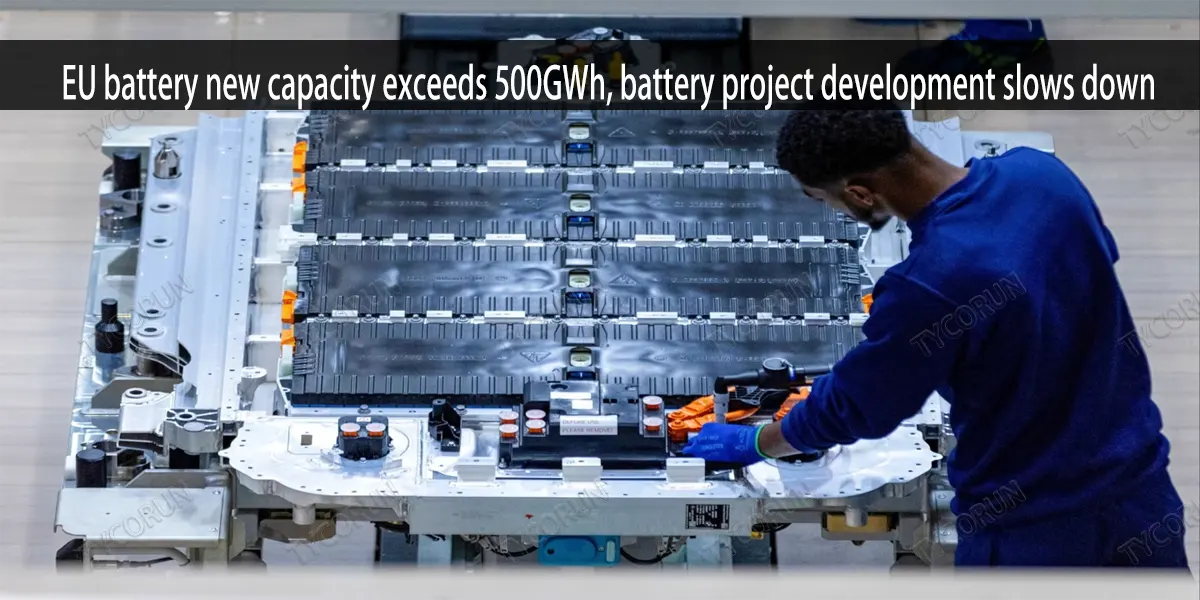
Nevertheless, signs of a slowdown in battery project development have begun to appear in the EU. For example, NorthVolt, Europe’s largest battery manufacturer, has postponed plans to expand production and recently announced layoffs; Chinese battery manufacturer SVOLT recently stopped plans to build a large factory in Germany… This slowdown is affecting the upstream part of the battery supply chain. Umicore, Europe’s largest cathode active material producer, is expected to barely break even in 2024 due to lower-than-expected demand.
The EU battery industry is facing fierce competitive pressure from China and the United States, not just because of its higher production costs. Chinese battery manufacturing giants, including CATL and BYD, are innovating rapidly in EV battery technology to produce next-generation lithium-ion batteries.
Meanwhile, with growing concerns about the impact of cheap electric vehicle imports from China on EU automakers, and evidence of alleged unfair subsidies from China, the European Commission decided to launch an anti-subsidy investigation in October 2023, and later announced that it would impose new tariffs on these Chinese imports for five consecutive years from 2024. These tariffs will be imposed on top of the existing 10% import tariff on all cars imported from outside the EU, alongside need battery capacity monitor.
The report analyzes that from the perspective of the impact of the new EU tariffs, these tariffs are likely to affect the automotive industry in both markets. In the short term, it may delay or restrict the plans of Chinese vehicle companies to enter the EU market, in which case China’s electric vehicle exports may shift to other non-EU countries with strong electric vehicle deployment targets, such as the UK and Norway.
These tariffs may also lead to a surge in imports of plug-in hybrid vehicles, which are currently duty-free in China because China is the world’s largest producer of such vehicles. In the medium term, Chinese vehicle companies are also likely to establish more manufacturing bases in EU countries. At the same time, some of the tariffs faced by vehicle companies may be passed on to consumers, thereby increasing the average price of electric vehicles in the EU.

In any case, the IEA believes that the current higher average retail price of electric vehicles in the EU market may help Chinese OEMs continue to export profitably, which is particularly attractive given the fierce competition in the Chinese market. Chinese electric vehicle manufacturers have made clear their ambitions for the European market.
In terms of batteries, due to early investments, nearly three-quarters of the EU’s battery demand in 2035 (equivalent to 530GWh) will come from Chinese production, and most of the rest will be imported from China. If all the EU’s promised battery production capacity is put into production on time, a similar share may be achieved as early as 2030. However, it should be noted that despite tariffs and non-tariff measures, the cost of EU battery production may still be higher than the cost of imports, especially from China.