Skip to content



Looking at the world, the German VDA size standard has 5 sizes, Japan’s Toyota has only 2 sizes, and South Korea has only 5 sizes. At the “Power Day” conference in 2021, German Volkswagen announced that it will fully promote standard batteries in 2023.
This move can improve the quality of power batteries and the efficiency of development and design while reducing production costs. In terms of cost, quality, and efficiency, specifying EV battery size is an inevitable trend to promote the healthy development of the industry.
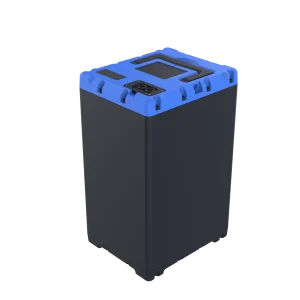
Problems caused by various ev battery size
As an emerging industry, the lithium battery industry has developed rapidly in technology, and the standard formulation cycle is long, which cannot meet the needs of existing technology development.
Manufacturing costs increase
Every time an enterprise changes the existing ev battery size, it involves various aspects such as the battery manufacturing process, manufacturing equipment, production process, etc., and needs to adjust the production line or install a new line.
As an asset-heavy industry, the annual production capacity investment of lithium battery production line is as high as 160-200 million yuan per GWh. The adjustment of the production line will also bring a series of equipment replacement costs.
In actual production, the equipment often needs technical modification just two years after it is put into use to produce new EV battery size and specifications, and only 20-50% of the equipment can be used compatible.
Once a new product model is launched, it means overthrowing and starting over, and the cost is huge. The cost can range from several billion yuan to tens of billions of yuan. Even the top 10 lithium ion battery manufacturers in China can hardly afford this cost.
If the establishment and implementation of standards are not accelerated, the cost and carbon emissions problems faced by manufacturers of batteries and lithium battery equipment will be hard to recover.
Difficult to guarantee quality
The ev battery size is not uniform, making it difficult to control the battery quality. The battery manufacturing process is relatively complicated.
It is necessary to pay attention to the quality of battery raw materials and monitor every process in the manufacturing process. Every step is related to the final quality of the battery.
The quality control of a single battery is so complicated. If multiple batteries of different sizes are produced at the same time, it will be more difficult in terms of manufacturing information extraction, quality inspection, and process analysis.
In the end, it is difficult to guarantee the quality of the batteries produced and the overall pass rate of battery manufacturing.
At present, the overall manufacturing qualification rate of China’s power lithium battery enterprises is 90%-94%. Every 1 percentage point increase in the qualified rate of 1GWh production capacity can save the enterprise 10 million costs (including hidden losses).
Specifying EV battery size and improving the manufacturing qualification rate are of great significance to the development of the enterprise.
Batteries are more difficult to recycle
Power battery recycling is an important link in the entire industrial chain. Inconsistent sizes and specifications will increase the difficulty of battery recycling.
The battery life of electric vehicles is about 5 years. According to estimates, from 2018 to 2020, China’s cumulative scrap power batteries will be about 120,000 to 200,000 tons, and it may reach 350,000 tons in 2025. By 2030, the power battery recycling market will exceed 100 billion RMB.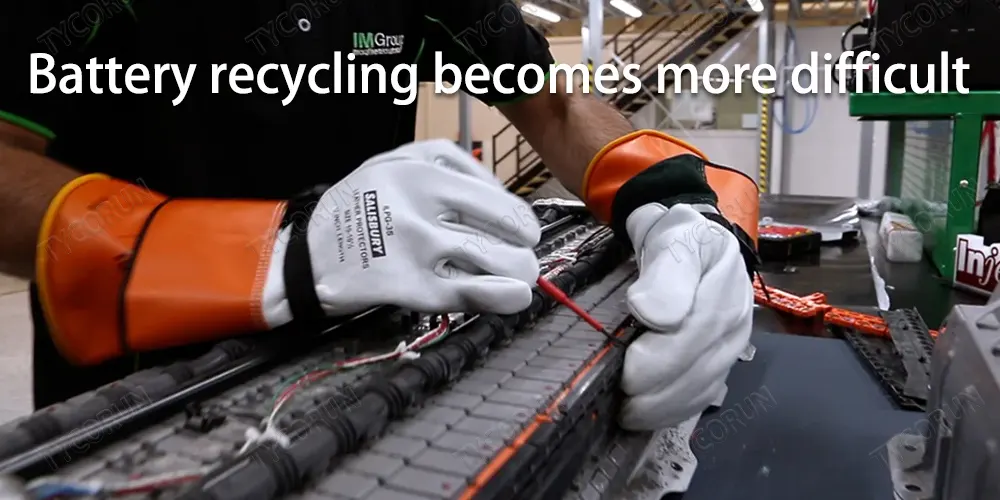
A wide variety of batteries will increase the number of equipment for battery recycling companies, make recycling more difficult, and increase costs. Thereby reducing the efficiency of battery recycling and the quality of reuse, it is difficult to realize large-scale operation.
Even individual battery recycling companies only recycle batteries of specific specifications and sizes, which is extremely detrimental to the entire industry.
Hinder the development of electric vehicle industry
Power battery is one of the core components of electric vehicles, accounting for about half of the cost of the vehicle. Its size and weight will affect the layout of the vehicle, battery shape, battery capacity and other aspects.
At present, power battery products on the market vary in size, shape, capacity, and voltage specifications. The poor versatility and interchangeability of batteries increases the difficulty of vehicle matching and battery procurement for electric vehicle manufacturers, and also reduces the feasibility of their technology accumulation.
Suggestions for standardization of ev battery size
Joint Research and unified standards
At present, battery materials, battery products, battery safety, manufacturing and equipment belong to different standard committees, resulting in chaotic situations such as unmanned management, cross management, low efficiency, and inconsistency.
The China National Standardization Management Committee should set up a special battery standardization technical committee (TC) to unify and standardize all standards in the battery industry.
When formulating standards, battery-related energy manufacturing, management and use departments, as well as related companies in the entire power battery industry chain should be involved.
Discuss together and control the specifications of power and energy storage battery cells and modules to about 10-12. Make it possible for batteries from different manufacturers and different purposes to be interchangeable.
Carry out joint research on the accurate definition of size specifications and battery performance, use requirements, recycling convenience, etc., to ensure the rationality of ev battery size.
Anticipate and respond to short-term labor pains
At present, the development of the battery industry is uneven, and there are leading companies like CATL and BYD.
But more are small enterprises. Most of these enterprises have high energy consumption, backward production technology, prominent safety and environmental problems.
After the battery industry standard is formulated and implemented, backward enterprises will inevitably be eliminated.
It is necessary to strengthen the guidance of mergers and reorganizations, layout adjustments, transformation and upgrading of the battery industry, and give certain upgrade compensation to the production lines built in the past that cannot meet the standard size specifications.
Summary
The unification of ev battery size and manufacturing is related to the common development of multiple industries.
This article mainly presents the status quo of battery standardization and analyzes the problems caused by various sizes and specifications. It also put forward some suggestions for standard research and development, promotion and application.
All is to look forward to providing new ideas and directions for battery solutions for the development of power battery size specifications and manufacturing standardization in the future.