Skip to content
How Do Lithium Batteries Catch Fire and How to Prevent It
Lithium batteries have become an essential component of modern life. Because of its exceptional durability and high efficiency, this technology is used in nearly every device. But behind this ease of use is a crucial and frequently raised question: how do lithium batteries catch fire?
Understanding how lithium batteries catch fire is critical for users and manufacturers. These batteries have a lot of energy stored in a tiny amount of space. When the internal balance is disrupted, such as by excessive heat, pressure, or internal damage, chemical reactions can become dangerous. Thermal runaway, a sudden and uncontrollable rise in temperature that eventually results in a fire or explosion, may occur under extreme circumstances.
As a result, this article will discover how lithium batteries catch fire in order to understand the causes and how to prevent them. This knowledge is important because it allows us to use lithium batteries more safely while maintaining the benefits we receive.


Understanding How Lithium Batteries Work
This technology uses chemical reactions inside the battery cell to effectively store and release energy. An anode, a cathode, and an electrolyte that serves as an intermediary medium for ion flow make up each lithium battery’s three primary parts.
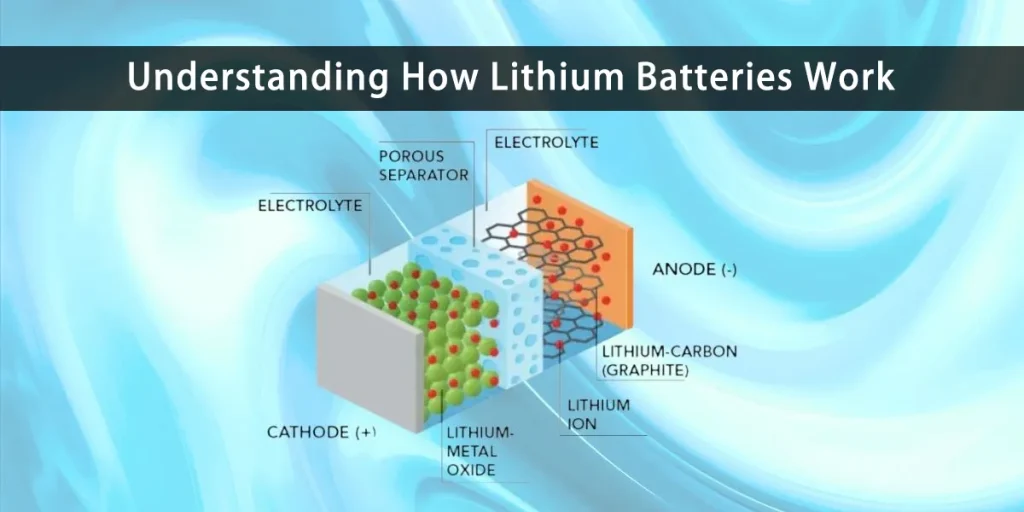
When the battery is charged, lithium ions are transferred from the cathode to the anode and stored there. When used, these ions return to the cathode via the electrolyte, producing an electric current that powers the device. This process is repeated throughout the battery’s lifetime, which explains why lithium battery is so efficient.
However, when there is a systemic disruption, this mechanism also explains how and why lithium batteries catch fire. If the separator-the thin layer that separates the anode and cathode-is damaged, electric current will flow uncontrollably, generating excessive heat. This heat can initiate a rapid chemical reaction, resulting in a fire or even a small explosion.
As a result, understanding how lithium batteries work is critical not only from a technological standpoint, but also for safety. Users and manufacturers can be more watchful in maintaining temperature stability, material quality, and the protection systems employed in each device by understanding how lithium batteries catch fire from the standpoint of their internal structure and processes.
You can also read Inside a Lithium Ion Battery for more detail.
How Do Lithium Batteries Catch Fire?
Even though lithium batteries are built with strict safety measures, internal processes can occasionally malfunction and endanger users. To understand how lithium batteries catch fire, we must consider how heat, pressure, and chemical reactions within the cell can act as ignition sources.
- First, thermal runaway is the primary cause of lithium battery fires. This occurs when the battery’s internal temperature rises too quickly and becomes trapped. The electrolyte fluid evaporates as a result of the sharp increase in temperature, which also raises the cell’s internal pressure. If the pressure is not controlled, the battery may explode or catch fire.
- Second, damage to the internal components of lithium batteries, such as when they are dropped, compressed, or punctured, is a common cause and method for them to catch fire. This can result in a short circuit between the anode and cathode, producing excessive heat.
- Third, when a battery is charged above its safe capacity, the excess electrical current causes the temperature inside the cell to rise. If this continues for an extended period of time, the heat can cause unstable chemical reactions, which are one of the primary causes of lithium battery fire.
- Fourth, lithium batteries can also catch fire in extreme temperatures. Storing or using devices in hot environments, such as a closed car during the day, can speed up the internal heating process and increase the risk of fire.
- Fifth, lithium battery fire risk can be increased by battery products with poor build quality or design. For instance, unstable electrolyte materials or excessively thin separators may result in the failure of the battery’s protection mechanism.
Understanding how lithium batteries catch fire helps us realize that these incidents do not occur suddenly. Typically, there are triggers that can be avoided with proper use and maintenance.
Common Causes of Battery Fires in Daily Use
- Using an incompatible charger: many people are not aware that the first cause of lithium battery fires can be using an incompatible charger. Cheap or counterfeit chargers frequently do not have an adequate current control system, which lets too much current flow into the battery and leads to overheating.
- Overcharging: leaving a device plugged in overnight may appear harmless, but it is a leading cause of lithium battery fires. When a battery is fully charged but continues to receive current, the internal temperature rises, hastening cell degradation.
- Exposure to high temperatures: placing your devices in a hot environment, such as direct sunlight or a closed car, can result in extreme temperatures. These conditions accelerate chemical reactions within the battery, which explains why lithium batteries catch fire in everyday life.
- Use of damaged or swollen batteries: batteries that are swollen, cracked, or smell strange should be replaced immediately. These signs point to internal damage that may result in a short circuit, which is one of the primary causes of lithium battery fires.
- Falling or being hit hard: when a device falls, the battery’s protective layer may crack without your realizing it. Consequently, unstable movement of lithium ions can lead to overheating and possible fires. Because of this, instances of lithium batteries catching fire occasionally happen after a laptop or cell phone has fallen.
- Counterfeit or low-quality products: non original batteries are frequently produced with insufficient safety precautions. Because they lack an internal protection system, lithium batteries are more susceptible to overheating and short circuits, which are two major causes of fires.
You may also read EV battery degradation for more insight
Warning Signs Before a Lithium Battery Catches Fire
Before a fire occurs, lithium batteries typically exhibit certain signs that can serve as early warnings. Understanding these symptoms allows us to know when to stop using the device and avoid dangerous situations. Here are some warning signs:
- Even when not in heavy use, the battery feels extremely hot. An abnormal increase in battery temperature may be an early indicator of unstable chemical reactions within the battery.
- The battery swells and changes shape. This shape change occurs when gas builds up inside the cell as a result of abnormal chemical reactions. This is one of the most obvious signs that the battery is no longer safe to use.
- There is an unusual smell that is similar to burning plastic. If the device or battery emits a strong smell, such as chemical smoke, it means that the material inside the cell has begun to decompose due to high temperatures.
- The device shuts down unexpectedly or experiences a significant power loss. A sudden drop in power may indicate internal damage or a short circuit within the battery.
- There is a hissing sound or light smoke. This is the most serious indication, and you should get away from the device immediately. At this point, a chain reaction may have begun, potentially leading to an explosion.
Emergency Steps if a Battery Catches Fire
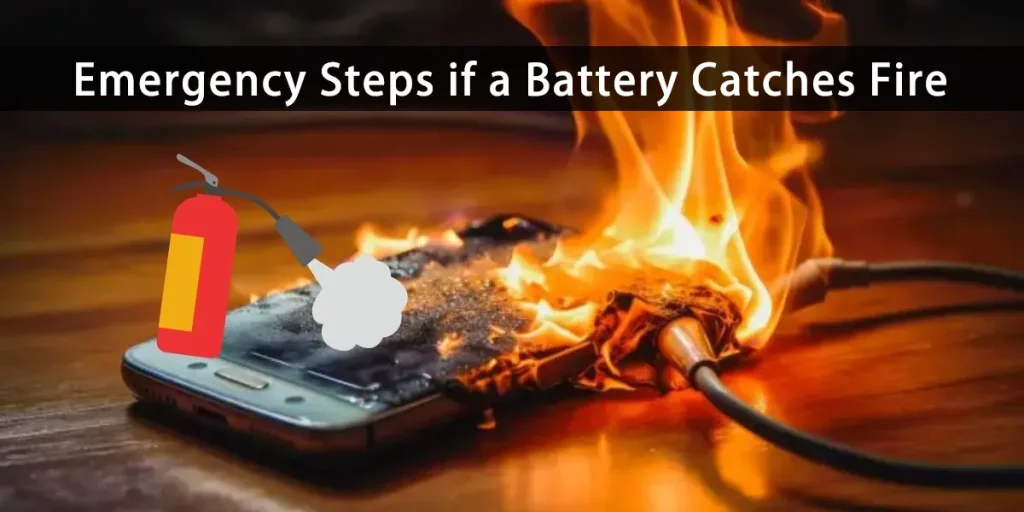
- Do not panic and immediately move away from the fire’s source.
As soon as you notice the first signs of a lithium battery catching fire, such as smoke or sparks, get away from the device. Lithium batteries can explode unexpectedly because the pressure of hot gas inside the cell rises quickly. - Turn off the power supply.
If the device is still plugged in, unplug the cord immediately, but only if it is safe to do so. The continued flow of electricity can exacerbate the situation and hasten the process by which lithium batteries catch fire. - Use the appropriate fire extinguisher.
Never pour water directly on a burning lithium battery. Water can react with lithium metal, increasing the fire. Use a dry chemical powder or Class D fire extinguisher, which are made especially to put out metal fires. If a lithium battery fire has already begun, this approach is far more effective at putting it out. - Remove flammable objects from the vicinity
If possible, remove any paper, cloth, or plastic materials from the area. Battery fires can spread quickly due to high temperatures-understanding this is one of the most important aspects of how lithium batteries catch fire in enclosed spaces. - Do not touch batteries that have just been extinguished
Even after the fire is extinguished, the battery can maintain extremely high temperatures for several minutes. Allow it to completely cool before moving it to avoid burns or additional chemical reactions. - Report or dispose of it properly
Once the situation is under control, do not dispose of the battery in the regular trash. Contact a recycling service or an electronic waste disposal facility. Batteries that have been burned can still be dangerous and may catch fire again if not handled properly.
Safe Practices to Prevent Lithium Battery Fires
Understanding how lithium batteries catch fire informs us about what to avoid and how to keep our devices safe in the long run. Following a few simple habits can significantly reduce the risk of fire while maintaining convenience. Here are some safe practices that can be implemented:
- Use the original charger and cable: the device’s built-in charger is equipped with a safety system that corresponds to the battery capacity. Using fake accessories can result in unstable electrical currents, which are frequently the primary cause of lithium battery fires.
- Avoid overcharging: avoid charging your device overnight. Even though many modern devices have automatic features, there is still the possibility of overheating. Avoiding overcharging battery puts you one step closer to preventing lithium batteries from catching fire.
- Store in a cool, well-ventilated place: lithium batteries are extremely sensitive to heat. Excessively high room temperatures can speed up chemical reactions inside the cells, which explains why lithium batteries frequently catch fire in enclosed areas without ventilation.
- Keep away from metal objects or water: contact with metal or liquids can result in a short circuit, which is one of the most dangerous factors in lithium battery fires. When batteries are not in use for an extended period of time, store them in a separate container.
- Check the condition of the battery regularly: batteries that swell, change colour, or emit a strange smell are signs of internal damage. Don’t wait until they’re completely damaged; these are frequently the first signs of a lithium battery catching fire.
- Avoid direct exposure to sunlight: placing your laptop or cell phone on the hot dashboard of your vehicle can hasten overheating. Lithium batteries frequently catch fire in harsh conditions like these without you noticing.
- Use the device according to the manufacturer’s instructions: each battery has a set charging limit and operating temperature. Ignoring these guidelines increases the likelihood of lithium batteries catching fire without the user’s control.
Conclusion
It can be concluded that lithium batteries are an important technology that supports almost all modern devices thanks to their efficiency and durability. However, understanding how lithium batteries catch fire is critical so that we can use this technology safely and responsibly.
Most battery fires are not accidental, but rather the result of preventable causes such as overcharging, excessive heat exposure, or the use of low-quality chargers and batteries. Understanding the causes and early warning signs, as well as implementing safe habits like using original chargers, storing devices in cool places, and checking battery conditions on a regular basis, can significantly reduce the risk of fire.
Furthermore, understanding how lithium batteries catch fire allows us to balance the convenience of technology with safety concerns. When used properly, lithium batteries will remain a significant invention that improves modern life without endangering anyone.
FAQS
Do lithium batteries catch fire when not charging?
Yes, they can. Although rare, lithium batteries can still catch fire even when not charging. This is usually caused by internal damage, exposure to high heat, or aging batteries with unstable chemical structures.
Which lithium batteries do not catch fire?
In general, no lithium battery is completely risk-free, but Lithium Iron Phosphate (LiFePO4) batteries are known to be much more stable and heat-resistant than other types of lithium batteries. Therefore, these batteries are less prone to catching fire.
Can you put out a lithium battery fire with water?
It is not recommended. Water can actually exacerbate the chemical reaction in a lithium battery fire. The best way is to use a Class D fire extinguisher or dry sand to stop the reaction and prevent the fire from spreading.