Skip to content
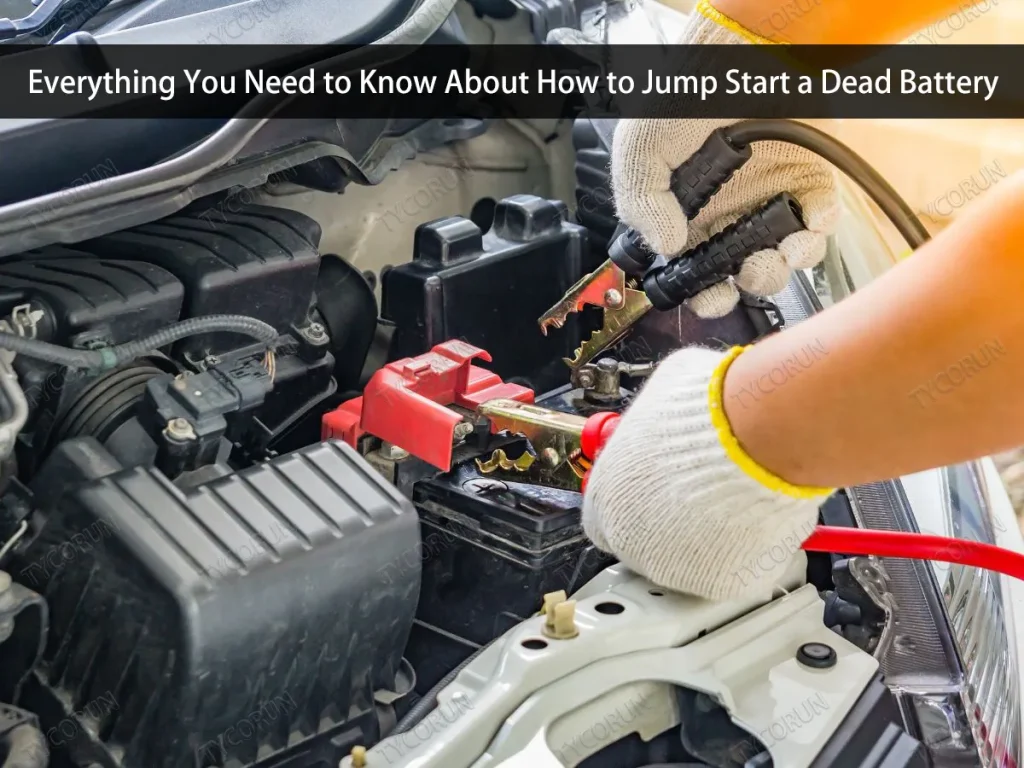
Everything You Need to Know About How to Jump Start a Dead Battery
Have you ever been in a rush and found that the battery in your vehicle is dead and won’t start? Panic is a common reaction to this situation, especially if you are unclear of how to respond. Knowing how to jump start a dead battery is important in this situation. You can restart the vehicle without immediately calling a mechanic if you know the proper procedures.
Even though jump starting a dead battery is not as difficult as people think, many people are still confused by the procedure. To ensure the safety of the battery, your vehicle, and yourself, it is important that you follow the process properly. The causes of a dead battery, the tools needed, safe procedures, and advice on avoiding future issues will be explored in detail in this article on how to jump start a dead battery.


What Common Causes of a Dead Battery?
Understanding the cause of the battery’s death is important before understanding how to jump start a dead battery. You can more easily stop the same thing from happening again if you know what caused it. The following are some typical reasons why batteries die:
- Forgetting to turn off the device: the battery can be fast drained by leaving electronic devices, radios, or car lights on when the engine is off.
- Old battery: Usually, batteries last 3 – 5 years. Their capacity then decreases, increasing the probability of failure.
- Extreme weather: battery degradation can be accelerated by extremely high or low temperatures. Batteries have trouble starting in cold weather, and their internal fluid drains more quickly in hot weather.
- Rarely used: rarely used devices or vehicles can slowly decrease the battery’s capacity.
Electrical system problems: when the engine is operating, the battery may not charge correctly due to a short circuit, unsecured wires, or an incorrect alternator.
Tools You Need Before Jump Starting
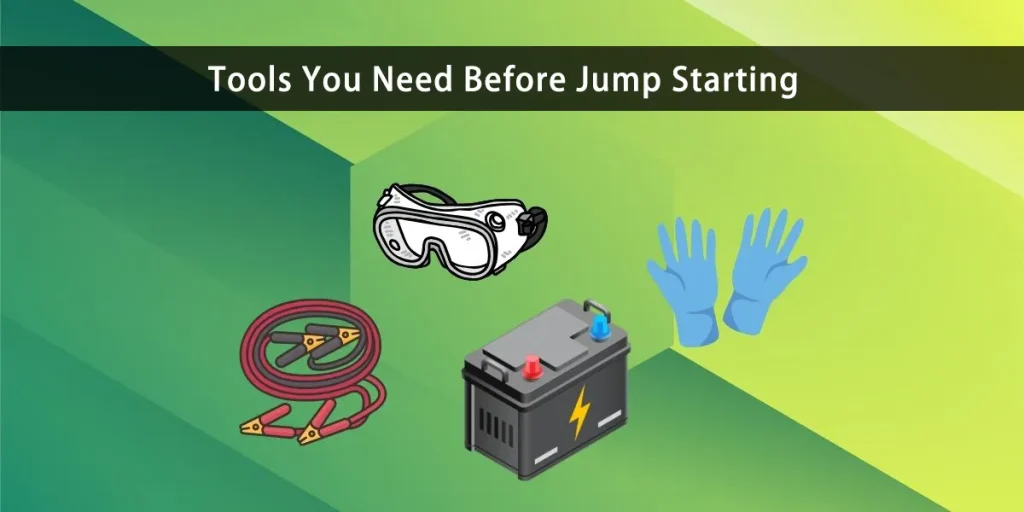
- Cables for jumpers
Long enough (about two to three meters) and high-quality jumper cables are important. Too-short or thin cables can limit the amount of electricity that can flow. - Another healthy battery or a donor car
The dead battery cannot be started without a power source. Usually, you can use a spare battery, but you can also use another vehicle with a healthy battery. - Portable jump starter (optional)
Having a portable jump starter might be really helpful if you are often traveling long distances. It’s useful and does not require assistance from another vehicle. - Safety glasses and gloves
Although not required, it is important for safety. Small electrical sparks might happen when the connections are connected. - Vehicle/device manual (optional)
Some cars have jump-starting regulations. You can ensure you connect the connections correctly by consulting the instruction book.
Step-by-Step: How to Jump Start a Dead Battery
It’s time to practice how to jump start a dead battery once all that is needed has been prepared. To ensure safety and efficacy, carefully follow these steps:
- Step 1: ensure a safe position
Avoid touching the car with the dead battery, but park the donor car next to it. Prior to beginning, turn off both engines. - Step 2: attach the red cable (positive +) to the dead battery.
Attach the red jumper cable to the dead battery’s positive terminal. - Step 3: attach the red cable (positive +) to the donor battery.
Attach the red cable’s opposite end to the donor battery’s positive terminal. - Step 4: attach the black cable (negative −) to the donor battery.
Attach the black jumper cable to the donor battery’s negative terminal. - Step 5: attach the black cable to the dead car’s ground.
Connect the black cable to an untreated metal surface, such as a bolt on the frame or engine. To avoid sparks, avoid connecting it straight to the dead battery’s negative contact. - Step 6: turn on the engine of the donor car.
To give the dead battery time to get electricity, let it run for 2 – 3 minutes. - Step 7: try using the dead battery to start the car.
Allow the engine to run for a few minutes if it starts in order to allow the battery to recharge. - Step 8: disconnect the cables in reverse order
The black cable on the ground should be placed first, followed by the black and red cables on the donor and dead batteries, etc. - Step 9: drive the vehicle
To help the battery recharge, it is recommended to drive it for 15 to 20 minutes after it starts.
Safety Tips During Jump Starting
- Check the condition of the battery first.
Never try to jump start a battery that is damaged, leaking, or smells strongly. It might be harmful. - Avoid touching the cables.
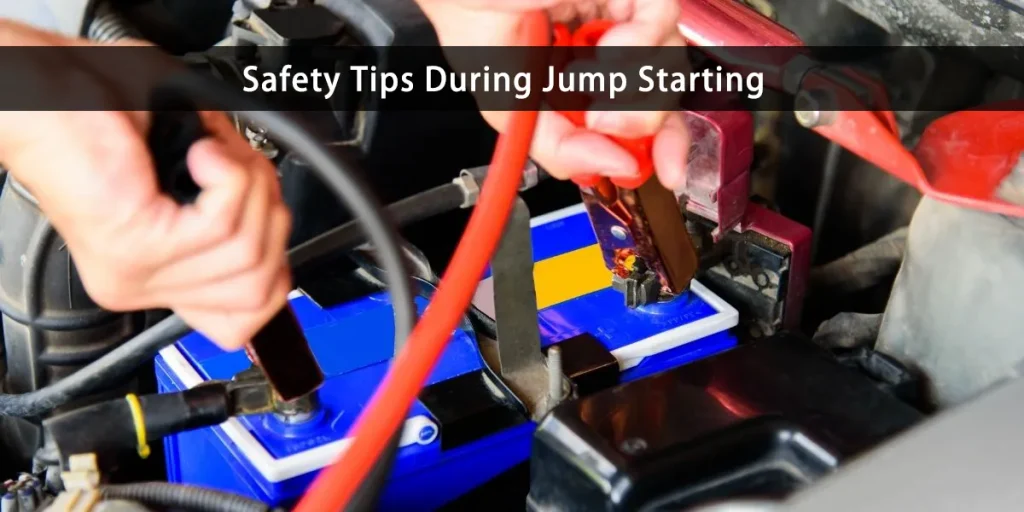
After connecting the jumper cables to the batteries, the red and black ends should never come into contact with one another. An electrical spark may result from this. - Ensure the connection is strong and secure.
The clamps need to be securely attached to the ground metal or battery connections. If loose, sparks could appear or the electrical supply could be cut off. - Stay away from flammable areas
Do the jump start in a clear space, away from flammable materials like gas and gasoline. - Follow the correct order for connecting and disconnecting cables
In order to connect the cables, connect the dead battery’s positive terminal to the donor battery’s positive terminal, then connect the donor battery’s negative terminal to ground. As you disconnect, switch the order. - Use protective equipment
Safety glasses and gloves can reduce the chance of electric sparks.
Can a dead lithium battery be jump-started?
Previously, we discussed how to jump start a dead battery in a regular (lead-acid) battery, but what about lithium batteries? Are they jump-startable as well? Not always, and in fact, it is often not suggested. In difference, when a lithium battery falls, its internal protective system (battery management system) automatically cuts off the current. As a result, the standard jump start technique frequently fails.
So, how can a dead lithium battery be started?
First, use a portable lithium jump starter. This is a much safer option than using traditional jumper cables because it is a specialist device made for lithium batteries.
Second, try using a lithium-specific charger to recharge the battery. Sometimes the battery will go into protection mode, but it can be recovered with a constant charge.
Third, the only option is to replace the battery if it is still totally dead because it is possible that the battery cells are permanently harmed.
You may read these article about more lithium battery:
Lithium battery recycling
lithium battery standards
lithium battery not charging
Preventing Future Dead Battery Problems
- Regularly check the state of your battery.
Look for any dirt or rust on the battery terminals. To ensure smooth electric current flow, clean the area right away if there is white crust. - When the engine is off, avoid leaving electronics running.
When the engine is off, leaving lights, air conditioning, or music on can quickly drain the battery. Make it a practice to check before getting out of the car. - Use your vehicle regularly
The battery in your vehicle might start to lose power if it is not used often. Warm up the engine at least 1 or 2 a week. - Avoid parking in extreme weather
While low temperatures impair the battery’s ability to function at its best, excessive heat may speed up the evaporation of battery fluid. - Consider using a portable jump starter
In the event that the battery unexpectedly dies, this tool could save your life. Especially for people who take long trips in often. - Replace the battery on time
Usually, batteries last 3 – 5 years. It is preferable to replace it rather than constantly jump starting it if it has expired its useful life and dies often.
Conclusion
Understanding how to jump start a dead battery allows you to restart your vehicle without needing to immediately contact a mechanic. The most important thing is to always put safety first and follow the instructions in the right order.
Along with knowing how to jump start a dead battery, it is important to comprehend the typical reasons why batteries fail, the equipment required, and preventative measures. Conventional jump start techniques are not always appropriate for lithium batteries in especially; instead, a specialized device is recommended.
With this information, you can take better care of your battery, be more prepared for emergencies, and lower your chance of experiencing dead batteries in the future.
FAQS
What to do if jump start does not work?
Recheck the jumper cable connections and ensure they are clean and tight on the terminals
How long to drive a car after jumping?
After jump starting your car, drive for at least 30 minutes, ideally at highway speeds, to allow the alternator to begin recharging the battery, but don't assume the job is done.
Is it better to jump or charge a car battery?
A jump starter is not necessarily better-it serves a different purpose.