Skip to content


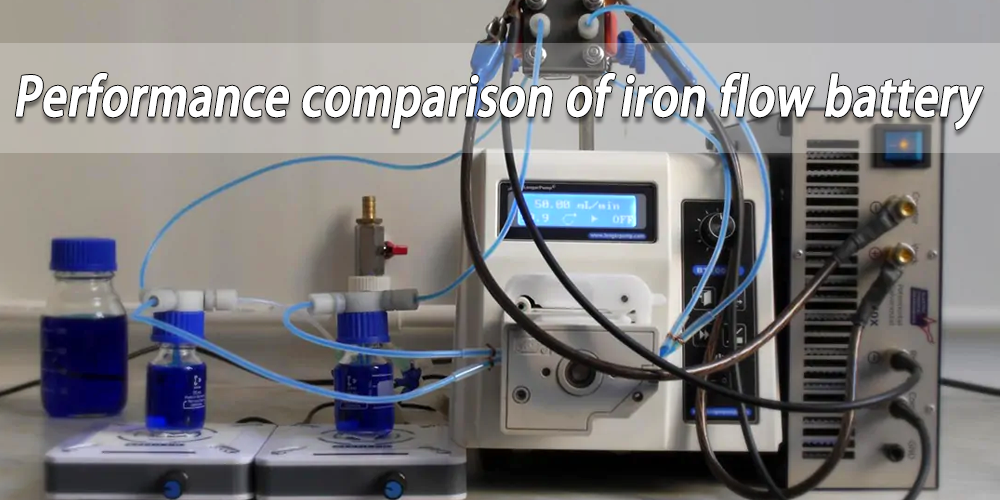
As can be seen from the above table, iron flow battery has obvious cost advantages. The energy efficiency of iron-chromium flow battery and zinc iron flow battery is closest to that of all-vanadium flow battery, but the capacity decay rate of iron-chromium flow battery is higher, and the energy efficiency of zinc-iron flow battery drops significantly at high current density.
The performance of iron-vanadium, iron-titanium and all-iron flow batteries is far behind that of all-vanadium redox flow batteries.
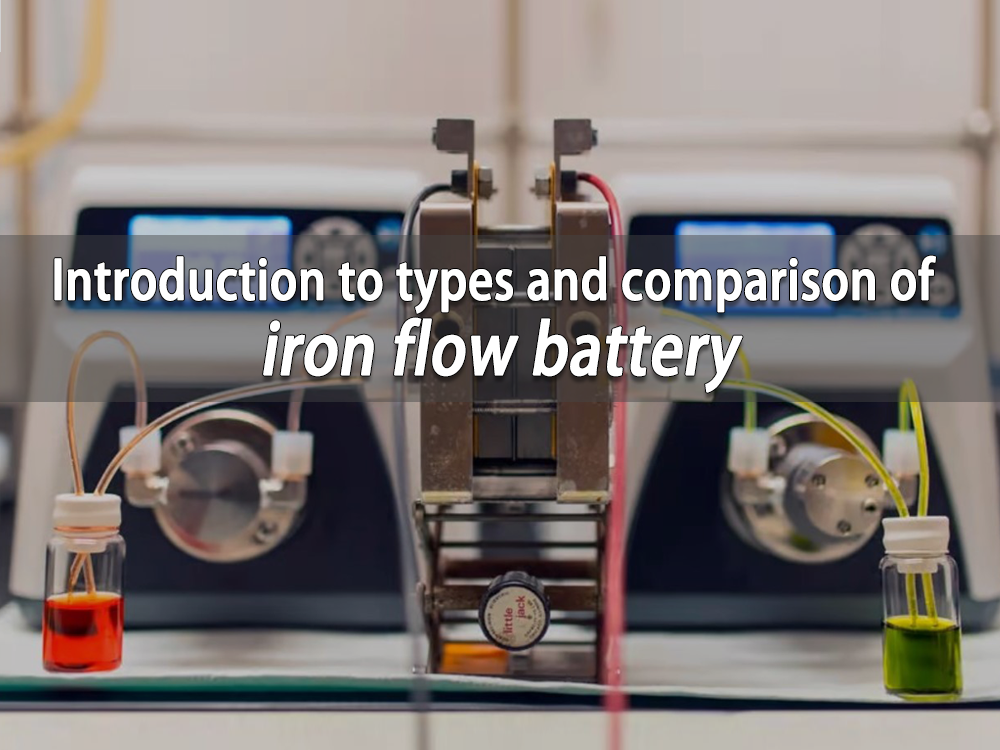
Types of iron flow battery
Iron chrome flow battery
In the 1970s, the research on iron-chromium flow battery was carried out, which is the earliest flow battery system and the most researched and demonstrated iron flow battery.
The battery uses Fe2+/Fe3+ as the cathode and Cr3+/Cr2+ as the anode. Its advantage is that the cost of the active material is low, but the slow electrochemical reaction kinetics of the anode and the side reaction of hydrogen evolution affect its performance.
For iron-chromium flow batteries, research on key materials such as electrodes and electrolytes should be focused on to solve the problems of slow reaction kinetics and hydrogen evolution at the anode, so as to improve the performance of flow batteries. In addition, for the application requirements of large-scale energy storage, the research on stack design and system integration of iron-chromium flow battery should be promoted.
Zinc iron flow battery
In 1979, researchers proposed an alkaline zinc iron flow battery with Fe(CN)63-/Fe(CN)64-, Zn2+/Zn as electrode pairs, and the energy efficiency reached 74%.
However, the zinc anode of this system is prone to generate irregular zinc dendrites, which grow continuously during the cycle, and eventually pierce the battery membrane, causing a short circuit of the battery, which seriously affects the cycle life and reliability of the battery.
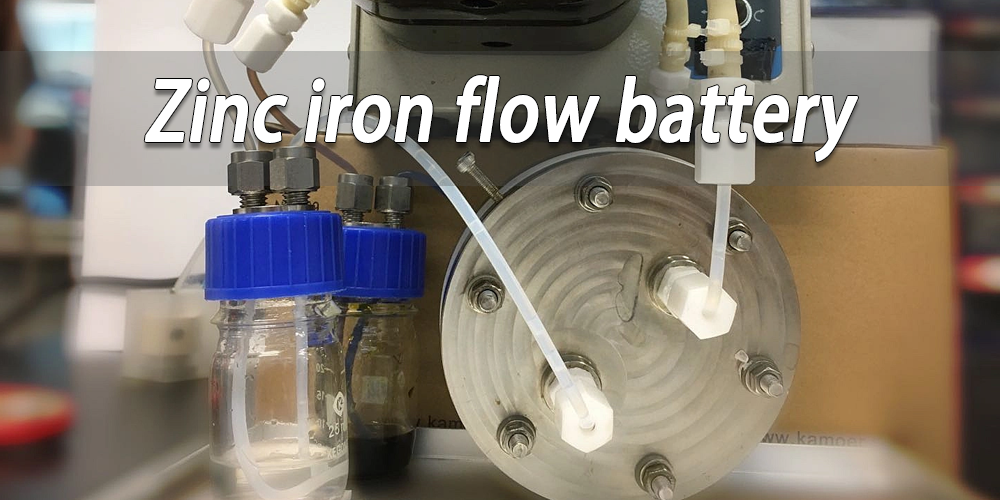
In response to the above problems, the researchers focused on the study of negatively charged separators. Compared with the all-vanadium flow battery, the zinc iron flow battery has obvious cost advantages, and the battery has the potential for industrial application.
Iron-titanium flow battery
In addition to iron-chromium flow batteries, experts have also discussed low-cost iron-titanium flow battery systems with Fe2+/Fe3+ as cathode and Ti3+/Ti2+ as anode.
Iron-titanium flow batteries are limited by the slower electrochemical reaction kinetics of the anode and lower energy efficiency, which does not have advantages compared with other flow battery systems. Therefore, the research on iron-titanium flow batteries was mostly concentrated in the 1980s, and there were few related reports after that.
Iron vanadium flow battery
In order to combine the advantages of vanadium redox flow battery and iron-chromium flow batteries, the Pacific Northwest National Laboratory of the United States proposed a flow battery with V2+/V3+ as the anode and Fe2+/Fe3+ as the cathode. Compared with Fe-Cr flow batteries, the V3+/V2+ of the anode is more electrochemically active than Cr3+/Cr2+, avoiding the use of expensive catalysts.
Compared with all-vanadium redox flow batteries, the cathode electrolyte avoids the use of highly oxidative V5+, and the expensive Nafion membrane can be replaced by a hydrocarbon-based ion exchange membrane, which significantly reduces the cost of the flow battery system.
The development of iron-vanadium redox flow battery aims to combine the advantages of all-vanadium redox flow battery and iron-chromium redox flow battery. However, since the anode uses vanadium as the active material, its cost is still limited by the price of vanadium, and the problem of electrolyte cross-contamination has not been solved. Therefore, there are not many studies on iron-vanadium redox flow batteries in recent years.
All iron flow battery
The all iron flow battery was proposed in 1981. Its cathode and anode active materials are iron-containing compounds of different valence states, which solves the problem of electrolyte interconnection. In recent years, all iron flow battery has attracted extensive attention from researchers due to their cost advantages, focusing on the following issues:
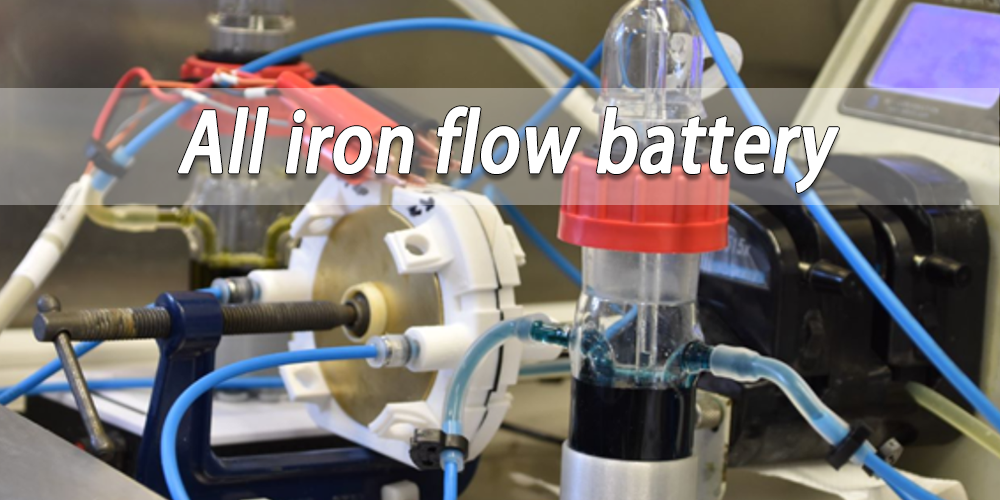
- Because solid iron participates in the electrode reaction, energy and power are not completely separated;
- The deposition of iron on the anode leads to the formation of dendrites;
- The potential of the anode is lower than the potential of the standard electrode, resulting in the side reaction of hydrogen evolution.
Facing the development needs of the large-scale energy storage field and the high cost of the traditional all-vanadium redox flow battery, the development of the iron flow battery provides a more economical choice for large-scale energy storage.
Conclusion
From the original iron-chromium flow battery to the continuous development of the all iron flow battery, the iron flow battery has attracted more and more researchers’ attention. Many flow battery companies in the world have carried out demonstration applications of iron-chromium flow batteries and zinc iron flow battery, and all iron flow battery are one of the most important development directions in the future.
In the period of rapid development of iron flow battery, it is still necessary to further strengthen the research and development of key materials, improve the kinetics of electrode reactions, and solve the problem of hydrogen evolution at the anode. Explore new iron complex couples to improve the performance of iron flow batteries, and continuously promote the industrial application of high-power iron flow battery.