Skip to content
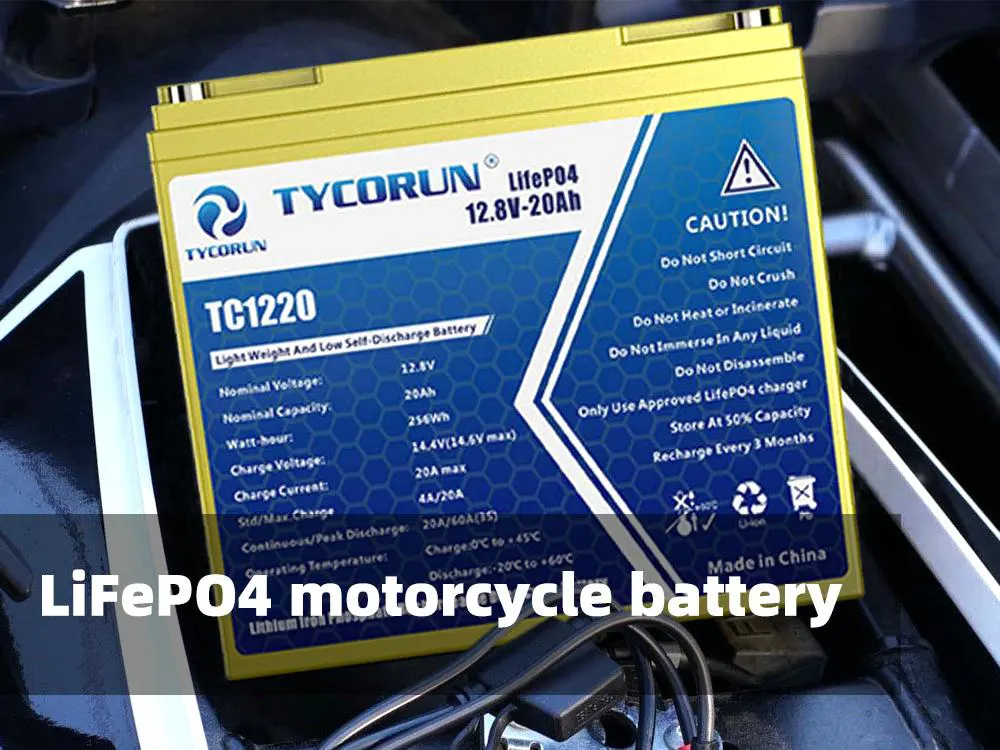


Types of motorcycle batteries on the market
The mainstream is lead-acid batteries, but now more and more people choose to use lithium battery replacement lead acid because the lithium motorcycle battery market has been growing for a few years as demand is increasing for lightweight and high-performance batteries for motorcycles. The trend of electric motorcycles is also increasing demand for lithium batteries, as they offer improved power density and are more durable when compared to traditional lead-acid batteries.
The market is expected to continue growing as more OEMs adopt lithium batteries in their motorcycle models and governments around the world promote the use of electric vehicles to reduce greenhouse gas emissions. Additionally, betterment in technology is making lithium batteries more enduring and cost-effective and rechargeable, further driving the market growth.
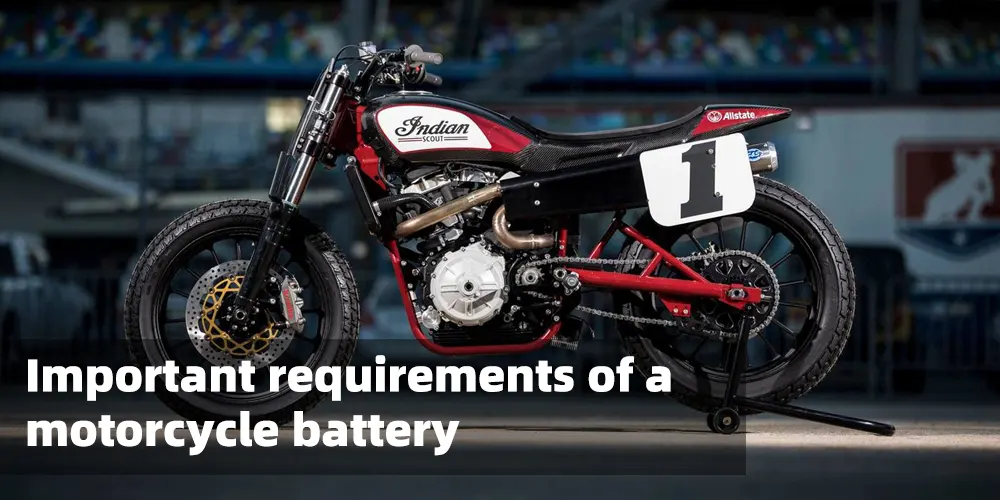
Important requirements of a motorcycle battery
The essential requirements of a motorcycle battery include:
●Capacity: The battery must have sufficient capacity to start the engine and power electrical devices.
●Voltage: As different motorcycles have different specifications and electrical systems, so it is a must that the battery voltage should match all the requirements.
●Size: The battery size must fit properly in the designated battery compartment.
●Durability: The battery must be able to withstand the vibration and shock of regular motorcycle use.
●Maintenance: The battery must be low maintenance or maintenance-free.
●Dependability: The battery must be reliable and have a long time of service.
From all dimensions, lithium ion motorcycle battery is the best choice.
How long will a LiFePO4 motorcycle battery last
LiFePO4 batteries are considered deep cycle batteries, which means this kind of battery can be deeply discharged by 80-90%, which can put the battery’s power to a very low level, even if it is discharged in this way, it will not cause damage to the battery.
The lifespan of a LiFePO4 motorcycle battery can vary depending on several factors, including the quality of the storm, the depth of discharge (how much the battery is discharged each time), and the frequency and intensity of use. On average, a high-quality LiFePO4 motorcycle battery can last up to 4,000-5,000 cycles or 5-8 years when properly used and maintained; this is significantly longer compared to lead-acid batteries, which typically have a lifespan of only 300-800 rotations.
Specifications of LiFePO4 motorcycle battery
The voltage of a two-wheeled motorcycle battery typically ranges from 12 volts to 72 volts, depending on the make and model of the motorcycle. Most two-wheeled motorcycles use a 12-volt electrical system, which is sufficient to power the engine, lighting, and other electrical components.
The voltage of a three-wheeled motorcycle is typically the same as a two-wheeled motorcycle, which ranges from 48 volts to 72 volts, depending on the make and model of the motorcycle. The ampere-hour (Ah) capacity of a three-wheeled motorcycle battery ranges from 50 Ah to 100 Ah, depending on the battery’s size and the motorcycle’s electrical demands.
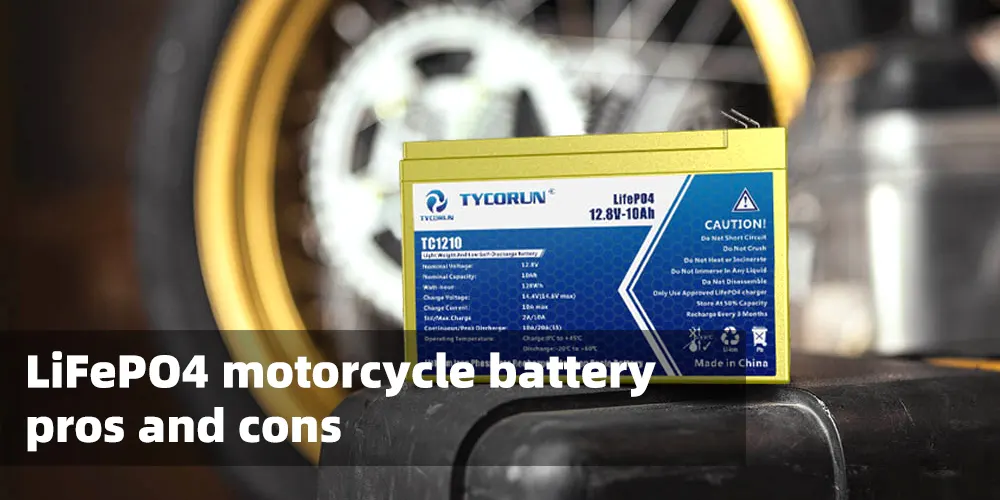
LiFePO4 motorcycle battery pros and cons
Pros
Imponderous: LiFePO4 motorcycle battery are significantly lighter than any other lead-acid batteries, making them standard for use in motorcycles where weight is a vital factor.
High energy density: LiFePO4 motorcycle battery has a higher energy density than any other lead-acid batteries, which means they can accumulate more energy in a shorter and lighter package.
Durability: LiFePO4 motorcycle batteries have longer durability than lead-acid batteries, typically lasting 4,000-5,000 cycles with proper use and upkeep.
Improved performance: LiFePO4 motorcycle batteriy can discharge and rejuvenate faster than any lead-acid batteries, providing improved starting performance and power delivery.
Less maintenance: LiFePO4 motorcycle batteries are maintenance-free, and hassle and do not need frequent topping up with distilled water like other lead-acid batteries.
Protection performance: Lithium iron phosphate battery packs will have a protective plate to prevent the battery from overcharging, overdischarging, short circuit and so on.
Cons
Price: LiFePO4 motorcycle batteries are typically more pricey than any other lead-acid batteries.
Density: Energy density is higher than lead-acid batteries, but lower than ternary lithium battery.
Limited availability: LiFePO4 batteries may not be available for all motorcycle models and may require special ordering.
How often should you replace a LiFePO4 motorcycle battery
A LiFePO4 motorcycle battery normally up to 5000 cycles or 5-8 years with proper usage and supervision. However, the lifespan of a LiFePO4 motorcycle battery can be affected by factors such as temperature, storage conditions, and frequency of use.
To assure optimal enactment and longevity, it’s crucial to properly charge and conserve your LiFePO4 motorcycle battery. This may include using a specialized charger designed for LiFePO4 batteries and storing the battery in a cool, dry place when not in use.
If you notice a decline in performance or the battery cannot be charged, the battery is charged quickly, and the electricity is used quickly, which means that the battery DOD is very low and it is not suitable for further use, it may be time to replace it. In general, it’s a good idea to supersede your LiFePO4 motorcycle battery every 5-8 years or when it is no longer providing dependable interpretation.
What should be considered when choosing a motorcycle battery supplier
When choosing a motorcycle battery supplier, the following factors should be considered:
●Quality: Make sure the supplier provides high-quality batteries that meet industry standards and are compatible with your motorcycle model. Check for certifications and awards to ensure the supplier is reputable and trustworthy.
●Price: Compare prices from multiple sellers to find a reasonable discount for your budget. Nonetheless, keep in the sense that the cheapest choice may not always be the most profitable, the quality, standard or performance of the battery must also be considered.
●Product selection: Check the supplier’s product selection to make sure they offer the type of battery that is compatible with your motorcycle and meets your needs.
●Warranty: Look for a supplier that provides a warranty on their batteries, as this will give you peace of mind and protection in case of any defects or issues.
●Customer support: Consider the supplier’s troubleshooting and support, including their responsiveness and readiness to reply to questions and provide subsidies.
●Reputation: Research the supplier’s reputation by reading customer reviews and feedback. This can give you a good idea of their quality of service and reliability.
Lithium ternary vs LiFePO4 motorcycle battery – which is better
Both are types of lithium-ion batteries that can be used in motorcycles. The choice between the two depends on specific requirements and preferences.
LiFePO4 (Lithium Iron Phosphate) is known for its resilience, security, and long cycle life, when compared to other lithium-ion batteries, making it a secure and best option for use in motorcycles. Reduce the frequency of battery replacement.
Lithium ternary is a unique technology and offers higher energy density, making it a more suitable choice for high-performance motorcycles. Lithium ternary batteries are also lighter and shorter in size, making them a great choice for motorcycles with restricted space. However, they are also more pricey when compared to LiFePO4 motorcycle batteries.
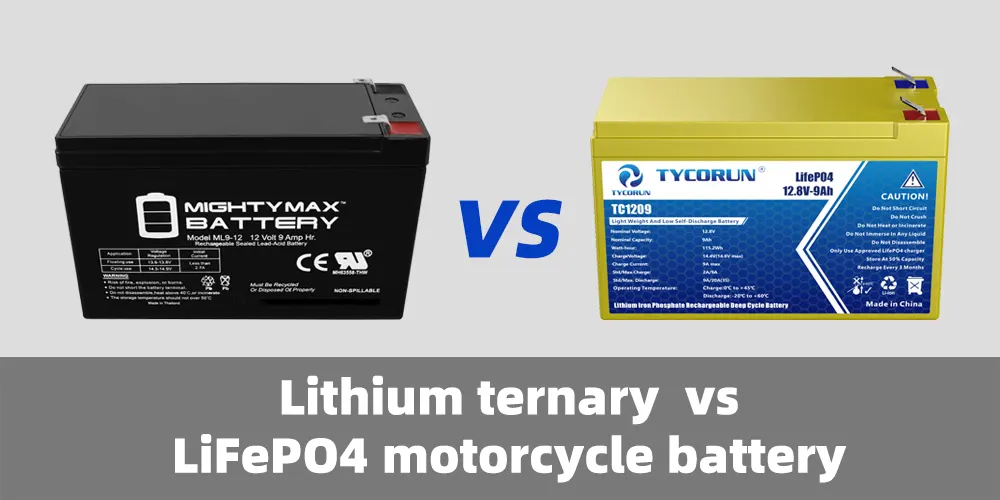
In conclusion, the LiFePO4 motorcycle battery is a better option for those who prioritize safety and stability, while lithium ternary is a better option for those who prioritize performance and energy density. It’s crucial to consider the specific necessities of your motorcycle and to talk with a skilled person to determine the reasonable battery for your requirements.
Both these LiFePO4 motorcycle batteries and Lithium-ion batteries have their benefits and drawbacks when used as motorcycle batteries. Li-ion batteries have an increased energy density, which means they can accumulate more energy in a shorter package. This makes them a popular choice for motorcycle manufacturers looking to reduce weight and improve performance.
Is there a LiFePO4 motorcycle battery swapping station
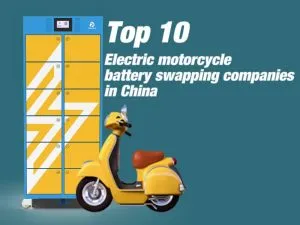
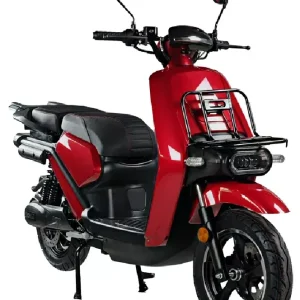
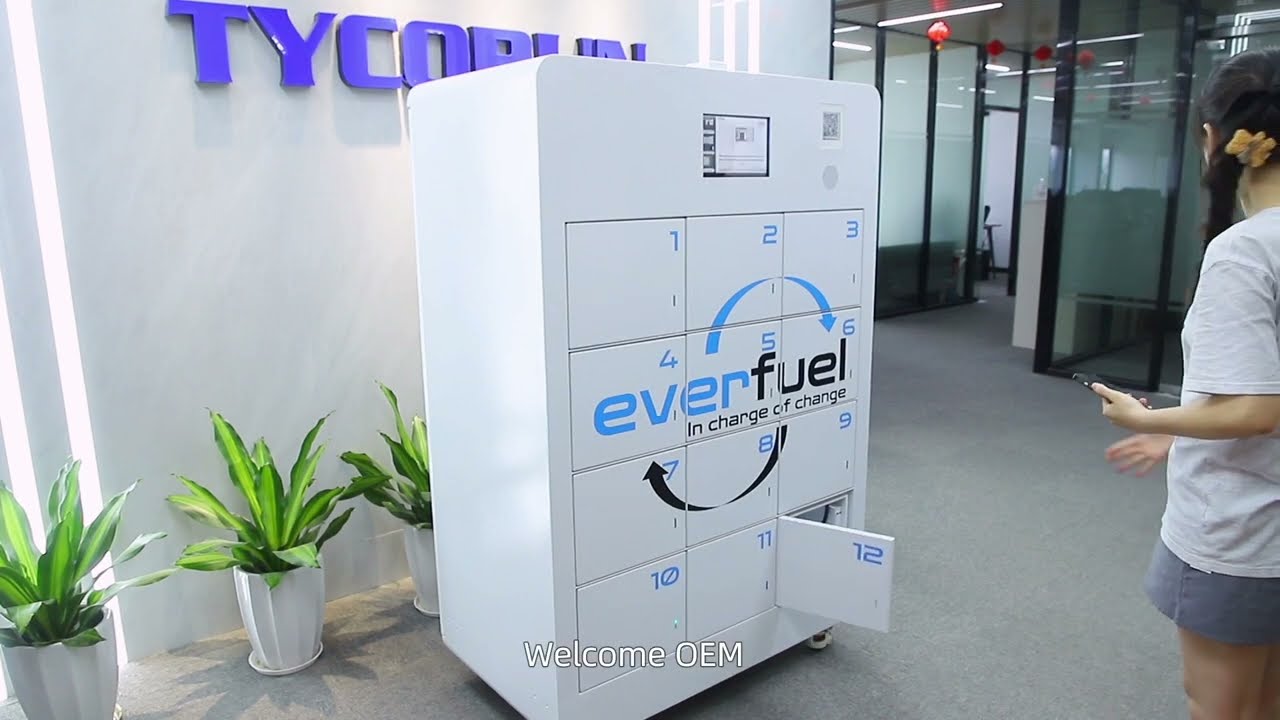
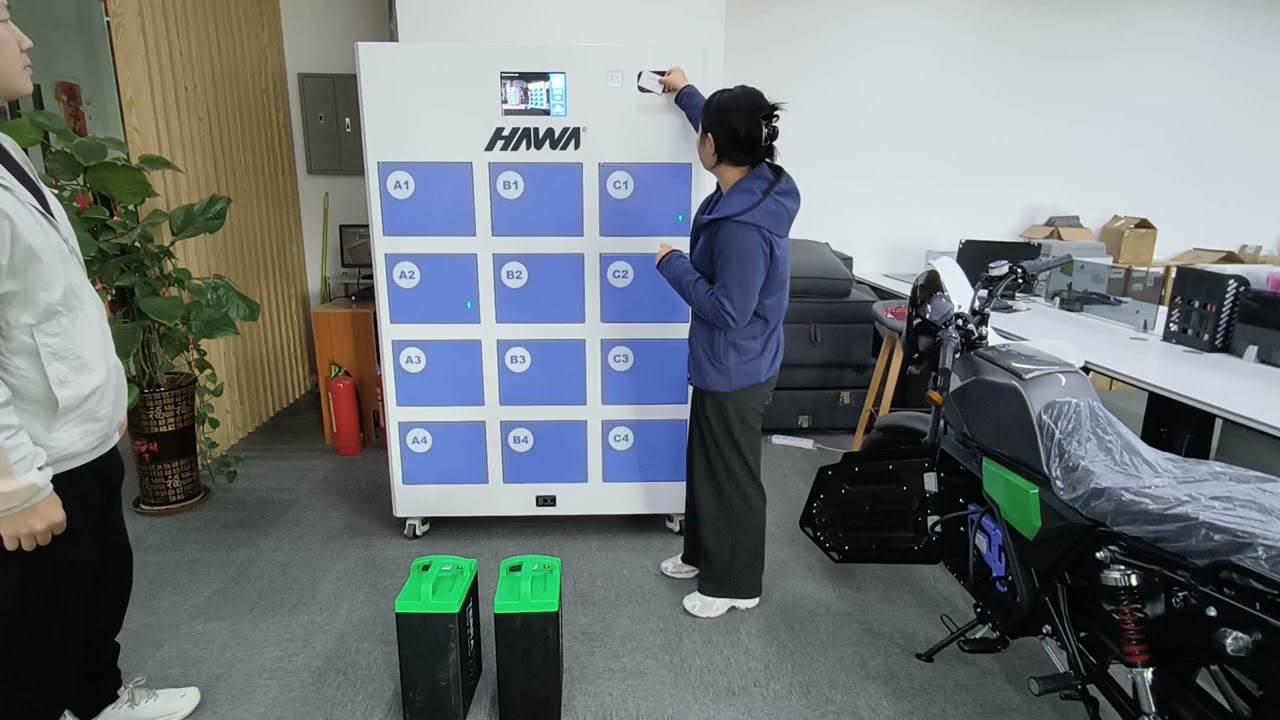
There are LiFePO4 motorcycle battery swapping stations available. These stations allow riders to quickly and easily swap out their depleted battery for a fully charged one, without the need for long charging times or the hassle of taking their motorcycle to a charging station.
Battery swapping stations are becoming more common in areas with high populations of electric motorcycles and scooters, such as large cities. They offer a convenient and efficient way to keep electric two-wheeled vehicles on the road and reduce downtime.
It’s important to note that not all LiFePO4 motorcycle batteries are compatible with these battery swapping stations, as the battery specifications and compatibility can vary between manufacturers. It’s best to consult with your motorcycle manufacturer or a professional mechanic to determine if your motorcycle is compatible with these battery-swapping stations.
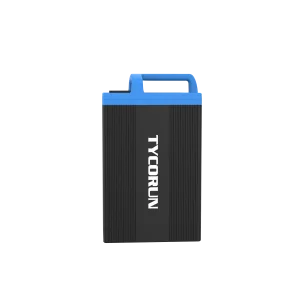
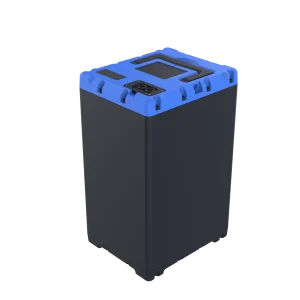
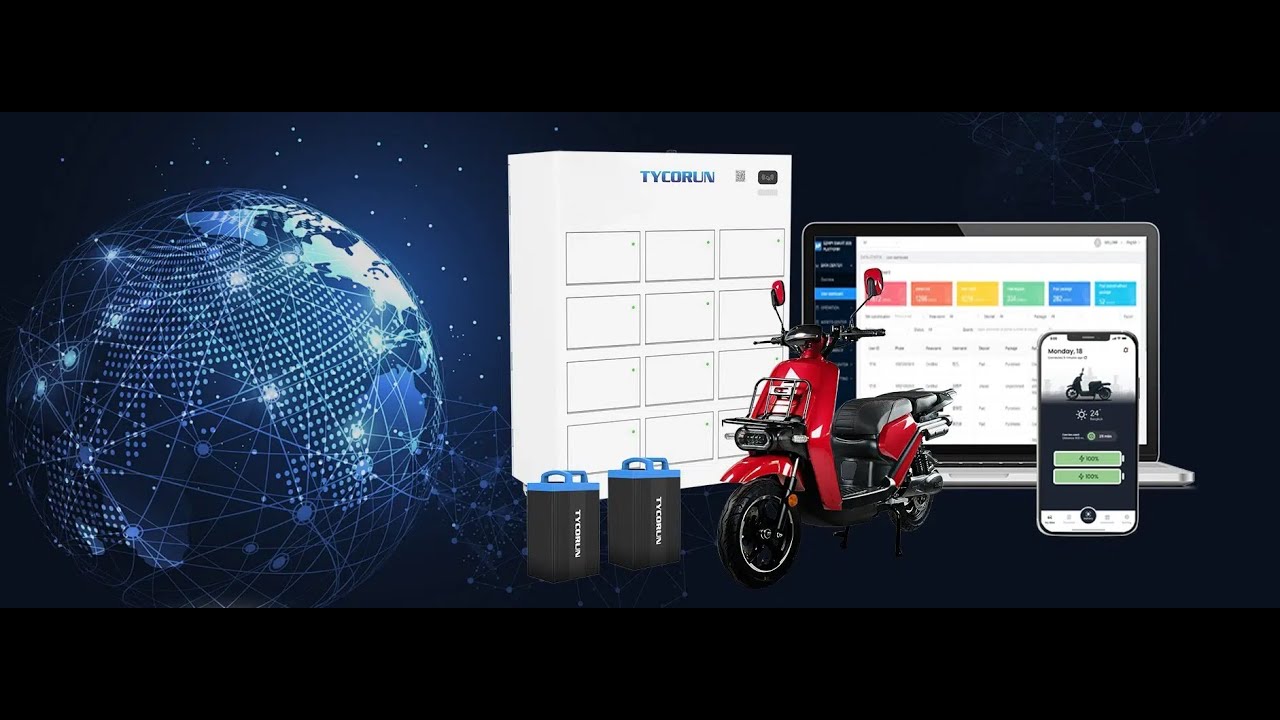
If you prefer ternary lithium battery as your motorcycle battery, or if you are more interested in ternery lithium battery swap station, you can take a look at odm lithium ion battery pack manufacturer TYCORUN ENERGY’s 72V/60V/48V battery swapping station with 12 ports for electrical motorcycle batteries. Click on the image for more details.
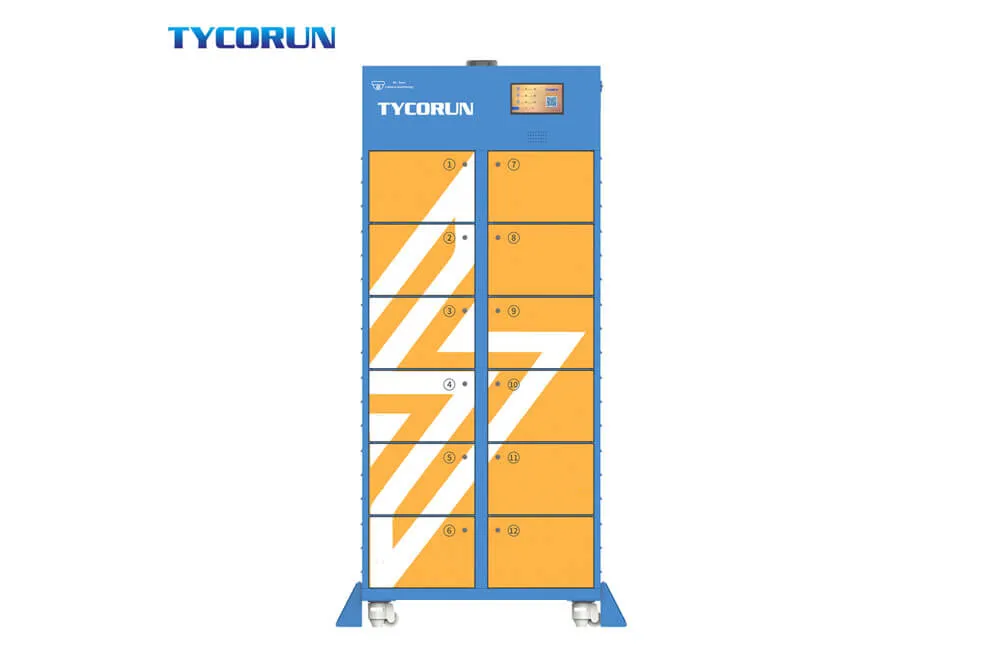
TYCORUN ENERGY electric motorcycle battery swapping battery system