Skip to content
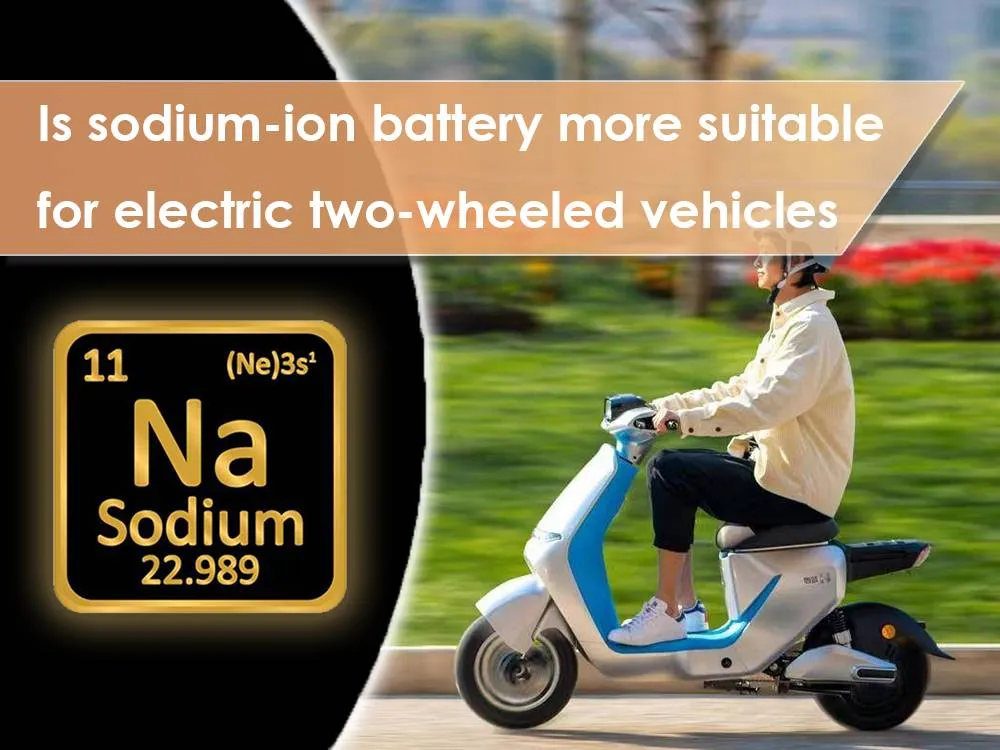

Sodium-ion battery application scenario expansion
The popularity of sodium-ion batteries has been fermented for two years. What is the current status of development? The first is the shortage of lithium-ion resources, which has become a booster for the development of sodium-ion battery technology. Judging from all aspects of the current situation, sodium-ion batteries will be a viable alternative to lithium batteries.
As the popularity of sodium-ion batteries continues to rise, giants in the new energy travel industry and the battery industry have also entered the market one after another, and have publicly stated that they have accelerated the construction of sodium-ion battery materials projects.
A number of analysis institutions have given judgments on the current development of lithium ions, and believe that the industrialization of sodium batteries has made clear progress and can form an important complement to the lithium battery industry. At present, the number of enterprises entering the sodium ion technology and product development is increasing, and the application scenarios are also continuously expanding.
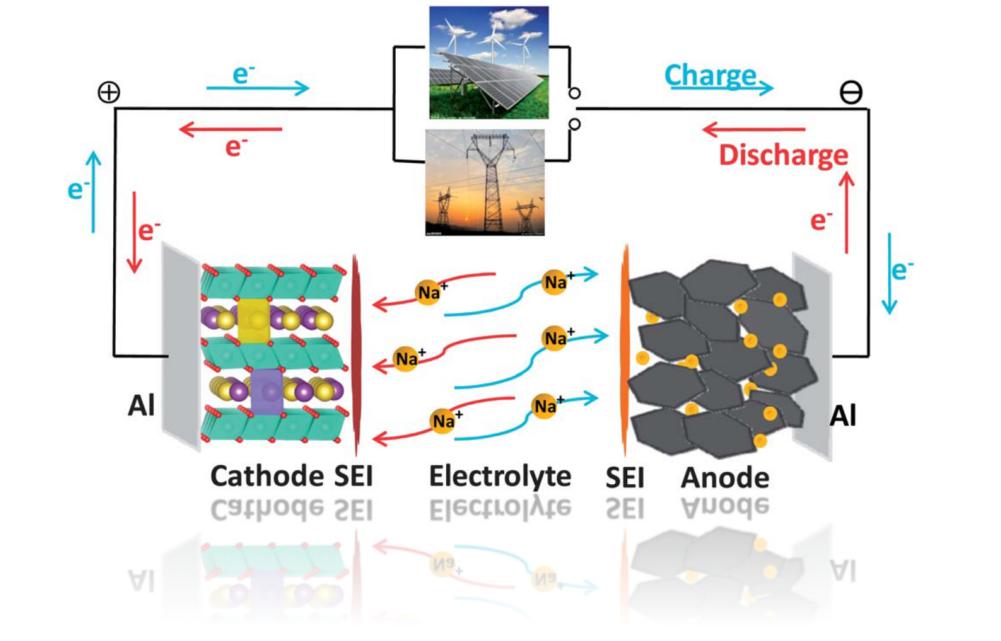
Some listed companies have begun to actively promote the large-scale application of small power scenarios, and the industry is optimistic about the mass production of sodium batteries in 2023. Obviously, sodium-ion batteries are bound to become an important pole in the field of power battery manufacturing in the future.
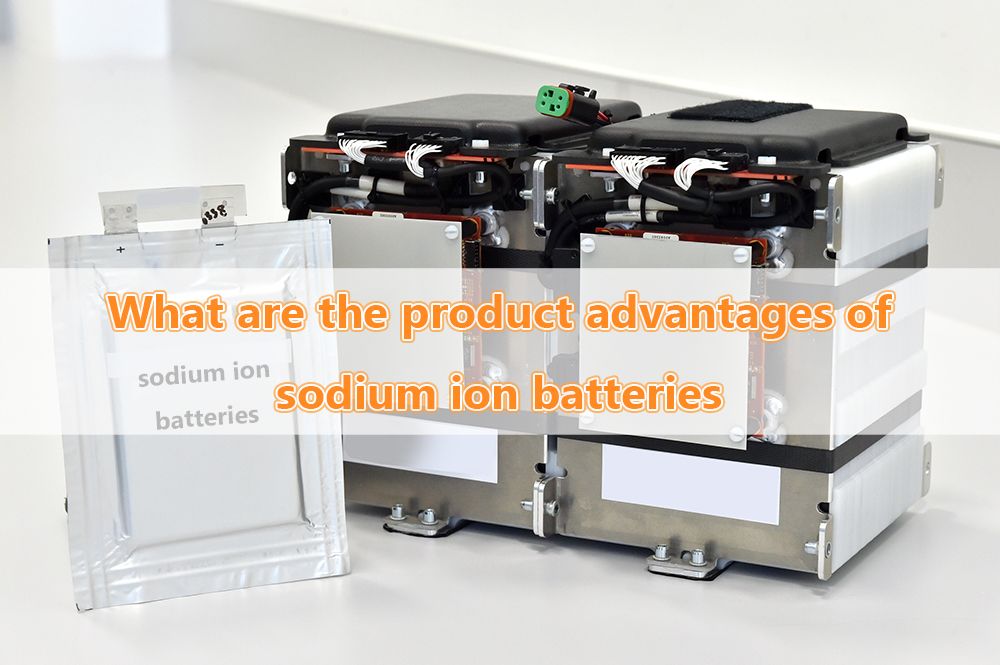
What are the product advantages of sodium ion batteries
Let’s do a simple analysis of performance first. Compared with lithium batteries, sodium-ion batteries have the advantages of good conductivity, fast charging and discharging, good safety, and strong low temperature resistance, but are lacking in energy density and cycle times compared with lithium batteries.
In terms of conductivity, sodium-ion batteries perform equally well. With the same concentration of electrolyte, the conductivity of sodium salt is about 20% higher than that of lithium electrolyte, and the strength of the same lithium electrolyte can be achieved by directly using low concentration electrolyte.
At the same time, the excellent electrical conductivity can bring faster charging and discharging effects, and the low temperature resistance is excellent, and the discharge rate of 90% can also be guaranteed in a low temperature environment of -28°C. It is worth mentioning that Na-ion batteries have no over-discharge characteristic, which also allows Na-ion batteries to be discharged to zero volts.
Not only that, the sodium-ion battery has good thermal stability, and can be tested in safety items such as acupuncture, extrusion, overcharge, and overdischarge without fire or explosion, and is very safe. Compared with lithium batteries, sodium-ion batteries have another biggest advantage, that is, low cost. As the sixth most abundant element in the earth’s crust, sodium is far more abundant than lithium. The reserve in the earth’s crust is as high as 2.36%. It is rich in resources and low in cost, so sodium-ion batteries have no obvious resource constraints.
The applicability of low-concentration electrolyte further reduces the cost of sodium-ion batteries, so sodium-ion batteries have a much higher cost advantage than lithium-ion batteries. Of course, although sodium-ion batteries have outstanding advantages, they can be active in the fields of power and energy storage just like lithium-ion batteries.
However, compared with lithium batteries, the performance of sodium-ion batteries in the field of high-speed new energy vehicles, BMS design, etc. is still young, and it will take a long time for technology development and precipitation to be popularized and applied on a large scale.
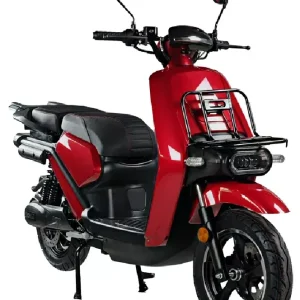
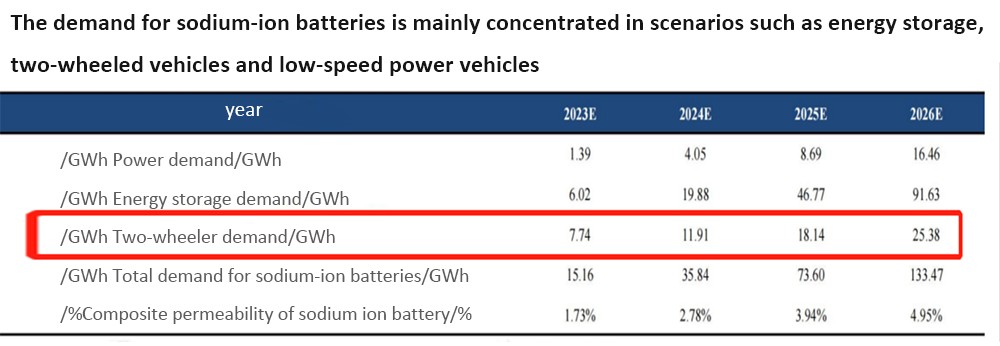
On the other hand, the field of electric two-wheeled vehicles, which does not require high endurance performance and is more sensitive to price and cost, will become an application scenario for sodium-ion batteries, which can promote the industrialization of sodium-ion batteries more quickly and efficiently. For more comparison information, please refer to lithium vs sodium battery article.
Sodium-ion batteries more suitable for electric two-wheelers
In fact, the current market is indeed more inclined to use sodium batteries for partial energy storage, low-speed two-wheeled vehicles and low-speed electric vehicles. For electric two-wheeled vehicles, there are currently two mainstream compatible batteries, lead-acid and lithium motorcycle battery.
The performance of sodium-ion batteries is more in between, lower than lithium batteries in energy density, higher than lead-acid batteries. It also has advantages over lead-acid batteries in terms of good conductivity, fast charging and discharging, and strong low temperature resistance.
From the perspective of the market, the electric vehicle consumer group has four major consumer needs for power batteries. First, the battery life performance is outstanding, and a single charge can achieve a considerable mileage. The advantage of sodium-ion batteries over lead-acid battery life is enough to provide good battery life for consumers’ daily travel.
Second, battery safety issues. Safety accidents such as explosions of inferior batteries and overcharged batteries and fires occur frequently, and the safety advantages of sodium-ion batteries such as excellent thermal stability will be further amplified.
Third, the low temperature resistance requirements of the battery. In winter, especially the vast number of consumers in the north have a great rigid demand for the performance of batteries in low-temperature environments. The outstanding low-temperature resistance of sodium-ion batteries is also a core advantage.
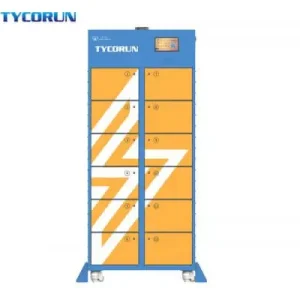
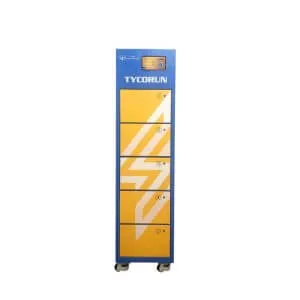
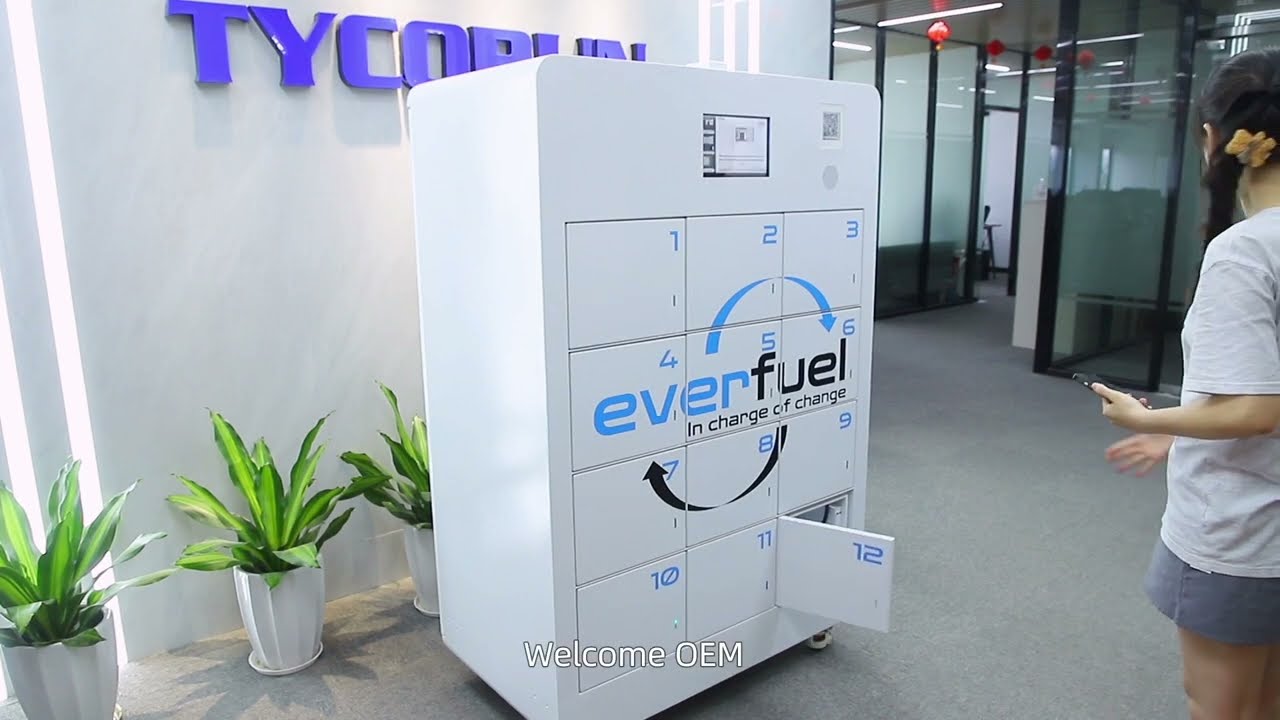
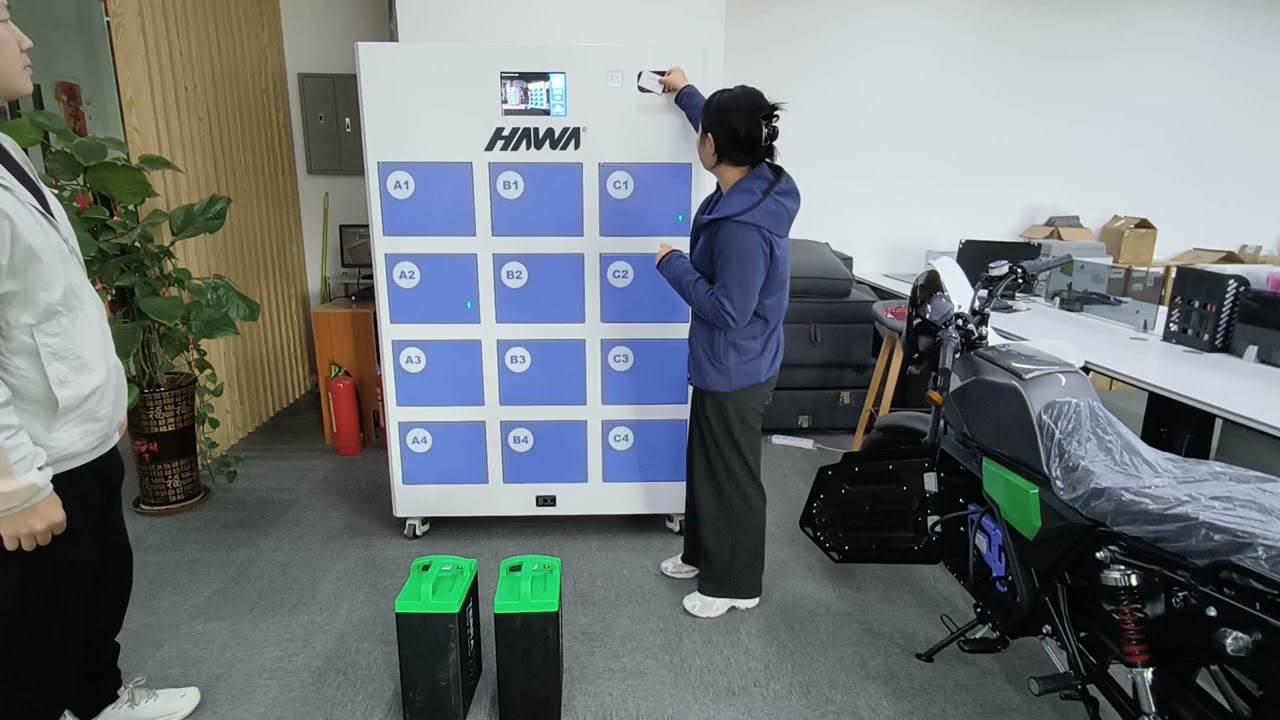
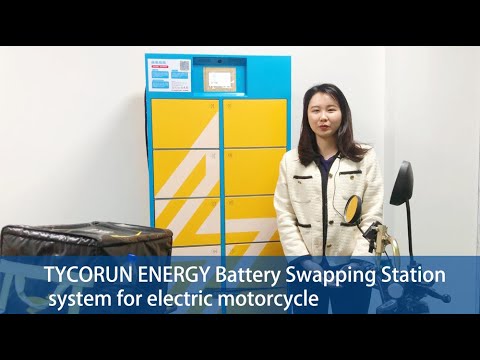
In addition, there are also many consumers who hope that the charging speed of electric vehicles can be increased, and the charging time does not need to be several hours at every turn, so that it can meet the demand for charging speed of electric vehicles under special circumstances or emergency needs. As for charging efficiency, battery swapping stations have been popularized now. While ensuring charging safety, they can obtain fully charged batteries in a short time, saving a lot of time and greatly improving the working efficiency of electric vehicles and two-wheeled vehicles.
Fourth, the price issue. At the beginning of 2022, the price of lithium battery raw materials continued to soar, and the price of some materials increased by more than 10 times in previous years, which also made the price of lithium battery for electric two-wheelers soar. In the context of the soaring lithium raw materials, the cost advantage of sodium-ion batteries will be further amplified and highlighted.
Therefore, sodium-ion batteries can be said to be very suitable for two-wheeled electric two-wheeled vehicle products. Also boldly predict here that some big brand companies in the industry, such as Phylion, may have a layout for sodium-ion batteries.
These leading companies in the field of power batteries, in addition to having a deep accumulation in product research and development and technological innovation, have always maintained a sensitivity to the front-end market and a forward-looking strategic vision for the future direction of the industry. It is a routine operation to actively plan ahead and grasp the broad development prospects of sodium-ion batteries.
According to the official information of Phylion, new products and new technologies will be unveiled at the upcoming strategic conference on January 12. According to the official poster that has been released, “Na new creature” is mentioned, which can meet more diverse needs, and Phylion may make big moves in sodium-ion batteries.
With Phylion’s consistent development concept of technological innovation as the core, it is indeed the company with the most technical strength and rigid conditions in the two-wheeled electric vehicle industry that takes the lead in taking the lead in taking the lead in sodium-ion batteries, and it is worth looking forward to.
Final thought:
At present, sodium battery technology is gradually becoming mature and perfect. With the acceleration of the industrialization process, sodium ion batteries will also occupy a place in the future new energy travel field.
- 48v lithium ion battery
72V/60V/48V battery swapping station with 12 ports for electrical motorcycle batteries
Read more - 72v lithium ion battery
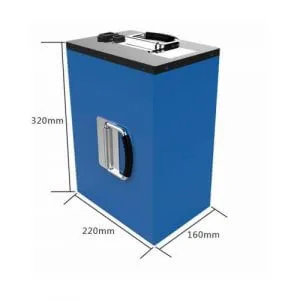
72 volt 50ah LifePO4 battery applietd for electric motorcycle swap system
Read more