Skip to content
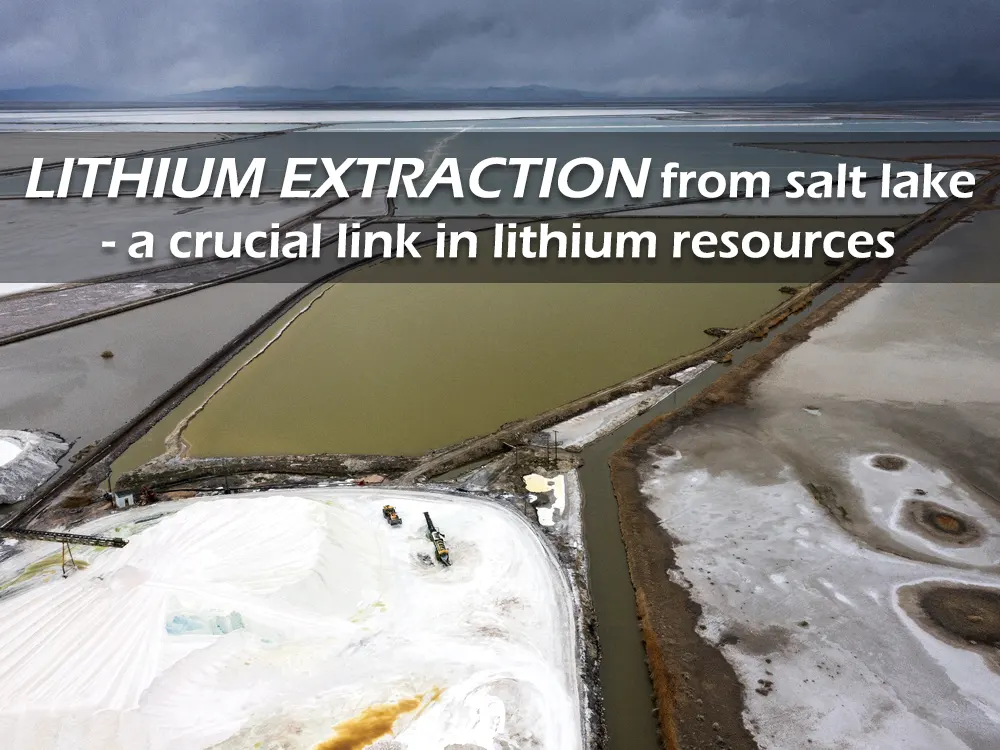


Salt lakes are rich in lithium reserves, and there is great potential for future technology upgrades and iterations. China’s salt lake lithium extraction industry has broad space and is expected to become the largest increase in lithium resources.
Overview of lithium extraction industry in salt lake
The top 10 lithium mines in the world are rich and highly concentrated. According to statistics, as of 2022, the world’s proven lithium resource reserves are about 518 million tons LCE, mainly concentrated in the South American Lithium Triangle, accounting for about 53.0%, and China accounting for 5.7% ranks sixth, and the amount of resources is relatively abundant.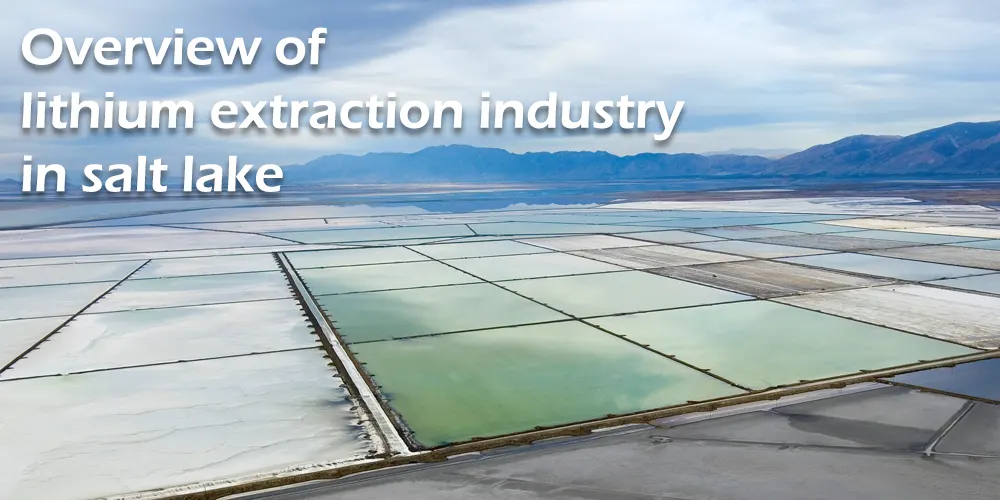
Lithium resources currently exist in three forms: spodumene, lepidolite, and salt lakes.
Spodumene is mainly concentrated in Australia, Canada, the United States, Zimbabwe and other countries.
Salt lake brine is mainly concentrated in Argentina, Chile, the United States and the Qinghai-Tibet region of China. Most of China’s proven lithium resources exist in the form of brine.
Compared with ore resources, the total scale of lithium resources extracted from salt lake brine has an advantage and the cost of lithium extraction is low. The production cost is about 1/3 of that of ore lithium extraction.
Lithium extraction from salt lakes is to separate lithium ions from the entire brine system. Therefore, the success or failure and cost of lithium extraction technology from salt lakes are directly related to the absolute content of lithium ions in salt lakes and the complexity of other component ions.
The higher the lithium ion content, the fewer interfering ions, the more convenient it is to extract lithium, and the cost will be relatively lower. The cost of extracting lithium from salt lakes in the world is generally US$3,000-4,000 per ton, which varies in China due to the complex conditions of salt lakes.
The pattern of salt lake resources in China
China’s lithium salt lake resources are mainly distributed in Qinghai Province and Tibet Autonomous Region.
Qinghai Salt Lake started early and has strong competitiveness. China’s current production capacity of Salt Lake is mainly concentrated in Qinghai; Tibet’s Salt Lake has good resource endowment and slow development progress.
According to incomplete analysis, as of the beginning of April 2023, the Qinghai Salt Lake currently has an operating capacity of about 114,000 tons/year of lithium carbonate + 10,000 tons/year of lithium chloride, and the Tibet Salt Lake is only 12,000 tons/year of lithium carbonate. Development is urgently needed Speed up.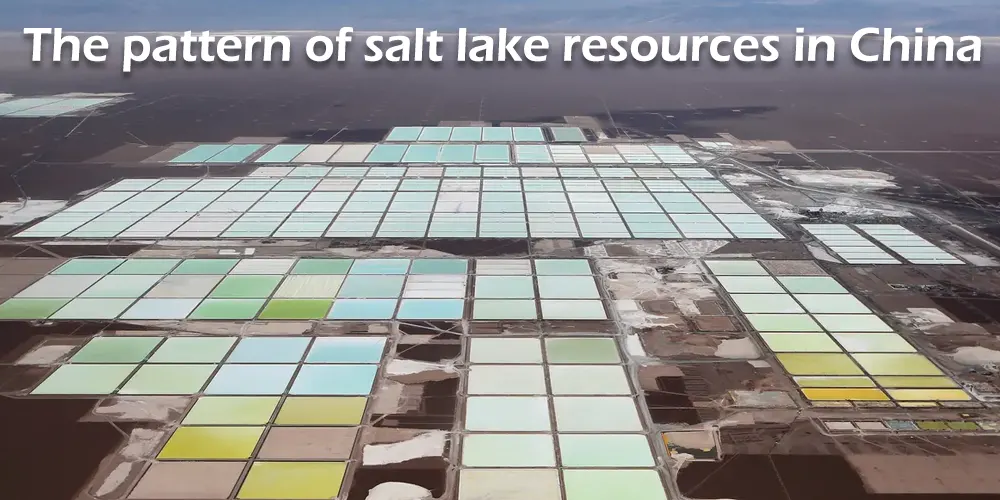
Qinghai salt lakes are mainly distributed in the Qaidam Basin, and most of them are sulfuric acid salt lakes. At present, there are 33 salt lakes in the Qaidam Basin.
It has been found that the lithium content of 11 sulfuric acid salt lakes has reached industrial grade, and they are mainly brine mines, with shallow burial, high grade, simple hydrogeological conditions and easy mining.
Tibet is one of the areas with the densest distribution of salt lakes in China. Among the 2,000 lakes in Tibet, there are nearly 500 salt lakes with an area of about 8,225.18 square kilometers, of which 234 are larger than 1 square kilometer.
Tibet’s salt lake resources are mainly concentrated in Zabuye Salt Lake, Jiezechaka Salt Lake and Longmu Co Salt Lake. Zabuye Salt Lake in Tibet is the third largest lithium salt lake in the world and the largest in Asia.
Its proven lithium reserves are 1.841 million tons. It is a special comprehensive large-scale salt lake deposit rich in lithium, boron, potassium, and solid and liquid.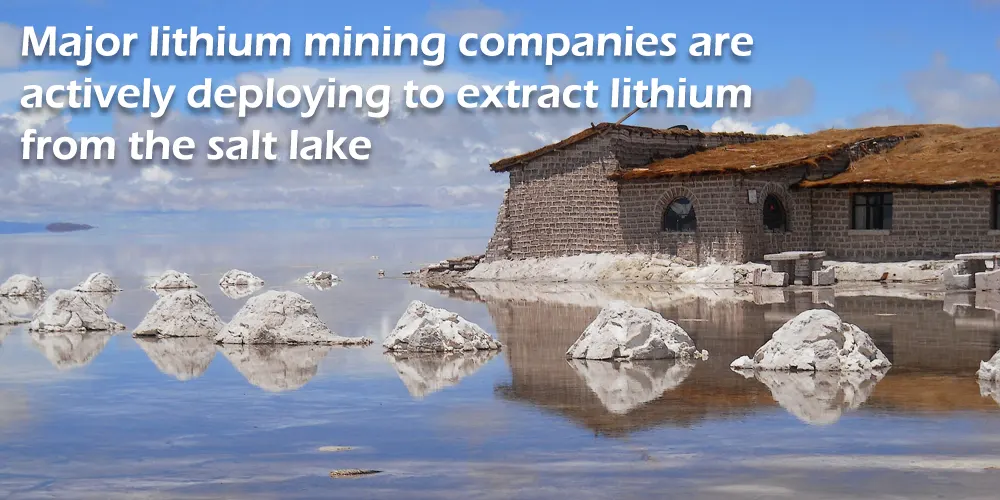
Major lithium mining companies are actively deploying to extract lithium from the salt lake in Tibet, striving to obtain prospecting and mining rights.
Although the production capacity of lithium extraction from salt lakes in China has grown rapidly in recent years.
However, from the perspective of enterprises, China’s current salt lake lithium extraction pattern is diversified, production capacity is still relatively scattered, and the individual scale still needs to be further improved.
Overall, leading companies will still constitute the main production capacity in the next 3-5 years.
The core process of extracting lithium from salt lake
The development of China’s salt lakes takes various approaches based on the peculiarities of the lakes.
Many processes are the first attempts, and further improvements and upgrades are still needed in terms of product purity, production cost, and comprehensive utilization.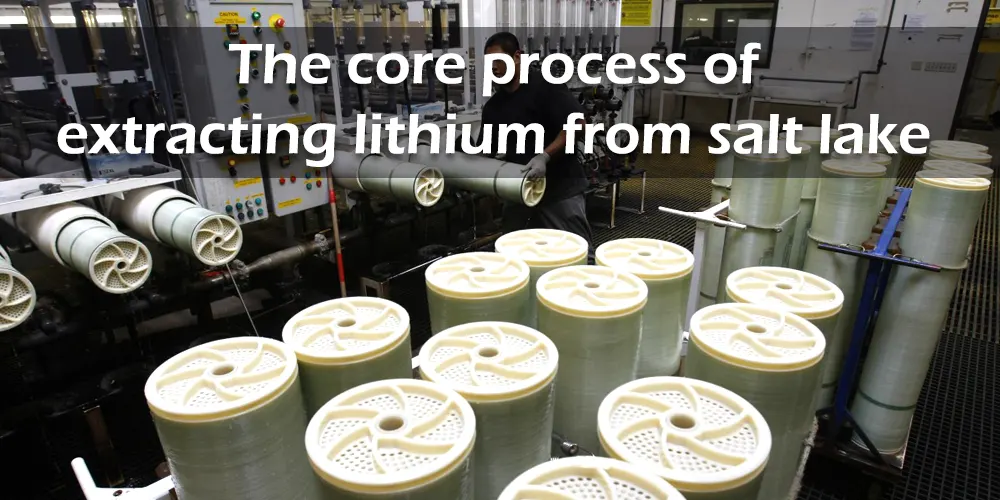
According to incomplete statistics, as of the beginning of April 2023, the production capacity of the adsorption + membrane method is about 57,000 tons of LCE, accounting for 42% of the total production capacity.
Since the adsorption + membrane method has three advantages of high efficiency, low cost and environmental protection, it is a promising solution for lithium extraction from salt lakes.
Main line of development of lithium extraction from salt lakes
The development of the salt lake lithium extraction industry mainly focuses on two main lines: the salt lake resource end and the technical service end.
Resource-side companies currently have a lot of layout, and under the high lithium price, resource-side companies will directly benefit.
Technical service companies are mainly companies that provide technical support to resource-side companies during the development of lithium resources in salt lakes.
Lithium extraction technology from salt lakes is complicated and the exploration period is long, so resource-end companies generally cooperate with technical service companies to avoid time and other costs.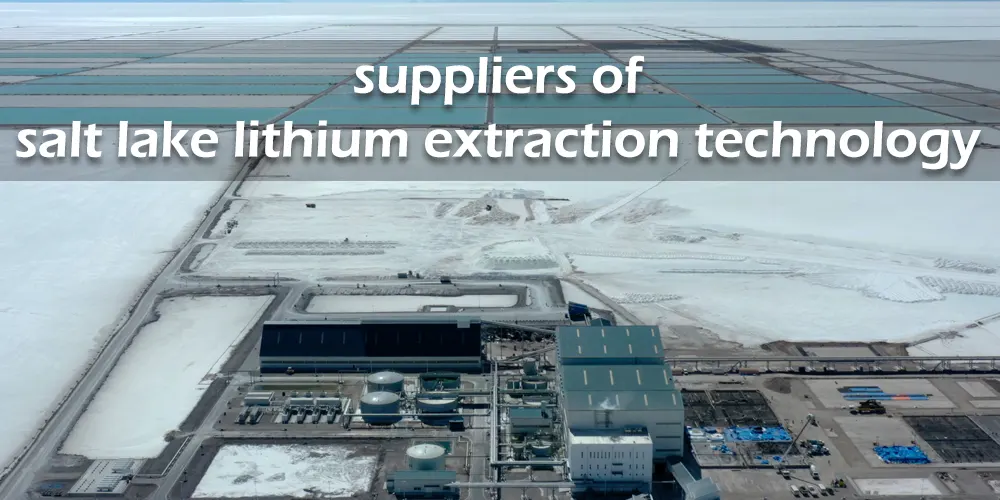
Currently, suppliers of salt lake lithium extraction technology mainly participate in market competition in three forms:
(1) Provide the entire EPC general contract (self-produced core materials): this type of enterprise has the qualifications and experience in engineering contracting while having self-developed and self-produced core materials such as adsorbents and membranes;
(2) Provide key materials: mainly provide core materials to various process package suppliers, and there is also a tendency to gradually penetrate into process packages;
(3) EPC general contracting and equipment supply: After the general contracting of such enterprises, they usually need to purchase core materials or outsource part of the process.
Among the companies related to lithium extraction from salt lakes, some companies have mastered the core technologies of various types of salt lake adsorbents, and both ceramic membranes (inorganic membranes) and organic membranes have production capacity layouts.
In recent years, a number of industrialization/pilot project cooperations have been reached successively.
The resource scale of salt lake type lithium resource monomer projects is usually considerable, can support high annual production capacity.
At the same time, the production cost is low, and the environmental pressure of tailings treatment is relatively small. Industry insiders believe that most of the salt lakes are located in remote, poor infrastructure, and harsh alpine and high-altitude areas.
Construction of salt farms requires a significant upfront expenditure.The brine drying cycle is long and depends on the weather, so it is difficult to respond sensitively to downstream lithium-ion battery manufacturers.
The explosion of demand from battery manufacturers, coupled with the large entrainment loss of lithium in the salt field system, and the current low overall yield have restricted the value of lithium resources in salt lakes.
From the perspective of long-term development, technology will support resources, and efficient lithium extraction paths such as adsorption are expected to break through efficiency constraints in the future.