2021 is an extraordinary year for the power battery industry. On the one hand, the upstream earns huge profits and the middle and lower reaches bear cost pressure. On the other hand, the consumer market and the capital market form a strong contrast between ice and fire. And the power battery companies we often mention have these Top 10 power battery companies in the world. This article finds some new industry rules from the perspective of r&d batteries investment:
In addition to the higher dependence of upstream minerals on resources and lower dependence on technology, there are some new technological trends in other links, which are also more obvious in r&d batteries investment.
The battery is still the link that requires the highest r&d batteries investment, followed by the vehicle, and the anode material is worth paying attention to. Its r&d batteries investment not only exceeds the separator, but also exceeds the cathode material.
The first half of the power battery is a battle between policies and production capacity, and now it has entered a new stage of high marketization, and the time to fight for strength with technology may be coming.
| Section | Technology Trends | Average R&D Expense Rate(2021) |
| Cathode material | High nickel, no cobalt, single crystal | 3.53% |
| Anode material | Artificial graphite, silicon-based materials | 4.50% |
| Separator | Artificial graphite, silicon-based materials | 4.35% |
| Electrolyte | New electrolyte lithium salts and electrolyte additives | 2.59% |
| Battery | The battle of battery form, the battle of charging and replacing | 5.51% |
| vehicle | Charging and swapping layout, intelligent driving layout | 5.21% |
Upstream mining
Although raw materials have risen sharply in 2021, the net profit of upstream lithium mining companies has increased by an average of 11 times. However, due to the cyclicality of resource supply and demand, the r&d batteries projects of upstream mining companies mainly focus on the exploration, exploitation, purification and preparation of resources, so the overall r&d batteries expense rate is not high.
The r&d batteries expense rate is less than 3%
From the perspective of r&d batteries expenses, the average r&d batteries expenses of upstream mining companies increased from 108 million yuan in 2020 to 158 million yuan in 2021, an increase of nearly 50%, but the r&d batteries expense rate remained at around 2.6%, with a slight decline.
In the first quarter of 2022, the average r&d batteries expense rate is less than 2%.
Among them, Zijin Mining has the highest r&d batteries expenses, but considering that its revenue scale is as high as 200 billion yuan+, the r&d batteries expense ratio is almost at the bottom.
The highest r&d batteries expense rate
From the perspective of r&d batteries expense ratio, from 2020 to the first quarter of 2022, Jiuwu Hi-Tech ranked first.
Its original business focused on membrane integration solutions, but since winning the bid for the Minmetals Salt Lake 10,000-ton/year lithium carbonate project in 2018, it has successfully placed the core process package for lithium extraction from the salt lake.
The use of self-developed adsorbents and the “membrane method lithium extraction” process package consolidates the layout of salt lake lithium extraction, so the r&d batteries expense rate has always maintained a high level, ranking first among mining companies.
The gap between the two major lithium companies
In addition, among upstream mining companies, Tianqi Lithium and Ganfeng Lithium are in sharp contrast, showing significant differences in business layout:

Tianqi Lithium has chosen to comprehensively strengthen its upstream lithium layout and achieve self-sufficiency as a lithium compound and derivative producer through a large, single and stable supply of lithium concentrate, and its economies of scale have gradually become prominent.
Ganfeng Lithium, on the other hand, chooses to run its business through the entire industrial chain of resource mining, refining and processing, and battery manufacturing and recycling. Since it has more involvement in the middle and lower reaches, its r&d batteries costs are significantly higher than Tianqi Lithium.
Reflected in the r&d batteries data, with the explosion of prices and income, the r&d batteries expense rate of Tianqi Lithium in 2021 is only 0.25%, while the r&d batteries expense rate of Ganfeng Lithium is as high as 3.03%, which is 12% of Tianqi Lithium. times.
And this feature is also very significant in the number of r&d batteries personnel: Tianqi Lithium will only have 33 r&d batteries personnel in 2021, while Ganfeng Lithium will have nearly 600 technicians.
However, looking at the entire industry, Zijin Mining has the largest r&d batteries personnel with 4,474 r&d batteries personnel.
Positive electrode material
Lithium-ion batteries are composed of four elements: Lithium batteries can be roughly divided into four components, namely positive electrode, negative electrode, electrolyte and separator.
In 2021, the pattern of cathode materials has undergone tremendous changes: lithium iron phosphate achieved an overtake in installed capacity in September, and finally gained the upper hand in the annual installed capacity competition.
Average r&d batteries expense rate
In the lithium battery industry chain, as the position of the industry chain gradually moves down, the reliance on r&d batteries to create differences is also higher, which is also significant in the r&d batteries expense rate.
Theoretically speaking, the specific capacity of different positive and negative active materials, the difference in lithium voltage and auxiliary components, mainly determine the mass energy density of the battery.
The main cathode materials currently used in large-scale applications are intercalated materials, and the capacity of cathode systems with relatively high relative voltages (over 3V on average) is still within 300mAh/g, which limits the overall performance of the battery.

Typical Cathode Material Specific Capacity and Voltage to Lithium
In terms of r&d batteries direction, battery cathode materials are developing towards high nickel, no cobalt, and single crystal, which should require higher investment.
Looking at the entire cathode material industry, from 2020 to the first quarter of 2022, the r&d batteries expense rate is about 1pct higher than that of upstream mining companies, 3.79%, 3.53% and 3.21% respectively.
The highest r&d batteries expense rate – Changyuan Ji
Changyuan Group has the highest r&d batteries expense ratio, with r&d batteries expense ratios of 8.82%, 12.76% and 10.85% in the first quarter of 2020-2022, ranking first in the industry.
The lowest r&d batteries expense rate is Chuan Jinnuo, which only hovers around 0.3%. When reflected in the number of r&d batteries personnel, the number of personnel in Changyuan Group is also far ahead, reaching 4,117, which is an order of magnitude difference compared to the number of r&d batteries personnel in most cathode material companies.
However, Changyuan Group is not a typical cathode material manufacturer. Its r&d batteries projects mainly focus on smart grid equipment and energy Internet technology service business and consumer electronics smart device business.
Coincidentally, There were problems such as inflated income in the financial statements of Changyuan Group from 2016 to 2017.
At the same time, Defang Nano, which emerged with the help of lithium iron phosphate, has become the king in the field of cathode materials, and its revenue growth rate ranks second in the industry.
Although r&d batteries investment has tripled compared to 2020, the r&d batteries expense ratio has dropped from 5.47% in 2020 to 3.38% in 2021, and will continue to decrease to 2.97% in the first quarter of 2022.
Negative material – significantly higher than positive
The structure of the negative electrode is the same as that of the positive electrode, and the active material is coated on the current collector (copper foil), and its function is to reversibly absorb/release the lithium ions released by the positive electrode, and flow out electrons through an external circuit.
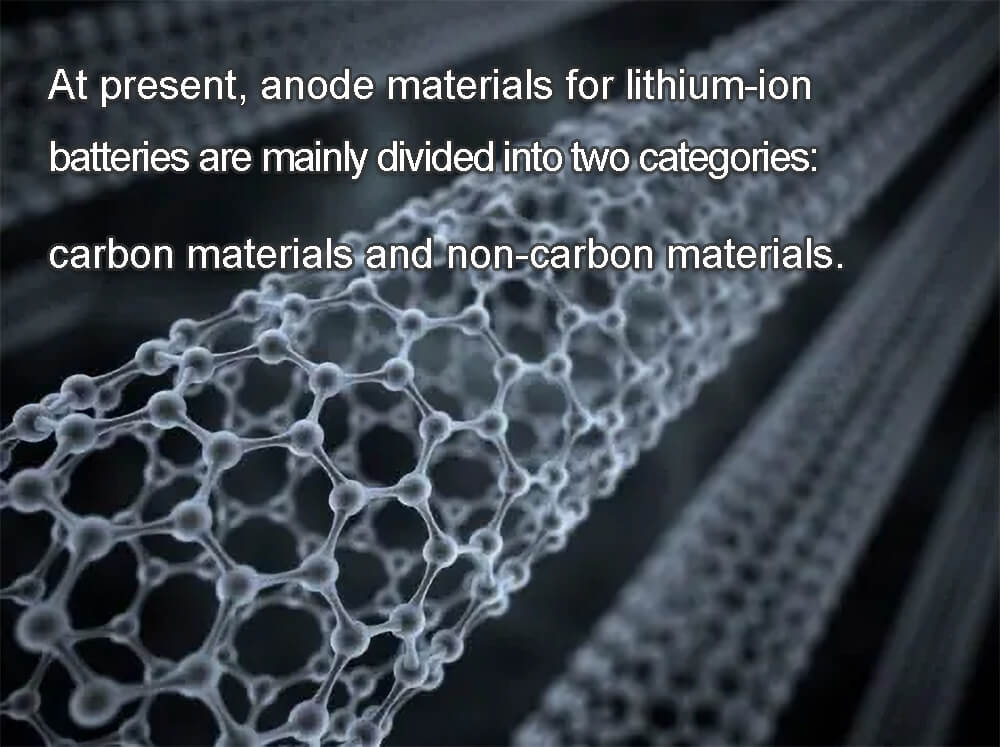
Lithium-ion battery anode materials should have the lowest possible electrode potential, high Li+ mobility, high Li+ intercalation/deintercalation reversibility, good electrical conductivity and thermodynamic stability. At present, anode materials for lithium-ion batteries are mainly divided into two categories: carbon materials and non-carbon materials.
In addition, among non-carbon materials, silicon-based materials are the focus of research by major anode material manufacturers , includding Top 10 anode material manufacturers,and are also one of the most likely new anode materials for large-scale application in the future.
Average r&d batteries expense ratio is 5.47%
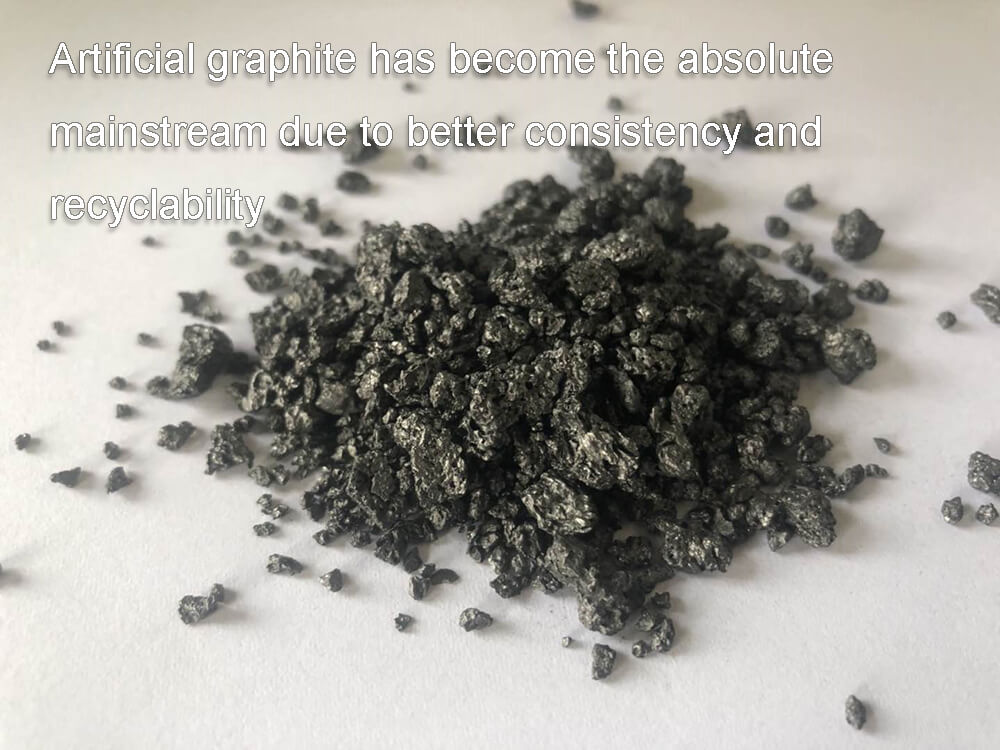
Compared with the vigorous route battle of cathode materials, the route of lithium battery anode materials is more stable. Artificial graphite has become the absolute mainstream due to better consistency and recyclability. In 2021, the market share will rise to 84%, and the share of natural graphite will drop to 14%.
However, this has not affected companies in the industry to maintain a higher r&d batteries expense rate than cathode materials: in the first quarter of 2020-2022, the average r&d batteries expense rates in the field of anode materials were 5.47%, 4.50%, and 4.13%, respectively.
National Technology has ushered in high growth in both integrated circuits and anode materials business, recording a profit increase of 3392.96%, and its r&d batteries expense rate is also driven by integrated circuits as high as 20%-30%, much higher than other companies in the field of anode materials.
Shanshan’s r&d batteries expense rate is low
In the field of anode materials, three companies, namely Betterray, Putailai, and Shanshan, occupy more than 50% of the market share of anode materials in my country, forming a stable three-giant pattern.
In 2021, the r&d batteries expense ratios of the three companies will be 5.64%, 6.03% and 3.46% respectively, of which Shanshan’s r&d batteries expense ratio is significantly lower.
Judging from the number of r&d batteries personnel, the national technology with the highest r&d batteries expense rate does not have more personnel. On the contrary, Longbai Group, which has a r&d batteries expense rate of about 10%, is the only company with more than 1,000 r&d batteries personnel.
Longbai Group is a new entrant in the anode material market, and its current business revenue still mainly comes from its titanium business.
New investment hotspots
Compared with the vigorous cathode materials, the anode seems to be a little tepid, but in fact it enjoys an overall higher r&d batteries expense rate and is currently becoming a new investment hotspot.
Taking Beterui as an example, on May 11, the company announced that the project of an integrated base for lithium battery anode materials with an annual output of 200,000 tons was started in Dali, Yunnan. The company said that after the project is completed, it will greatly enrich the company’s anode material supply capacity.
Not long ago, Betterray just announced that the project with an annual output of 40,000 tons of high-end lithium-ion battery anode materials was launched in Shenzhou City, Hebei Province, with a total investment of 5 billion RMB.
At the same time, another anode material leader, Shanshan Co., Ltd., recently announced that it plans to set up a project company in Anning City, Yunnan Province and invest in the construction of an integrated base project for lithium-ion battery anode materials with an annual output of 300,000 tons. The planned total investment in fixed assets is about 9.7 billion RMB.
In addition to direct investment, in mid-April, Shanshan also announced that it planned to increase its capital by 3.05 billion RMB in its holding subsidiary Shanghai Shanshan Lithium Power, and introduced four strategic investors, namely Wending Investment, BYD, Ningde New Energy and Kunlun Capital.
It is estimated that the global demand for anode materials in 2022 will be 621,000 tons, a year-on-year increase of 54%. Among them, China’s demand is 383,000 tons. In the medium and long term, it is expected that the global demand for anode materials will reach 1.613 million tons in 2025, with a three-year compound growth rate of 37.5%.
Separator – Gradually tends to average
As an important part of improving the overall performance of the battery, the battery separator is often referred to in the industry as the “third pole of the battery” besides the positive and negative electrodes.
At present, for lithium battery series on the market, since the electrolyte is an organic solvent, a high-strength thin-film polyolefin porous membrane is generally used. However, the existing separators include polypropylene + ceramic coating, polyethylene + ceramic coating, and Bilayer and trilayer materials based on polypropylene, polyethylene, etc.
New materials are also emerging, including polyester film, cellulose film, polyimide film, polyamide film, spandex or aramid film, etc. The unifying advantage is high temperature resistance.
On the basis of ensuring safety, the separator tends to be thinner and lighter. The thinner lithium battery separator can effectively improve the energy density of the lithium battery, so that more electrode materials can be accommodated in the lithium battery per unit volume or weight, thereby ultimately improving the lithium battery. battery life.
Average r&d batteries expense rate is 4%
China’s diaphragm market has developed for more than ten years since the first decade of the 21st century, and has led China’s diaphragm out of its own path.
At present, the main research and development direction of each company is still coating diaphragm, and the industry’s average research and development expense rate is 4.06%, 4.35% and 3.65% respectively in 2020-2022Q1. With the development and gradual maturity of the industry, the research and development expenses of various companies in the industry The rate is now gradually approaching the average, with the extremes smoothed out.
Among them, there are three companies with a r&d batteries expense ratio of more than 6% in 2021, namely Golden Crown, Putailai and Aerospace Rainbow.
As a company that started as a negative electrode material, Putailai has been investing heavily in coating separators in recent years, and has won an order from CATL as a joint venture partner.
Enjie is lower than Xingyuan material
Xingyuan Materials and Enjie Co., Ltd. are the first to develop domestic diaphragms, and the other occupy the largest share of the current diaphragm market. When the diaphragm dispute entered the second half, Enjie’s r&d batteries expense rate was currently lower than that of Xingyuan Materials.
In 2021, the r&d batteries expense rate of Enjie shares is 5.13%, and there are 280 valid patents, including 13 international patents; another 236 patents are under application, including 56 international patent applications.
Xingyuan Materials is vigorously expanding its production capacity for coating diaphragms, and is gradually approaching Enjie shares.
As far as r&d batteries personnel are concerned, the number of Enjie shares, whose income is several times that of Xingyuan Materials, does not widen the gap; while the ones with the most r&d batteries personnel are Hengli Petrochemical and Sinoma Technology.

Electrolyte – Significant differences between the main companies
Lithium battery electrolyte is an important part of lithium battery. It needs to fully wet the electrodes to provide battery reaction conditions. At present, the main direction of electrolyte is lithium hexafluorophosphate.
Electrolyte performance is derived from electrolyte lithium salts and additives. The core of developing a compatible high-nickel power battery electrolyte lies in the new electrolyte lithium salt and electrolyte additives. This is the main layout of Tianci Materials and Xinzhoubang at present, and it is also one of the core competitiveness of electrolyte products in the future.
Average r&d batteries expense rate is less than 3%
The average r&d batteries expense ratios of the electrolyte industry in 2020-2022Q1 were 2.74%, 2.59% and 2.39%, showing a slight downward trend.
Among them, the r&d batteries expense rate of Xinzhou State remained the highest in the year, and the data for the biennial period was 6.17%, 5.86% and 3.89% respectively, which was related to the horizontal development route it chose.
Different technical routes
The two major companies in the industry, Tianci Materials and Xinzhoubang, are also key companies in the electrolyte field and have also chosen different paths:
Tinci Materials has chosen to develop its industrial chain in depth, including increasing capital in Jiangsu Ronghui and Jiujiang Ronghui, which are engaged in lithium carbonate refining business; in 2016, Jiujiang Mining was established to be responsible for lithium ore processing; in 2018, it held Zhongtianhong Lithium (lithium battery leasing) and increased capital in Jiangxi Cloud lithium (mica to extract lithium) and so on.
Xinzhoubang, on the other hand, chooses to develop horizontally. In addition to lithium battery chemicals, it also operates capacitor chemicals, semiconductor chemicals and organic fluorine chemicals.
This also brings about the difference in the r&d batteries expense rate between the two: in 2021, the r&d batteries expense rate of Xinzhou State is 5.86%, which is the highest in the industry; while the r&d batteries expense rate of Tianci Materials is only 3.41%.
In addition, it is worth mentioning that the lithium hexafluorophosphate of Tianci Materials has basically achieved self-supply, while Xinzhoubang still chooses to purchase imported products.
Judging from the personnel data, the comparison between Xinzhoubang and Tianci Materials is basically the same as the difference in their r&d batteries expense rates, and the largest number is Development, and the smallest number is Shen Zhonghua A.
In 2021, due to the increase in r&d batteries projects, Yuntianhua’s r&d batteries expenses will increase by 88.29%, but the number of r&d batteries personnel will drop sharply by 70%.
Batteries – Significant decrease in r&d batteries expense ratio
Compared with the middle and upper reaches, the r&d batteries expense ratio of batteries and OEMs is significantly higher.
For Top 10 lithium ion battery manufacturers, 2021 will not be easy. The increase in upstream raw material prices has brought huge operating pressure to battery companies, and gross profit margins have generally declined. Perhaps based on the consideration of cost control, the r&d batteries expense rate has also dropped significantly, from the previous 7% to the 5% range.
However, their research and development did not stop. BYD released blade batteries, CATL released Kirin batteries and chocolate power exchange blocks, and Honeycomb Energy continued to run on the road of cobalt-free batteries.
The average r&d batteries expense rate is 5.51%
From 2020 to 2022Q1, the r&d batteries expense ratios of battery manufacturers are 7.47%, 5.51% and 5.44% respectively, and the data in 2021 has dropped significantly.
Among them, Funeng Technology has the highest r&d batteries expense rate, and the data in 2020-2022Q1 are 33.21%, 15.47% and 12.49% respectively. As the younger generation of power batteries, with the continuous growth of revenue scale, the expense ratio is declining due to the scale effect.
It is also worth noting that BYD, as a dual car + battery giant, has the highest absolute amount of r&d batteries expenses, but it is basically the same in 2020-2021.
In 2021, CATL will increase its r&d batteries investment by a high proportion, and the r&d batteries expenses will double with the income, which will lead to a decrease in the r&d batteries expense rate. In terms of the number of r&d batteries personnel, the growth rate of r&d batteries team expansion in CATL is as high as 80.24%.
The average number of r&d batteries personnel in the battery sector reached 7,192, ranking at the forefront of the entire sector. CATL and BYD have more than 10,000 r&d batteries personnel.
The problems faced by battery manufacturers are not only the disputes between ternary and lithium iron phosphate, but also the disputes between charging and battery swapping, and the layout of energy storage. direction.
OEMs – Slight decline
The car company’s 2021 results are brilliant, with overall sales increasing by more than 160%.
Among the new car-making forces, the ranking relationship of “Wei Xiaoli” has been rotated. The former sales champion Weilai (91,000 units) was replaced by Xiaopeng Motors (98,000 units), Li Auto (90,400 units) It also slipped to third place from second place last year. By the first quarter of this year, Xpeng Motors still ranked first with 3,451 deliveries.
Average r&d batteries expense rate is 5.21%
In terms of r&d batteries expense ratios, the r&d batteries expense ratios of 2020-2022Q1 car companies are 6.52%, 5.21% and 5.11% respectively, and the downward trend is basically the same as that of battery manufacturers.
Among them, the two companies with the highest r&d batteries expense ratio in 2021 are BAIC Blue Valley and Lili Auto.
Wei Xiaoli r&d batteries has grown rapidly
Xiaopeng Motors, as the new champion of the new power, has experienced a rapid increase in revenue, but its losses have also expanded by 78%, but at the same time, the r&d batteries expense rate has declined.
As a result of research and development, at the beginning of 2022, Xiaopeng released its new G9 car. In addition, it will launch two new platforms for B-segment and D-segment vehicles in 2023, and release two new cars for the first time.
Li Auto’s r&d batteries investment expanded to 3.286 billion yuan, a year-on-year increase of 198.73%, but it was still the company with the least investment among the new forces.
The average number of r&d batteries personnel per company is 9,299, which is higher than the battery sector. At the same time, the r&d batteries teams of BYD, SAIC, and Great Wall Motors exceed 10,000. Among them, the “Weixiaoli” r&d batteries team has grown the most rapidly, and the number of teams has doubled compared to the previous year.
For OEMs, the problem they are currently facing is that they need to compete with battery manufacturers for the right to speak in the battery field, and on the other hand, they need to make key arrangements for future-oriented smart cars and autonomous driving, all of which rely on research and development.

Conlusion
By reviewing the r&d batteries investment status of the lithium battery industry in 2021, we can see that the more dependent on resources, the less dependent on r&d batteries.
However, as a technology-intensive industry, r&d batteries is still an important factor for lithium battery companies to create comparative advantages. With the downward movement of the industrial chain, the closer it is to consumers and the consumer market, the higher the demand for r&d batteries investment.This is most vividly demonstrated by power battery manufacturers.
The power battery is a key link that accounts for about 40% of the cost of the car, and battery manufacturers are stuck between the upstream and downstream, and they need to do a good job in the adaptation of the upstream and downstream, not only facing upstream pressure in the short term, but also facing technical route disputes. , but also to prepare for the long-term.
For the lithium battery industry, 2021 is a splendid and difficult year. Although there is an explosion in demand, it is also accompanied by a skyrocketing lithium price. Downstream companies have only had revenue but lost profits.
Faced with numerous challenges, manufacturers have not stopped innovating and are still striving to break through technical barriers.
Looking ahead, new technology leaders may already be at hand.