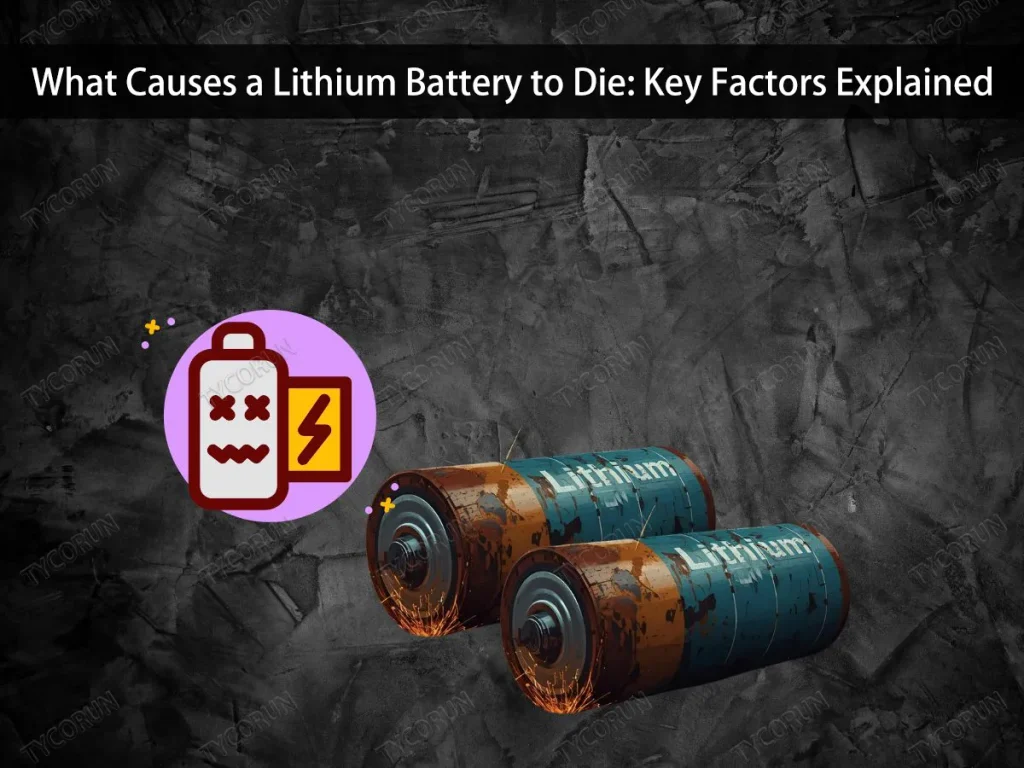
What Causes a Lithium Battery to Die: Key Factors Explained
It should come as no surprise that lithium batteries are the preferred technology for many contemporary devices due to their efficiency, portability, and high energy storage capacity. However, their performance gradually deteriorates. This frequently raises the question, what causes a lithium battery to die?
The response is not as simple as “because of age.” Actually, a variety of factors contribute to an effect in the deterioration of lithium battery performance. A battery’s capacity gradually decreases as a result of the chemical reactions that take place inside it each time it is used. Understanding what causes a lithium battery to die can help us identify behaviors or circumstances that may unintentionally hasten damage.


What Causes a Lithium Battery to Die?
What causes a lithium battery to die can be explained by a variety of interconnected factors. This is because lithium batteries have a short lifespan and lose some of their storage capacity with each charge and discharge. However, if the battery is regularly exposed to high levels of stress, this performance decline may occur much more quickly.
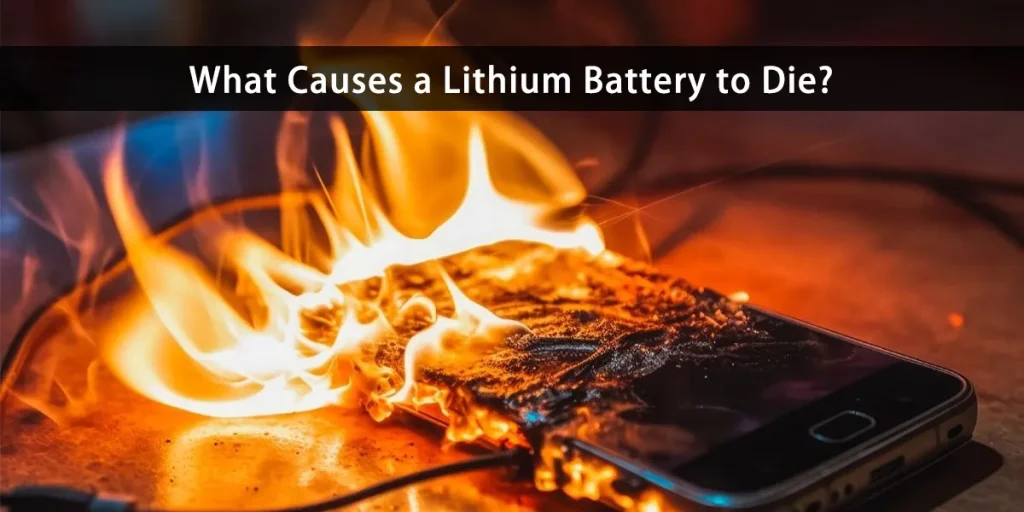
Here are some key factors to know:
- Multiple charging and discharging cycles: every time a battery is charged and discharged, a small amount of its capacity is lost. Naturally, the battery’s durability declines after hundreds of cycles.
- High temperatures and overcharging: the biggest enemy of lithium batteries is heat. Long-term charging or exposure to high temperatures can hasten cell damage and reduce battery performance.
- Full discharge: excessive use of the battery can accelerate chemical deterioration in the cells and result in a sharp drop in voltage.
- Chargers are incompatible: the battery’s protection system may be harmed and its lifespan reduced if chargers are used with voltages or currents that deviate from the manufacturer’s recommendations.
- Internal protection systems and material quality: low-quality batteries and Battery Management Systems (BMS) have a tendency to degrade more quickly due to their inability to properly balance power distribution.
What Is the Average Lifespan of a Lithium Battery?
Lithium batteries have an average lifespan of two to five years, depending on usage and maintenance. However, if users do not know what causes a lithium battery to die in the first place, that number may be lower. The capacity of a battery steadily declines with each full cycle of charging and discharging. The battery will start to lose its capacity to store power at its best after hundreds of cycles. You can also read lithium ion battery capacity for more insight
This aging process can be accelerated by a number of external factors, including high temperatures, overcharging, and using the battery until it is completely depleted. In other words, the battery’s lifespan will decrease more quickly the more times it is exposed to high levels of stress. For this reason, determining the causes of a lithium battery’s death is crucial to extending and estimating its lifespan.
Therefore, although lithium batteries are technically made to last a long time, user behavior has a significant impact on how long they actually last. Long-term battery life can be greatly increased and performance can be maintained by avoiding behaviors that lead to lithium battery death.
How Do You Know If Your Lithium Battery Goes Bad?
Sometimes lithium batteries do not suddenly die. The process is slow, but you can actually recognize the signs early on. Many people only notice when the battery can no longer hold a charge, despite the fact that the symptoms of a lithium battery dying often appear much earlier. By identifying these subtle indicators, you can determine when the battery is beginning to degrade and when to take action to stop additional harm.

- Rapid capacity decline: even though the battery has just been fully charged, it seems to drain quickly. One of the most frequent consequences of a lithium battery dying is this, which is typically brought on by too many charging cycles or too hot storage temperatures.
- When the battery is being charged or used, it feels too hot: overheating is a sign of internal battery cell pressure. This factor is frequently brought on by overcharging, which is one of the primary causes of lithium batteries die.
- The battery becomes swollen: this is a clear indication of damage to the battery’s internal chemical structure. Another consequence of the factors that lead to a lithium battery dying is unstable internal reactions.
- Device performance declines dramatically: inaccurate power indicators, slower charging times, or rapid device death can all be signs that the battery has lost its effectiveness because of the factors that lead to lithium battery death.
- The color or smell changes: despite being uncommon, a strong chemical odor or a change in the casing’s color may be signs of a dangerous internal reaction. This condition is typically brought on by a number of factors that contribute to the death of a lithium battery.
The Hidden Reasons Behind Lithium Battery Failure
Sometimes the answer to what causes a lithium battery to die is not as simple as “overcharging” or “overheating.” Many unseen elements gradually erode the battery’s internal structure without your knowledge. Even though you believe you have taken good care of the battery, some of them still happen. Here are some hidden reasons why lithium batteries deteriorate quickly:
- Temperature fluctuations are small but regular: small temperature variations, like going from cold air conditioning to room temperature, can lead to the battery’s internal materials constantly expanding and contracting, which eventually harms the cells.
- Inconsistent cell quality: there may be variations in cell quality even in brand-new batteries. The battery’s overall performance will suffer if one cell is weaker than the others.
- Electrical current that fluctuates while being charged: uneven charging may result from fluctuating power sources. Over time, this speeds up the battery’s internal chemical deterioration process.
- High humidity: a humid environment can cause water vapor to seep into the outer layer of batteries, causing minor chemical reactions that reduce battery life.
- Bad battery management system (BMS) design: batteries should be shielded from overcharging and overheating by BMS, but if the system is not precise or sensitive, it may actually hasten damage.
How to Prevent Your Lithium Battery from Dying Early
The next step after learning what causes a lithium battery to die is to figure out how to avoid it. If you follow the right usage habits, you can actually prolong the life of a lithium battery quite a bit. The way you charge, store, and care for it every day is crucial.

Here are some effective ways to prevent lithium batteries from dying quickly:
- Avoid letting the battery run entirely dead: in fact, waiting too long until it drops to zero speeds up internal chemical deterioration. When the capacity falls to about 20 – 30%, try to recharge.
- Do not constantly charge to 100%: excessive pressure within the battery may result from continuous full charging. To keep things balanced, charging should ideally be kept to 80–90%.
- Make use of a high-quality, specification-compliant charger. Incorrect chargers that generate erratic electrical currents are the root cause of many cases of what causes a lithium battery to die.
- Maintain a consistent room temperature: excessive heat or cold can hasten the process of internal deterioration.
- Remove the battery from the device when not in use for a long time: the battery may lose capacity without you noticing if it is kept at full capacity for an extended period of time.
- Ensure good ventilation and air circulation: it can trap heat and hasten damage if the battery is used in a closed area with insufficient ventilation.
Can a Dead Lithium Battery Be Restored?
Many people wonder if a completely dead battery can be restored. It is natural to hope that a lithium battery can be repaired after learning what causes a lithium battery to die. Unfortunately, restoring a completely dead lithium battery is often difficult, if not impossible. The battery’s internal chemical structure starts to sustain irreversible damage when the voltage drops below the safety threshold. This reaction makes it impossible for lithium ions to move effectively, which makes it impossible to store or release power steadily.
There are some technical ways to restore a dead battery, such as using a specialized charger with a boost mode. However, this procedure carries a high risk, particularly if the battery has sustained damage over time or if overheating is the cause. In these cases, attempting to revive it may actually cause a fire or an internal short circuit.
For the most part, “dead” batteries will not regain their original state, though some may be partially recovered. Therefore, preventing the problem from happening in the first place is far more effective than concentrating on fixing what has already been damaged.
You can also read can you charge a damage lithium battery for more insight
Safety Tips When Handling Dying Lithium Batteries
Following a knowledge of what causes a lithium battery to die, we must make sure that damaged batteries are properly disposed of. Completely dead lithium batteries cannot be thrown in the trash because they still contain reactive chemicals and residual energy. They need to be disposed of appropriately to protect both the environment and human health.
- Batteries should not be disposed in household waste: throwing dead batteries away with ordinary trash is a common mistake that can result in fires if they are crushed or come into contact with heat.
- Remove batteries from devices before disposal: to avoid short circuits, make sure the batteries in devices, power banks, and other electronic devices are taken out.
- Insulate the battery terminals: to avoid short circuits, cover the positive and negative poles with thick tape or insulation.
- Temporarily store in a secure location: batteries should be kept in a fireproof bag or metal container before being taken to a recycling facility. Steer clear of hot or humid areas.
- Bring it to an e-waste or recycling facility: these facilities handle chemicals and heavy metals from lithium batteries according to specific protocols.
- Do not burn batteries, for any reason: this is among the riskiest actions to take and indirectly contributes to what causes a lithium battery to die, which can result in an explosion.
Conclusion
It can be concluded, the answer to the question: what causes a lithium battery to die? Is determined not only by the battery’s age, but also by how users treat it. High temperatures, excessive charging, and even minor variations in daily usage can hasten the deterioration process without the users’ knowledge.
Even though lithium batteries are made to be long-lasting and effective, their performance will deteriorate with time. However, the battery’s lifespan can be greatly increased with appropriate usage practices, such as avoiding overcharging, keeping storage temperatures steady, and using a high-quality charger.
Additionally, properly disposing of the battery is a crucial last step when it can no longer be saved. It can be disposed of at a specialized recycling facility to reduce the risk of pollution and fire.
FAQS
Can heat really kill a lithium battery?
Yes. Heat is one of the biggest factors that can permanently damage lithium batteries. High temperatures speed up internal chemical reactions, which cause the cells to degrade faster and reduce their capacity over time. country in question. These voltage measurements are typically done in frequencies or cycles per second called Hertz which the widely accepted is between 50Hz to 60Hz.
Is 12v AC or DC
Why is my lithium battery draining so fast?
Fast battery drain usually happens because of frequent full charging and discharging, exposure to heat, or aging cells. It can also be caused by using incompatible chargers or keeping the battery at 100% for too long.
How long can a lithium battery last without use?
If stored properly in a cool, dry place at around 40–60% charge, a lithium battery can last from six months to two years without major degradation. But poor storage conditions can make it deteriorate much faster.