Skip to content
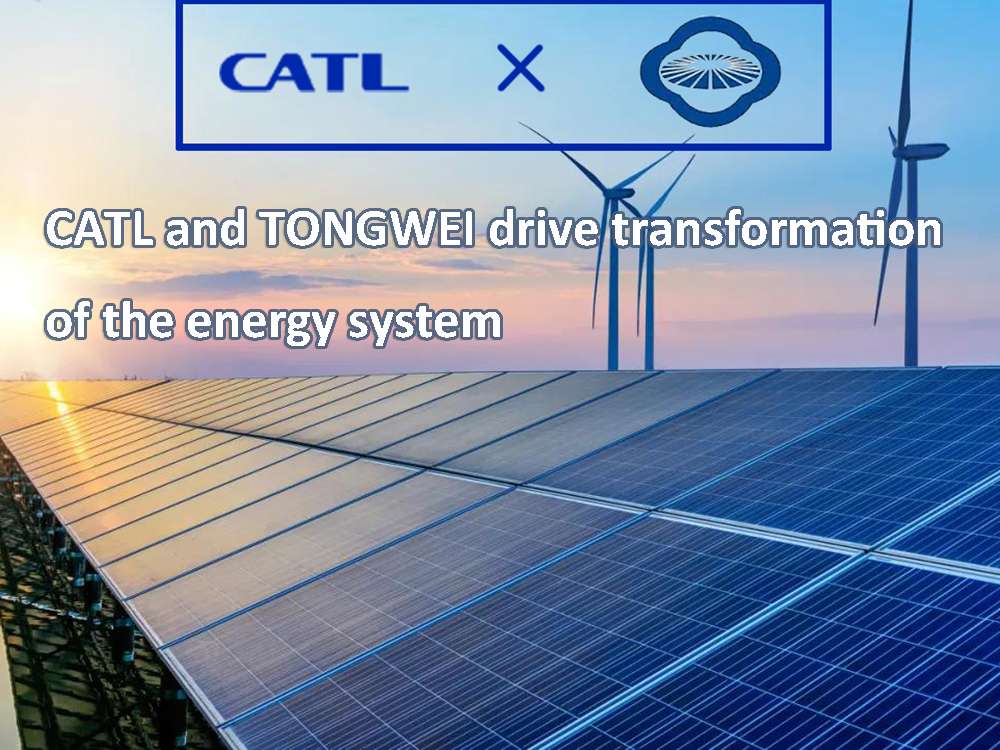


TONGWEI intends to reshape the photovoltaic industry
On August 17, 2022, China Resources Power announced the successful bidders for the fifth batch of PV modules and equipment centralized procurement of PV projects. The first bidder was actually TONGWEI Solar (Hefei) Co., Ltd. with a bid price of 5.827 billion RMB. The winning bid by TONGWEI is regarded by the market as a signal that it will cut into the component track.
According to the tender announcement, the scale of China Resources Power’s centralized procurement is 3GW. It is reported that Yijing Optoelectronics and LONGi Green Energy are also participating in this bidding. TONGWEI’s single-watt offer is 0.05RMB lower than that of Yijing Optoelectronics and 0.08RMB lower than that of LONGi Green Energy.
The profit per watt is around 0.05RMB to 0.1RMB. Overall, the quotation of TONGWEI Solar is nearly RMB 240 million lower than that of LONGi Green Energy, beating other players by virtue of its price advantage.
People in the photovoltaic cell industry believe that TONGWEI can win the bid for China Resources 3GW module procurement, which proves from the side that the company has the module mass production capacity. In addition, TONGWEI itself is a leading company in the upstream silicon material and battery field. If its integrated photovoltaic industry layout is completed ahead of schedule, it may set off a fierce competition for market share and may reshape the entire photovoltaic industry.
The photovoltaic industry is divided into several major links, such as silicon materials, silicon wafers, cells, modules, and photovoltaic power plants. Each link has formed some large-scale leading companies. Although the competition situation is fierce, However, the competitive landscape is relatively stable, and there is no one company that takes all the upstream and downstream industry chains.
You must know that in the photovoltaic circuit, TONGWEI has always been a double leader in the field of silicon materials and batteries. Now it is necessary to cut into the component track by means of a “price war”, which means that its integrated production has taken shape. This is a pair of component leaders LONGi Green Energy, JA Solar, JinkoSolar, Yijing Optoelectronics, and Risen Energy are under a lot of pressure.
Affected by the above events, on August 19, a huge earthquake occurred in the A-share photovoltaic sector, and the share prices of module manufacturers fell the most. Among them, Trina Solar ranks first in top 10 solar battery manufacturers in the China, the leader in modules, had the largest intraday drop of more than 16%, and its market value had evaporated by 27 billion compared with the previous day; LONGi Green Energy’s biggest intraday drop was over 8%; JA Solar hit the daily limit. In 2021, the net profit of 81 listed photovoltaic companies will total 66.313 billion RMB. The top three net profits are LONGi with 9.086 billion RMB, TONGWEI with 8.208 billion RMB and TBEA with 7.255 billion RMB.

By 2022, the profits of the photovoltaic industry will continue to be concentrated in the upstream silicon material enterprises. In the first half of 2022, TONGWEI will achieve an operating income of 60.339 billion RMB, a year-on-year increase of 127.16%. The net profit attributable to shareholders of the listed company was 12.224 billion RMB, a year-on-year increase of 312.17%, and the net profit after deducting non-profits was about 12.493 billion RMB, a year-on-year increase of 317.19%.
In the first half of 2022, the total profit of listed companies in the photovoltaic industry was 65 billion RMB. The profit of one company, TONGWEI, accounted for 18.8% of the total profit of the photovoltaic industry, nearly double that of the second-ranked LONGi Green Energy, and more than that of all listed photovoltaic module companies. The total net profit is even higher. The gross profit margin of TONGWEI’s silicon material is as high as 66.69%, which is much higher than the 10-15% gross profit margin of the module segment.
TONGWEI cut into the module link and won the bid this time, which can be regarded as opening up the downstream photovoltaic industry. With the cost advantage of upstream and downstream integration, it has completely formed an industrial chain of “silicon material + silicon wafer + battery + module + power station”. With the current price of silicon material rising, TONGWEI has broken the inherent market structure of the industry and will bring earth-shaking changes.
CATL attempts to enter the photovoltaic cell industry
Another giant in the battery industry, CATL, one of top 10 lithium ion battery manufacturers in the world, is trying to enter the photovoltaic battery industry and play the integration of photovoltaic + energy storage. On May 5, 2020, CATL Chairman Zeng Yuqun said at the performance briefing that the company’s perovskite photovoltaic cell research is progressing smoothly, and a pilot test line is being built, and CATL’s layout of solar photovoltaic cells has been officially announced to the public.
This piece of information did not attract extensive attention from the outside world at that time, but it inadvertently revealed that CATL’s energy layout was no longer limited to the field of chemical batteries, but resolutely stepped into the field of physical batteries. In fact, CATL participated in the Pre-A round of investment in the perovskite concept company GCL Optoelectronics as early as two years ago. After thinking about it for a while, it is clear that Zeng Yuqun is not satisfied with being an investor, but has to go into the game.
In 2021, CATL’s operating income will be 130.356 billion RMB, with a growth rate of 159.06%; the net profit attributable to shareholders of listed companies will be 15.931 billion RMB, with a growth rate of 185.34%; The net profit attributable to shareholders of listed companies after deducting non-recurring gains and losses was RMB 13.442 billion, a growth rate of 215.20%.

In the first half of 2022, CATL’s operating income was 112.971 billion RMB, a year-on-year increase of 156.32%; the net profit attributable to the parent was 8.168 billion yuan, a year-on-year increase of 82.17%.
Although the operating income still maintains a rapid growth, the profit growth rate obviously cannot keep up with the income growth rate, which is reflected in the obvious decline in the company’s gross profit margin.
In the first half of 2022, the gross profit margin of power battery systems was 15.04%, a year-on-year decrease of 7.96%; the gross profit margin of lithium battery materials was 20.65%, a year-on-year decrease of 0.5%; the energy storage system gross profit margin was 6.43%, a year-on-year decrease of 30.17%.
Zeng Yuqun, chairman of CATL, in addition to the in-depth integration of the upstream and downstream of the lithium battery industry chain, also set his sights on the chemical battery industry, trying to take the lead in making breakthroughs in the third-generation photovoltaic cell technology, so as to open up the physical battery industry. channel and expand its new energy territory.
On September 4, 2022, CATL Chairman Zeng Yuqun led a team to visit the headquarters of Sungrow Power Group. The two parties had a symposium and exchanged views on further deepening the global cooperation between CATL and Sungrow in new energy fields such as photovoltaics and energy storage. Formally signed a strategic cooperation agreement.
Obviously, the layout of CATL is already unfolding, and more action is expected to follow.

Green electricity + energy storage – the way for human society to be carbon neutral
In 2022, extreme high temperature weather will appear around the world, and many countries and regions have set historical high temperature records. Severe droughts will occur in places that used to be rainy, and severe floods will occur in places that used to be dry. The earth is warming at an accelerated rate, and various extreme natural disasters, which originally occurred once every 50 years, or even once every 100 years, now occur once every two or three years.
From 1850 to 2021, the carbon concentration in the earth’s atmosphere rose from 285PPM to 417PPM, an increase of about 50%, and the average temperature of the earth’s surface rose by 1.3℃ during the same period. The increase of carbon concentration in the air is one of the main reasons for the rise of the earth’s temperature, which leads to the increasing frequency of disasters such as extreme heat, drought, floods and earthquakes, and the living environment of human beings has become very bad. In order to effectively protect the living environment, control carbon emissions and achieve carbon neutrality, it has become a political consensus of countries around the world. The Paris Agreement was adopted by 197 countries at the twenty-first session of the Conference of the Parties in Paris on 12 December 2015.
The agreement aims to significantly reduce global greenhouse gas emissions and limit global temperature rise to below 2°C this century, while seeking measures to further limit the rise to 1.5°C. Most developed countries such as Europe and the United States pledged to achieve carbon neutrality by 2050, while developing countries represented by China pledged to achieve carbon neutrality around 2060.
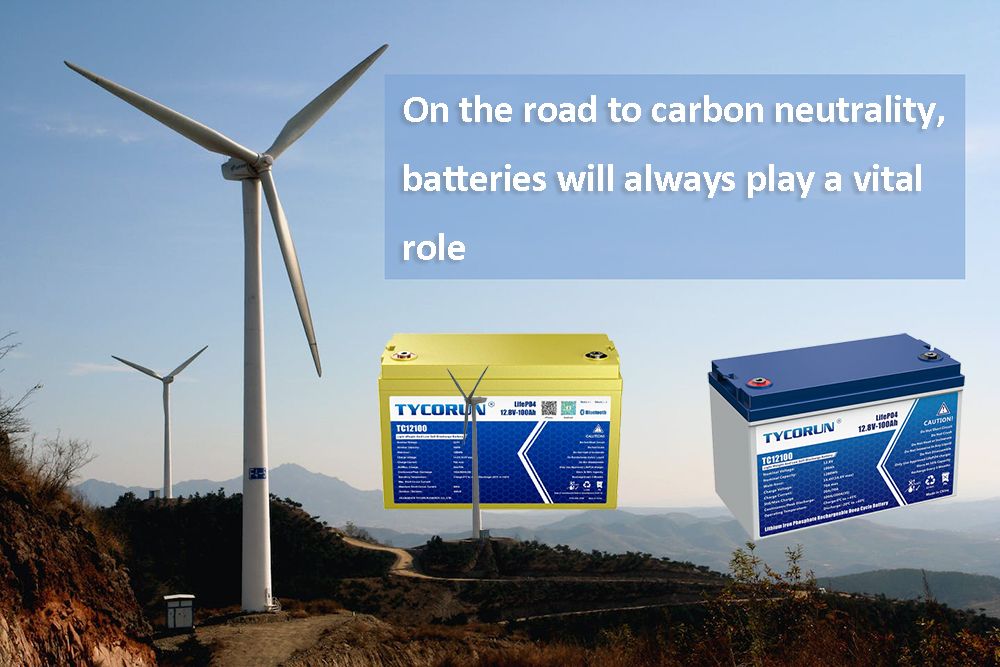
On the road to carbon neutrality, batteries have always played a vital role. Photovoltaic cells can convert sunlight reaching the earth’s surface into electrical energy needed by human beings to achieve the goal of renewable energy generation. Chemical batteries, represented by lithium batteries like powerwall battery, can store excess electrical energy for use when people need it. As crystalline silicon cells gradually approach the limit of photoelectric conversion efficiency, in recent years, the third-generation non-silicon thin-film cells represented by perovskite cells have gradually become a new research direction and breakthrough point in photovoltaic cell technology.
With the advantages of high conversion efficiency and low cost, many giants have begun to deploy. The shortage of lithium resources has caused the cost of lithium batteries to rise sharply, and it has also made sodium-ion batteries with abundant energy storage and relatively low cost an important development direction of chemical batteries, which will be industrialized and scaled in the near future.
The transition from petrochemical energy represented by coal, oil, and natural gas to clean energy and renewable energy dominated by wind power, photovoltaics, and hydrogen is a major trend in the transformation of the global energy system. It is estimated that by 2050, more than half of the world’s energy consumption will use clean energy with almost no carbon emissions,
Renewable energy power generation + energy storage will become the core link of global clean energy production, transmission and use, making a huge contribution to achieving carbon neutrality and protecting the global environment. Excellent companies represented by TONGWEI and CATL have seen this trend and used their own strength to promote the transformation of the energy system, accelerate the development of the new energy industry, and welcome the arrival of the carbon neutral era. The resonance of the enterprise and the times at the same frequency will create a great cause and a cause that benefits all mankind.