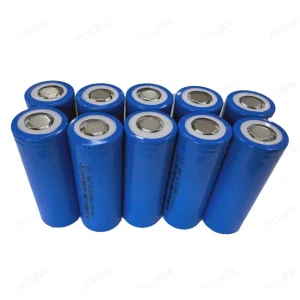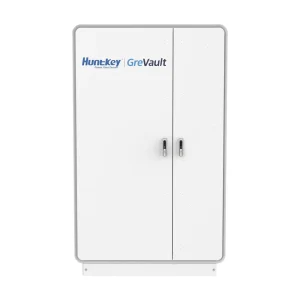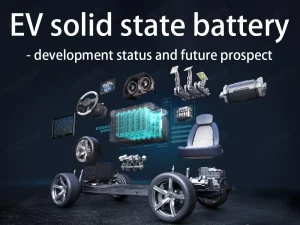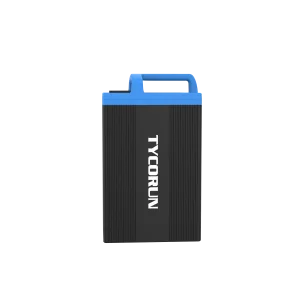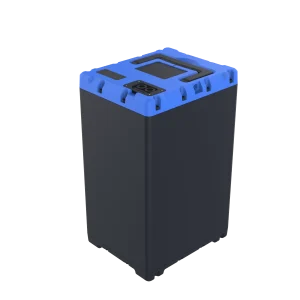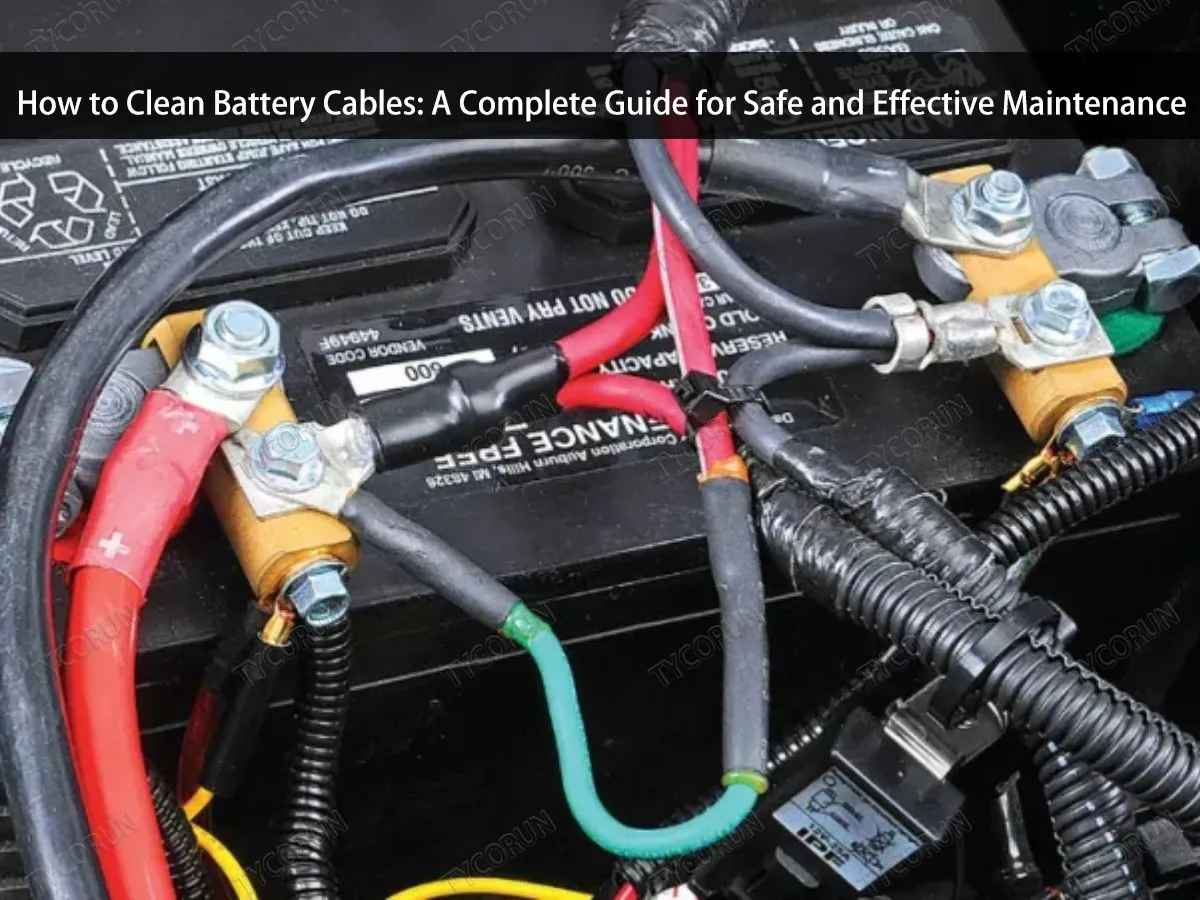

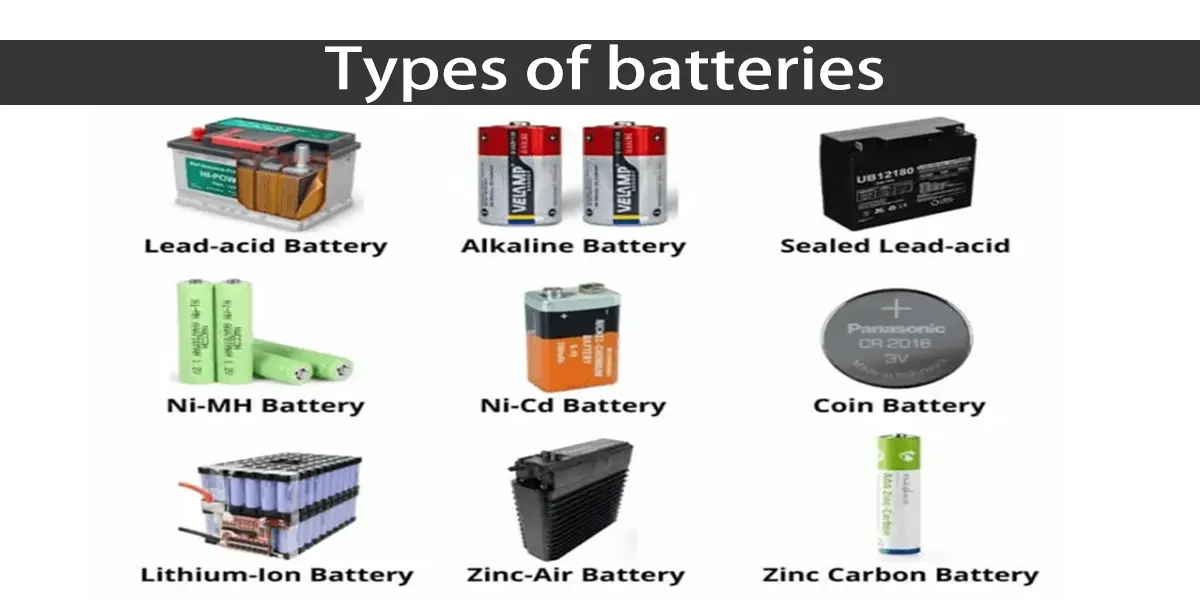
There are physical batteries, chemical batteries, biological batteries.
Physical batteries are: solar cells, nuclear batteries supercapacitors.
Chemical batteries can be divided into: primary batteries, secondary batteries, fuel cells.
Biological batteries are: microbial batteries, enzyme batteries.
Life common solar cells, primary batteries, secondary batteries of lithium batteries, sodium batteries will soon be commercialized, hydrogen fuel cell will be carbon neutral, carbon peak of the ultimate energy source.
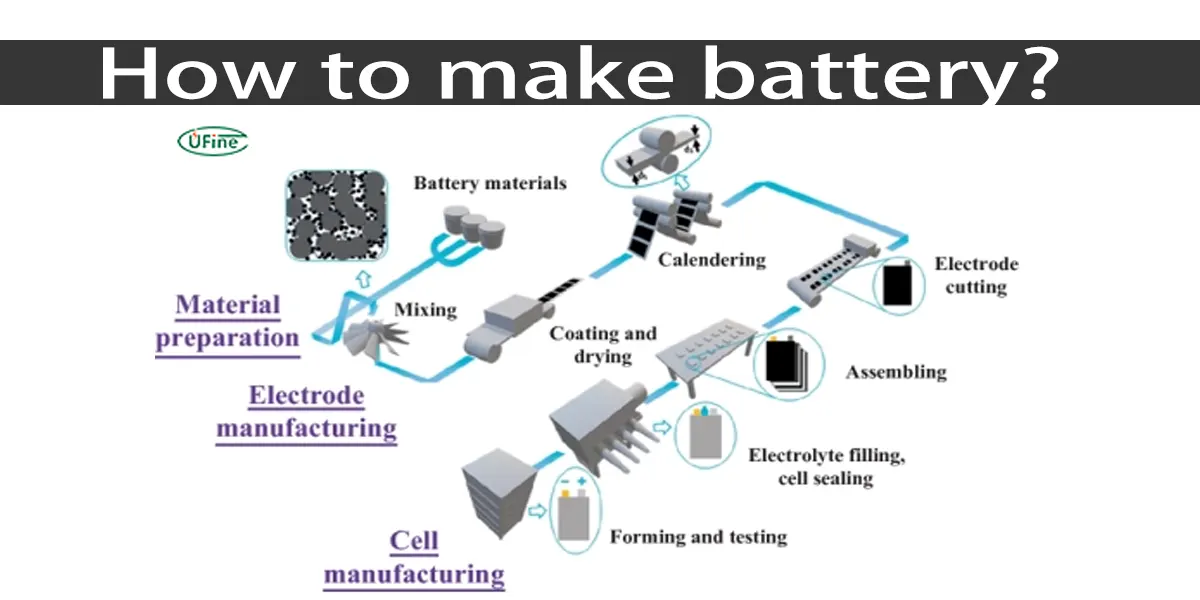
- Fabrication of electric cell (Cell)
- Material Mixing and Stirring
In the production of battery cells, raw materials need to be accurately proportioned and mixed. The process of mixing and stirring is to realize the homogeneous mixture of various raw materials to ensure the stable performance of the battery. - Positive and Negative Electrode Preparation
After mixing and blending, the positive and negative electrode materials need to be prepared into positive and negative electrode wafers through the processes of pressing and mold forming. During the preparation process, the thickness, density and other parameters of the materials need to be strictly controlled to ensure the performance and quality of the positive and negative electrode wafers. - Assembly of the core: The positive and negative electrode sheets, diaphragm and electrolyte are laminated and assembled in a certain order and method to form a preliminary core structure.
- Encapsulation of electric core: Seal and fix the manufactured electric core. In the encapsulation process, it is necessary to ensure that there is a certain insulation layer between the electric core and the shell to prevent the electric core from short-circuiting and other safety accidents.
- Module production
- Connect the encapsulated battery cells with the battery management system (BMS) to form a complete battery cell module. This step involves the choice of connection between the battery cell and BMS, welding technology and sealing performance requirements, which is directly related to the overall performance and safety of the battery module.
- Common battery modules can be divided into three forms: welding, screwing and mechanical crimping according to the connection between the battery cell and the conductive busbar.
Welding methods mainly include laser welding, ultrasonic welding and resistance welding, with high efficiency, easy to realize the characteristics of automated production. - Screwing method is relatively simple, used for anti-loosening screws to fix the connection between the battery cell and the busbar, especially suitable for single large capacity battery system. Mechanical crimping relies on the elastic deformation of the conductive parts to maintain the electrical connection between the battery and the circuit, with the advantages of flexible disassembly and high recycling rate.

- Battery pack production (Pack)
- Best battery pack consists of several battery modules, the assembly of battery modules requires a moderate degree of tightness, the structural components have sufficient strength. Battery modules are generally fixed to the nut at the bottom of the box using long bolts through the module, there are also battery packs in order to save space, the use of double-layer module form.
- There are high and low voltage connectors distributed on the battery pack or BMS, which require the use of sensor-based tools for data collection and tightening. There are total positive and negative high voltage wiring harnesses inside the pack that need to be connected to the assembly, and this portion of the connection has a voltage of hundreds of volts, so it needs to be insulated.
- Battery packs are usually made of aluminum, with dozens of bolts connecting the top cover to the lower case. When tightening, it is necessary to ensure an even distribution of stresses to avoid torque decay.
- Voltage and Capacity Test
- Voltage Test
For newly made batteries, the first step is to conduct an open circuit voltage test. - Capacity Test
Adopt constant current discharge method to test battery capacity. - Cycle life test flow
- Test Equipment Preparation
Choose a professional battery cycle tester to ensure it can accurately control the charging and discharging parameters. - Test Parameter Setting
For Li-ion batteries, the charging process usually adopts constant current – constant voltage mode. - Cycle Test Process
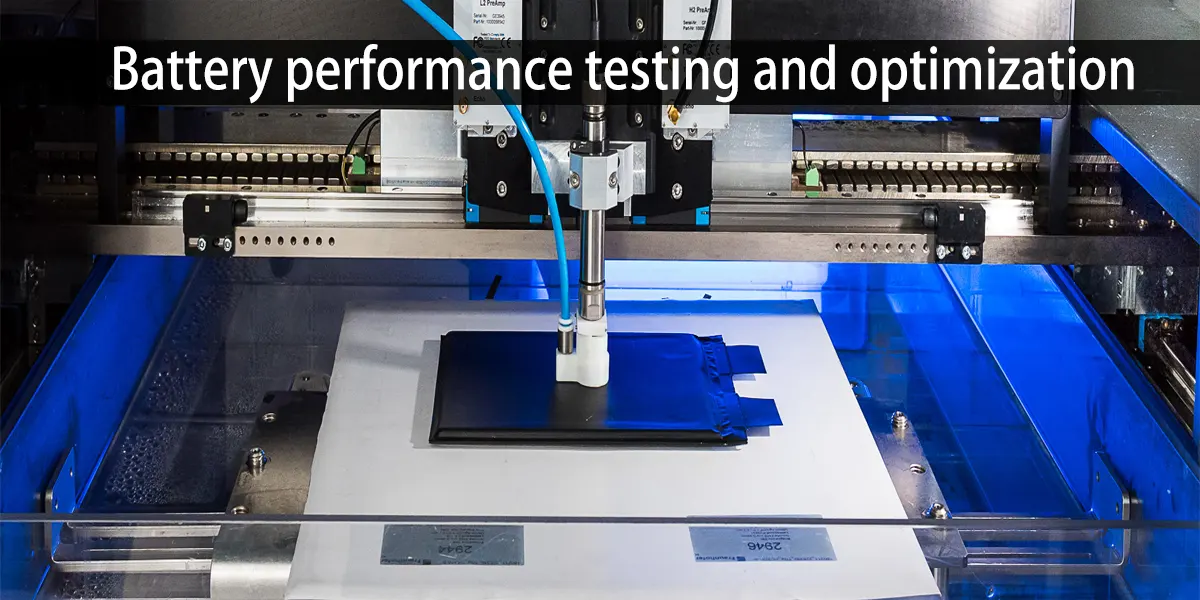
After starting the battery test, the battery cycle tester automatically carries out charging and discharging cycles according to the set parameters.
- Safety Performance Test
- Overcharge test: Connect the battery to the overcharge test equipment and set the charging voltage higher than the normal charging voltage.
- Over-discharge test: Discharge at a voltage lower than the normal cut-off voltage.
Short-circuit test: short-circuit the positive and negative terminals of the battery with a low-resistance wire to instantly generate a high current. Monitor whether the battery has overheating, fire or explosion phenomenon, under normal circumstances, the battery internal protection circuit should quickly cut off the circuit. - Process optimization based on test results
- Electrode material adjustment
If the capacity test result is lower than expected, it may be necessary to adjust the ratio of positive or negative electrode materials. - Assembly process improvement
If problems are found during the safety performance test, such as the battery protection circuit failing to cut off the circuit in time during the short-circuit test, it is necessary to check whether the electrode tabs inside the battery are neatly stacked, whether the diaphragm is damaged, and whether the wires are securely connected, and other aspects of the assembly process. - Electrolyte Optimization
Consider optimizing the electrolyte formula when the capacity of the battery decreases severely under low temperature environment.