Skip to content
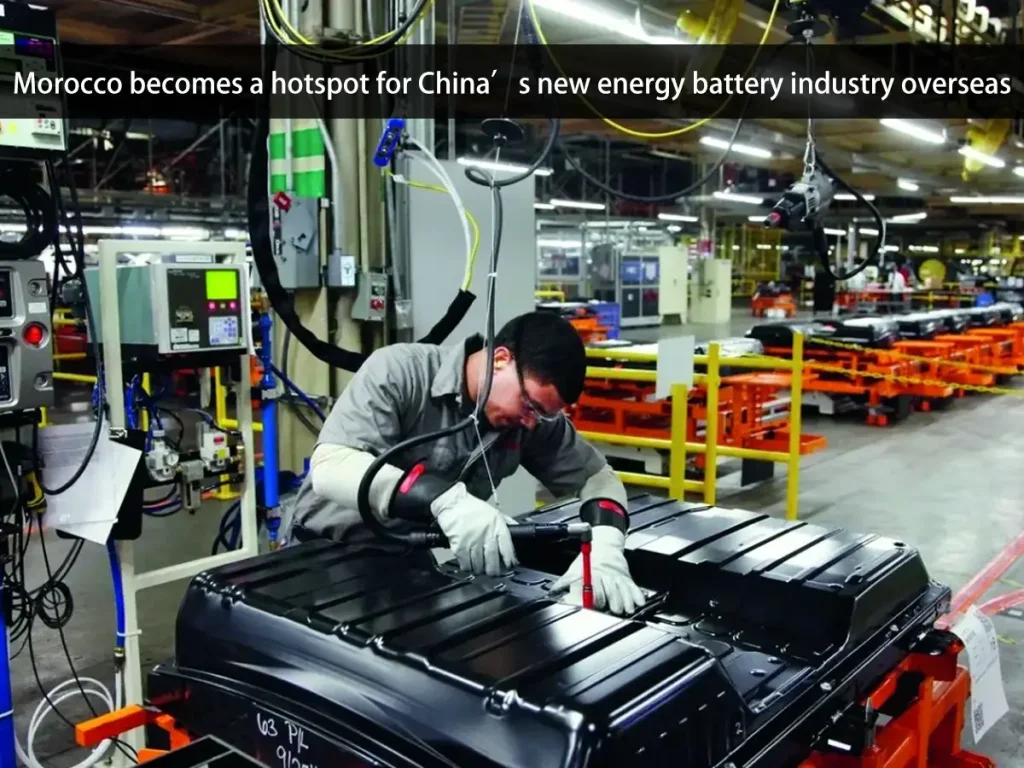


Recently, Morocco has planned to build the AL JORF Power Battery Industrial Acceleration Zone, aiming to establish a complete industrial ecosystem and create an industrial innovation center integrating the power battery, chemical, mining, electronic technology, and automotive industries. The acceleration zone covers 283 hectares, located south of Casablanca, and is Morocco’s first power battery industrial acceleration zone. It has already attracted three investment projects with an investment amount of approximately $2.4 billion.
China is Morocco’s third-largest trading partner, with a total trade volume of 39.5 billion dirhams (approximately $3.97 billion) in 2016. According to data from the Moroccan Ministry of Industry and Trade, the annual growth rate has been 18.2% since 2001. Currently, Morocco has an annual production capacity of 40,000 electric vehicles. The Moroccan government’s goal is to increase production to around 100,000 vehicles by 2025.
According to data from the Moroccan Stock Exchange, the revenue of the Moroccan automotive industry reached $7 billion by the end of June 2023, with an annual growth rate of 34%. Moroccan government officials stated that the demand for electric vehicle batteries in the surrounding energy storage market is growing. Renault and Stellantis have both established factories in Morocco, with a combined production capacity of 700,000 vehicles per year, targeting both the Moroccan domestic and global markets. Additionally, Morocco has more than 250 automobile manufacturers and parts suppliers, collectively forming the country’s automotive ecosystem. Morocco has signed free trade agreements and preferential trade arrangements with 56 countries, covering a market of 1 billion people.
Gotion High-tech: Gotion High-tech, one of lithium battery manufacturers, signed a strategic investment agreement with Morocco, under which Gotion High-tech will build the country’s first power battery super factory in Kenitra, with an expected investment of 12.8 billion Moroccan dirhams (approximately 9.3 billion RMB). The initial battery capacity of the factory is 20 GWh, with plans to gradually increase the lithium ion battery capacity to 100 GWh, and the total investment is expected to reach 65 billion Moroccan dirhams (approximately 47.4 billion RMB).
Tinci Materials: On June 27, 2023, Tinci Materials announced that it intends to establish a wholly-owned Moroccan management company through its wholly-owned subsidiary Singapore Tinci Investment. Tinci Materials will invest $280 million to build a factory in Morocco with an annual output of 300,000 tons of lithium battery materials, including 150,000 tons of electrolyte, 100,000 tons of lithium hexafluorophosphate, and 50,000 tons of lithium iron phosphate.

BTR: BTR and its wholly-owned subsidiary BNUO plan to sign an investment agreement with the Kingdom of Morocco, intending to establish a project company in Morocco through BNUO to invest in a project with an annual output of 50,000 tons of lithium battery cathode materials, with a total investment not exceeding 3.535 billion RMB.
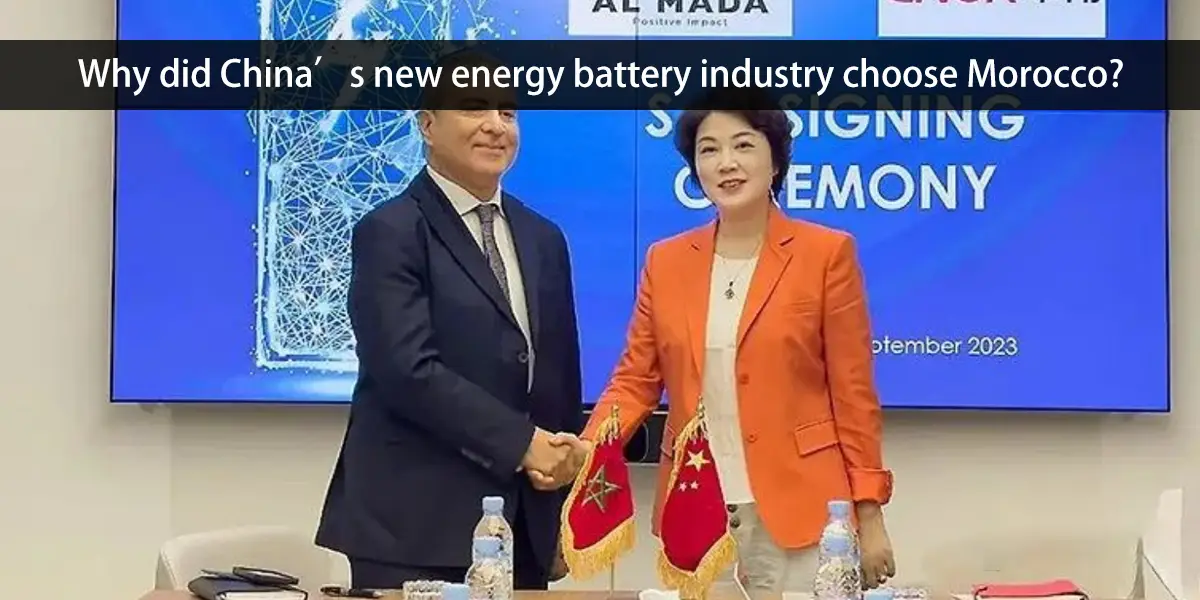
CNGR: The company announced a joint venture with Morocco’s Al Mada investment group to establish a $2 billion “global and trans-Atlantic base” in Morocco.
Huayou Cobalt: On September 24, 2023, LG Chem announced that it will build an electric vehicle battery materials plant in Morocco in partnership with Huayou Cobalt, which is scheduled to start production in 2026 with an annual output of 50,000 tons of lithium iron phosphate cathode materials. LG Chem stated that the lithium iron phosphate cathode materials produced by the Moroccan plant will be supplied to the North American market. Due to the free trade agreement between Morocco and the United States, the plant can receive subsidies under the US Inflation Reduction Act. LG Chem also announced an additional investment plan to establish a lithium conversion plant in Morocco with Huayou Cobalt, with the goal of starting mass production by 2025, with an annual capacity of 52,000 tons of lithium.
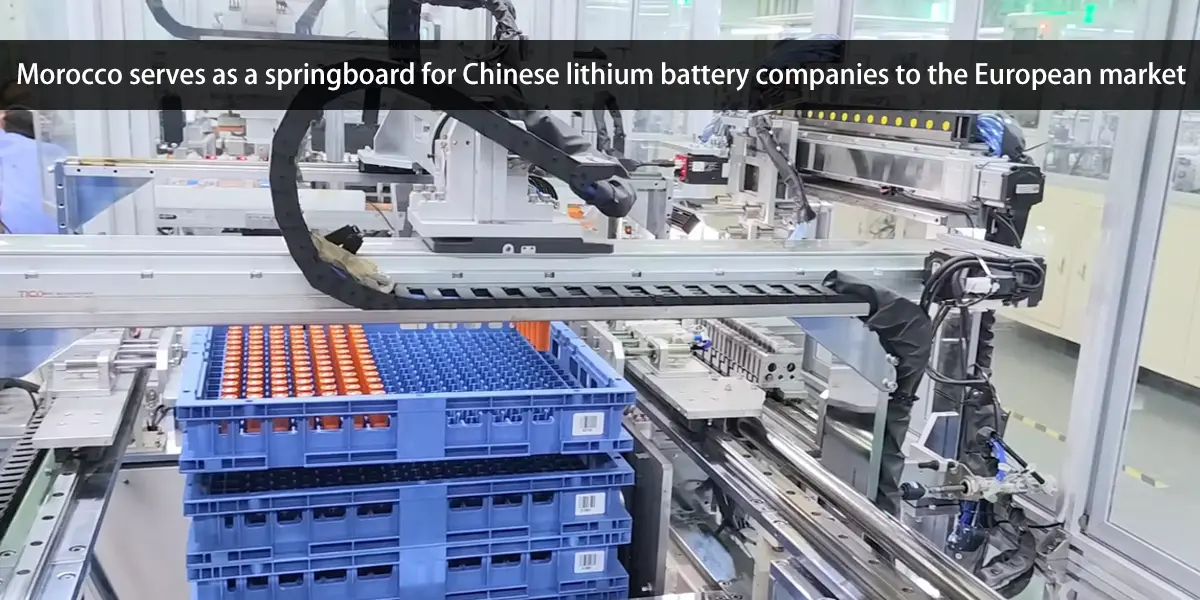
These companies will not only introduce advanced battery manufacturing technology and equipment but will also establish production lines locally, forming a complete automotive battery supporting industrial zone, deeply participating in the construction and operation of the battery production industrial park. According to a report by Morocco’s “Economist Daily” on April 2, the export value of investors in the power battery value chain is expected to reach 40 billion euros by 2030.
Superior geographical location
With the global energy structure changing and the electric vehicle market developing rapidly, Morocco, located on the western edge of the Middle East and North Africa region, is quietly emerging as a new center for electric vehicle battery manufacturing due to its unique geographical location, abundant resources, and close economic and trade ties with the West, attracting a large number of Chinese companies to enter Morocco.
Resource advantages
Morocco is an African country with resource advantages, the most important of which is phosphate resources, with reserves of 50 billion tons, accounting for more than 70% of the world’s reserves.
Other resources include iron, lead, cobalt, manganese, barite, copper, salt, magnetite, anthracite, and oil shale for different lithium battery types. Among them, oil shale reserves exceed 100 billion tons, containing 60 billion tons of crude oil, accounting for 3.5% of the world’s total. Morocco’s phosphate reserves are 50 billion tons, accounting for 73% of the world’s reserves. Lithium iron phosphate (LFP) batteries are much cheaper than nickel, cobalt, and manganese ternary lithium batteries, and are welcomed by manufacturers.
Phosphorus is a non-renewable resource with leading production but insufficient reserves. What problems does this bring? It is predicted that China’s phosphate mines may be exhausted within the next 40 years. With the recent environmental rectifications, China’s production capacity and output have both declined at an annual rate of 10%.
Since 2022, China has frequently experienced shortages of spot phosphate mines, and prices have continued to rise. On one hand, there is a shortage of phosphate supply, and on the other hand, the demand for phosphate from the power battery industry is increasing.
In the future, China may partially rely on imported phosphate, and Morocco will naturally become a potential major source of imports. In recent years, major Chinese industry giants have intensively announced the establishment of production bases in Morocco, promoting Morocco to become an important global base for battery material production. Morocco has now become a gathering place for China’s new energy battery industry.
Political stability
Social harmony is Morocco’s greatest advantage in conducting international cooperation. Whether during the “Arab Spring” movement in 2011 or in recent years when extreme religious forces and terrorism have spread, Morocco has maintained political and social stability.
Trade openness advantage
Morocco’s economy is highly open, having signed free trade agreements with the EU, the US, and others, covering 56 countries, reaching a market of 1 billion people. In 2019, Morocco joined the African Continental Free Trade Area, consolidating its foundation for expanding exports and cooperation with Africa.
In 2006, the US-Morocco Free Trade Agreement came into effect. After the US President signed the Inflation Reduction Act in 2023, Chinese battery manufacturing companies had to increase investments in countries with free trade agreements with the US to circumvent barriers set by the US. In 2010, the EU and Morocco established a free trade zone. Goods originating in Morocco can freely enter the EU market. In 2019, the African Continental Free Trade Area Agreement was also approved by the Moroccan government.
In 2022, China and Morocco signed a cooperation plan to jointly promote the Belt and Road Initiative, making Morocco the first country in the North African region to sign a joint Belt and Road cooperation plan with China.