 Skip to content


This incident has drawn attention once again to the delicate relationship between automotive leaders and upstream lithium battery suppliers. The intervention of auto giants has directly seized the best market share of lithium battery manufacturers. Does this represent a trend?
At present, the lithium battery manufacturer, which is the core of the lithium battery industry, is experiencing double squeeze from gross profit margin and market share. At the same time as the price of lithium carbonate has risen sharply, downstream customers have come to seize market share, which has become a systematic challenge faced by lithium battery manufacturers, and has also attracted the attention of the capital market.
The integrate trend of electric vehicle companies
The chairman of GAC Group joked at the conference that all the money of auto companies was earned by lithium battery manufacturers. This may be the voice of GAC’s determination to intervene in the lithium battery sector. After all, the gross profit margin of the OEM is too low. If GAC has a market, brand and channel, it is not as good as the mature lithium battery manufacturing upstream. This is too easy for GAC Group to make decisions, and this does not take into account other factors such as supply chain security.
GAC is not an solitary case. In fact, One of the top 10 power battery companies in the world Tesla and BYD, the two major electric vehicle giants, are deeply involved in the lithium battery sector. Among them, BYD is basically 100% self-sufficient and has become a standard model for the integration of electric vehicles and lithium batteries.
In addition, NIO Automobile also established NIO Battery Technology (Anhui) Co., Ltd. and began to develop and manufacture its own lithium batteries. The previous acquisition of Gotion High-Tech by Volkswagen China can also be regarded as an integrated layout. It can be expected that there will be more electric vehicle giants directly involved in the lithium battery sector, instead of establishing joint ventures with lithium battery manufacturers or simply doing PACK as in the past.
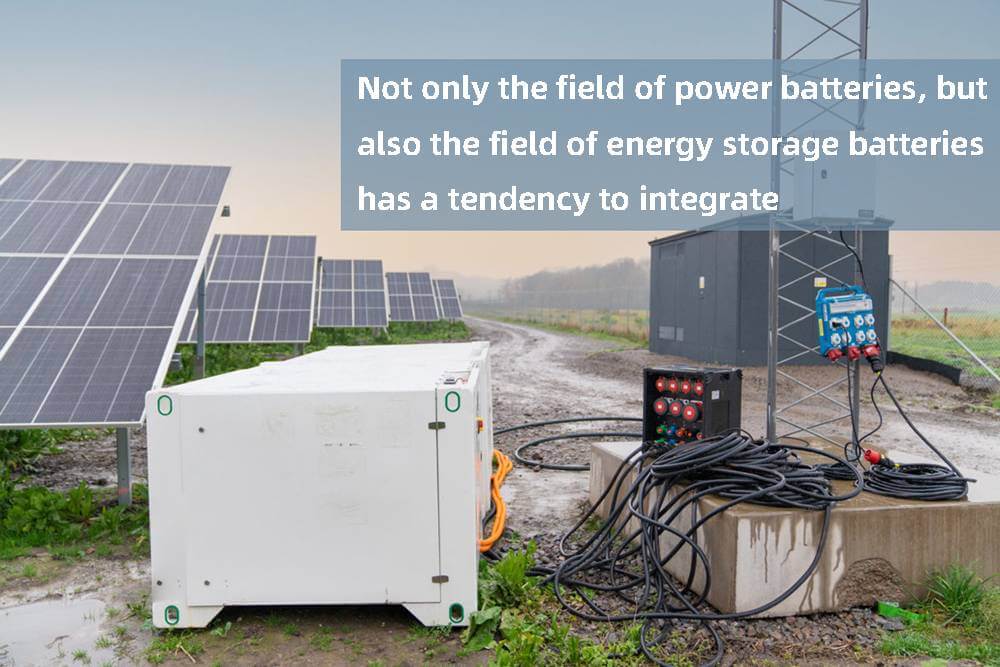
Not only the field of power batteries, but also the field of energy storage batteries has a tendency to integrate. As an energy storage brand and system integrator facing the end market, PYLONTECH is self-sufficient in lithium batteries. Compared with other energy storage companies, PYLONTECH also belongs to the upstream lithium battery integration. In addition, Desay battery, which has strategically laid out the energy storage business in recent years, has also begun to intervene in upstream lithium batteries, with a planned production capacity of 20GWh and a 4GWh phase in the first phase, focusing on energy storage cells.
In fact, with the breakthrough in the order volume of large-scale energy storage system integration companies, those energy storage giants with potential orders of 10GWh have enough power and impulse to intervene in energy storage batteries with a high degree of standardization.
In any case, regardless of power batteries or energy storage batteries, downstream electric vehicle companies or energy storage companies are trying to “upward integration” one after another to compete for a slice of the lithium battery segment. For independent lithium battery manufacturers, this means that they are losing high-quality customers and the most high-quality market share.
The impact of integration on the upstream and downstream
What impact does this “integration” have on the upstream and downstream of lithium batteries? Different types of lithium battery products or users of different scales have different situations. The key is to look at technical barriers.
The higher the technical barriers, the higher the requirements for safety, energy density, cycle times, etc., the stronger the discourse power mastered by lithium battery manufacturers, the more difficult it is for downstream auto companies or energy storage companies to “upward integration”.
The ternary prismatic battery has always shown this characteristic, which is also the best site for leading lithium battery manufactures. Lithium battery products in this regard are mainly reflected in the fields of mid-to-high-end electric passenger vehicles and specific energy storage, which are also the long-term technological dividends of independent lithium battery manufacturers, with certain excess profits.
Moreover, in areas with high safety requirements, outsourcing batteries can also diversify risks, and professional people do professional things. On the contrary, the more “standardized” mature products, the less obvious the technical requirements, and the easier it is for downstream auto companies or energy storage companies to intervene.
Lithium battery products in this regard are mainly reflected in the fields of medium and low-grade electric passenger vehicles, commercial vehicles, construction machinery, large-scale energy storage, two-wheelers, battery swapping and other fields.
At present, lithium iron phosphate is relatively mature and safe, so it is easier for downstream companies to intervene. GAC’s first battery is lithium iron phosphate, and the batteries involved in energy storage companies are also lithium iron phosphate. Of course, it is not a mature product such as lithium iron phosphate, and downstream companies are worth intervening. There is a “scale effect” among them.
Only when the demand of downstream companies breaks through the scale effect, can self-built batteries be economical. Conversely, if the demand of downstream electric vehicle companies or energy storage companies is small and the scale effect is insufficient, then it does not make economic sense for self-built batteries.
With the continuous maturity of technology, this “capacity balance point” will become higher and higher, and there are actually very few companies that can truly “upward integration”. Not everyone is eligible for “upward integration”. According to this logic, a large number of downstream lithium battery users are not up to the scale threshold.
For example, small and medium-sized electric vehicle companies, small and medium-sized energy storage companies, commercial vehicles, construction machinery, two-wheelers, and PACK integration companies can only rely on third-party lithium battery manufacturers. Among them, the related manufacturers of two-wheelers are top 10 two-wheelers battery manufacturers.
This also explains why the specialization division of labor in the lead-acid battery era is obvious. Although lead-acid batteries are relatively mature and safe, and are only sensitive to price and service, the downstream market demand is relatively scattered.
The upstream leader companies compete to reduce costs through scale, and there is no need for self-built batteries in the downstream, and finally an industrial structure dominated by division of labor has been formed.
This brings many inspirations to the future pattern of lithium battery industry. From these perspectives, the real downstream challenges faced by lithium battery manufacturers are mainly mature technologies for large-scale needs, for areas with high technical requirements or areas with insufficient scale, outsourcing is still the mainstay.
Systemic concerns and challenges of lithium battery manufacturers
Regarding the “upward integration” of downstream customers, especially automobile and energy storage giants, it is not only a systemic challenge faced by lithium battery manufacturers, but also a systemic concern of the capital market for the lithium battery industry. From the above analysis, systemic challenges are not systemic risks.
The mature lithium battery technology favored by “integration” is approaching the industry’s lowest gross profit margin, and such gross profit margin is only valuable to independent lithium battery manufacturers.
In the short term, there may be some downstream companies “upward integration” due to profit factors. It is believed that after a period of competition and optimization, there are not many downstream customers who are truly capable of “upward integration”. On the one hand, there are technical barriers and on the other hand, there are scale barriers.
If there is no technology, no scale, no room for profit improvement, no supply chain financing convenience, and no risk diversification mechanism, it would be better than external procurement.
For independent lithium battery manufacturers, it is always necessary to give full play to their professional advantages: First, iterative technology improves the dimension of competition, upgrades and converts the track, and gets rid of homogeneous competition;
Second, under the background of homogenized technology, the third party’s professional advantages will be brought into play, and the ultimate cost control from the supply chain to the manufacturing link will continuously improve the entry threshold for large-scale production.
This is not only the way to break the situation, but also the right way for the industry. At present, the competitiveness and gross profit margin differences between different lithium battery manufacturers are mainly reflected in the two aspects of technology and cost.
Conclusion
We must rationally view the “upward integration” of the downstream of lithium batteries. The main challenge is the mature technology that needs to be scaled up. For categories with high technical requirements or users with insufficient scale, outsourcing is still the main challenge.
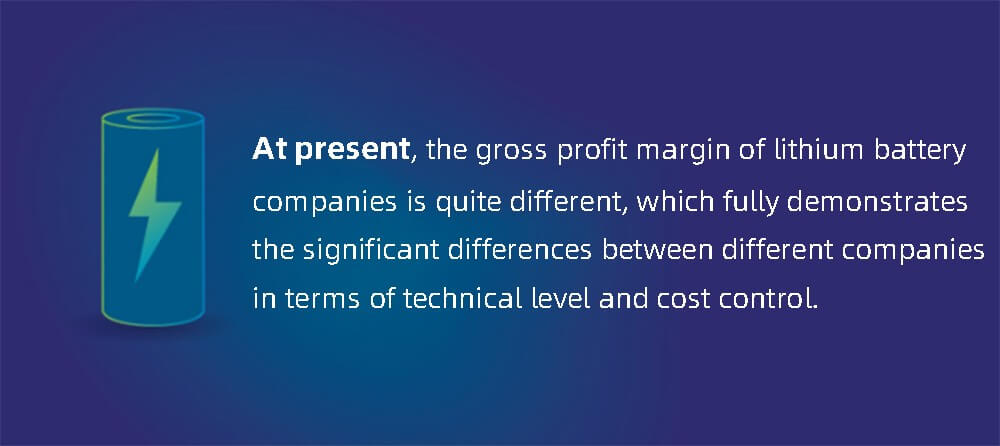
At present, the gross profit margin of lithium battery companies is quite different, which fully demonstrates the significant differences between different companies in terms of technical level and cost control. From this perspective, it is full of challenges and variables for downstream enterprises entering across borders to do better.


1 thought on “Systemic challenges for lithium battery manufacturers – downstream integration trend”
Hi! This is my first visit to your blog! We are a collection of volunteers
and starting a new initiative in a community in the same niche.
Your blog provided us useful information to work on. You have done a marvellous job!
Comments are closed.