Skip to content
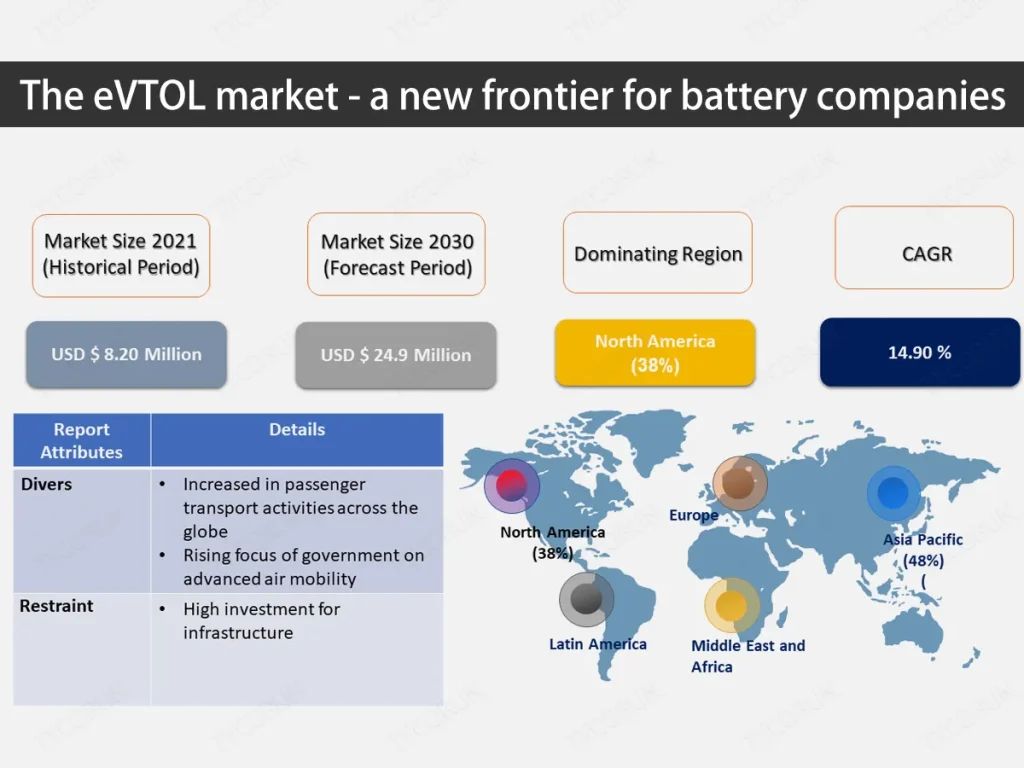

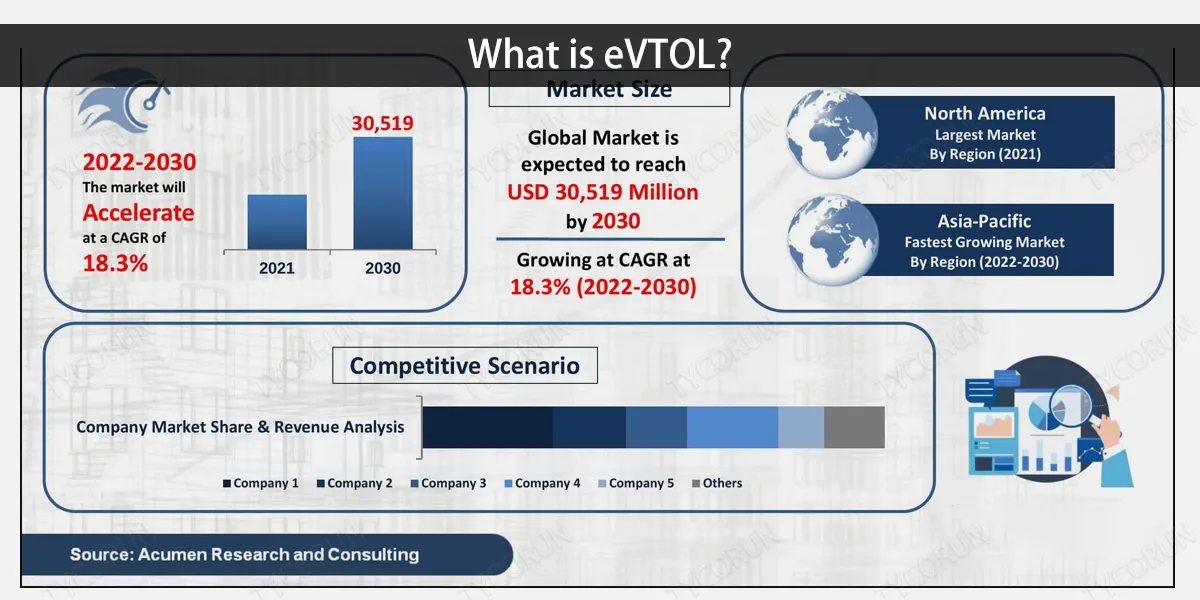
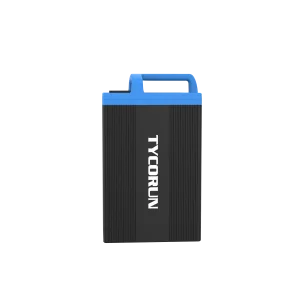
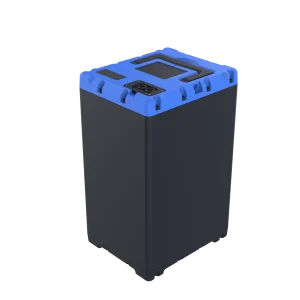
eVTOL uses batteries to provide energy for the power system and onboard systems. Battery performance is a key factor restricting the development of eVTOL. However, existing battery technology is still lacking, and its density and safety require further breakthroughs. Otherwise, eVTOL will face development limitations of low payload, short range, and short endurance time.
Current battery technology cannot fully meet the range, life cycle, fast charging technology and energy density of eVTOL operating scenarios and other technical elements. Battery suppliers need to pursue a balance between high energy density, high power density, fast charging, long cycle life and high safety.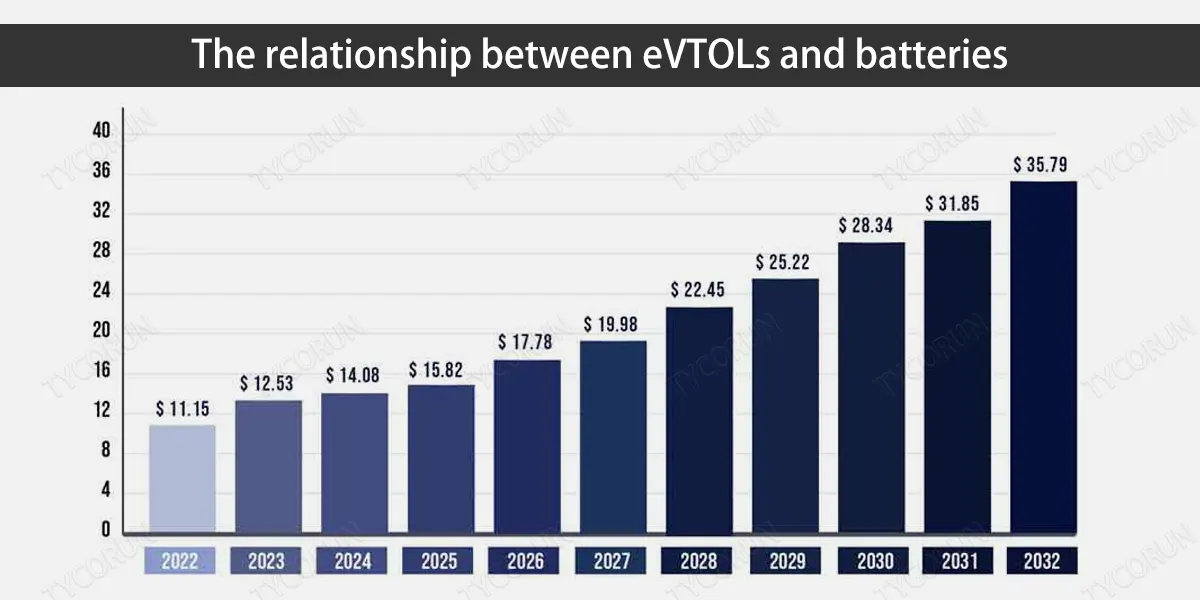
At present, lithium battery technology is more mature and stable than hydrogen fuel cell technology, and currently has the highest energy density ratio. Most manufacturers use lithium batteries, but the improvement of lithium battery energy density requires continuous technical research.
The energy density of hydrogen fuel cells is higher than that of lithium batteries, but its power density is lower and its instantaneous discharge capability is poor. It still needs to be developed. In addition, due to the limitations of solar radiation, its practicality is not high.
Regarding the development of eVTOL, analysis points out that among various eVTOL elements such as batteries, motors, manufacturing, communications, and intelligent driving systems, batteries may become a weak link.
From the perspective of demand, eVTOL has higher performance requirements for power batteries than electric vehicles. In terms of performance such as high specific energy, high rate, and high safety, eVTOL’s requirements for batteries are not small.
In terms of energy density, judging from the products put into eVTOL applications by battery companies, the current eVTOL battery has reached the level of 285Wh/kg, which is 40% higher than the ternary lithium battery (200Wh/kg) for passenger cars. It is also the lithium iron for passenger cars, which twice that of the battery (140Wh/kg). Even so, the performance index of 285Wh/kg still cannot meet the requirements. In order to meet the basic battery life, the energy density of lithium ion battery needs to continue to increase.
In terms of rate, the special scene of take-off and landing requires that the instantaneous charge and discharge rate of eVTOL batteries must be above 5C, while the rate of passenger car power batteries is still in the stage of moving from 1.3-1.7C to 1.7-2.5C.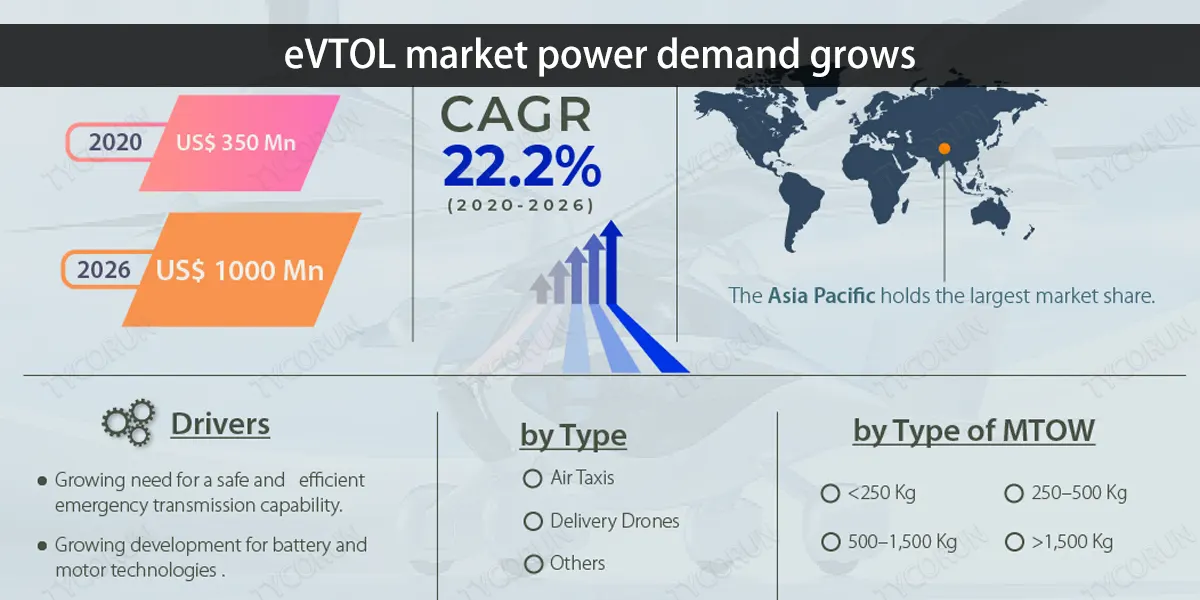
In terms of safety, high-altitude cruising makes eVTOL’s battery requirements more stringent than ever before. The battery system needs to be able to control any failure and allow the aircraft to land safely without damaging the aircraft. The requirements for battery thermal runaway in passenger cars are to allow sufficient escape time for the occupants of the vehicle after entering a thermal runaway state.
In the second half of 2023, there will be a significant increase in inquiries about eVTOL power batteries in the market. Although the volume is small at this stage, for battery companies, the eVTOL market is a “must compete” for cutting-edge lithium battery power technology, and technical research on it is a lever to leverage the electrification market across the sea, land and air.
Currently, advanced battery technologies represented by all-solid-state batteries and lithium metal batteries are being nurtured globally through the eVTOL market.
According to recent news, Funeng Technology, which is deeply involved in soft-pack batteries, has reached cooperation with a well-known eVTOL manufacturer and has begun delivering products. According to reports, the power battery used by Funeng Technology in eVTOL can achieve an energy density of 285Wh/kg, a top speed of 320km/h, and a maximum single cruise of 250km; in working conditions tests, the battery cell can achieve more than 10,000 cycles.
Currently, CATL is cooperating in the development of civil electric manned aircraft projects, implementing aviation-grade standards and testing, and meeting aviation-grade safety and quality requirements. At the same time, the company will also launch a car-grade application version of condensed matter batteries.
The power demand of the eVTOL market also points to the cutting-edge of current battery company technology – solid state batteries.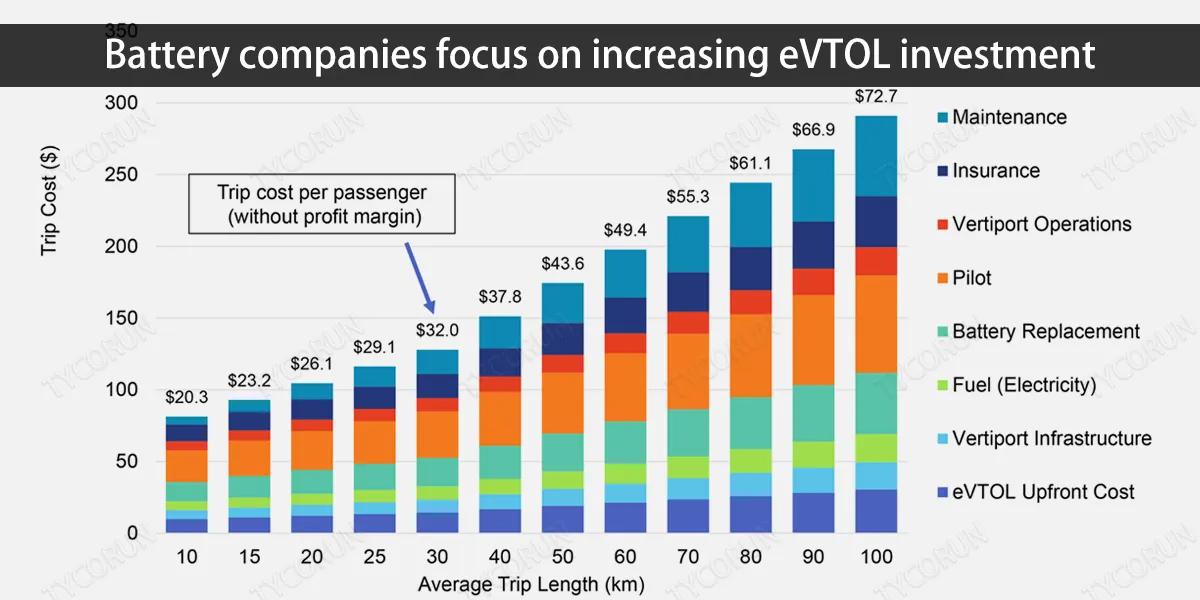
Lishen Battery has released a high specific energy semi-solid battery. It adopts surface modification ultra-high nickel technology, homogeneous low expansion silicon carbon technology, etc. The battery capacity reaches 90Ah and the energy density reaches 372 Wh/kg. In just a few months, Lishen Battery has released a new semi-solid battery with an energy density of 402Wh/kg, an increase in energy density of 30Wh/kg.
According to reports, the high specific energy and high safety battery cells adopt new integrated design technology. By controlling the electrochemical process to suppress transition metal dissolution and structural dislocation growth, semi-solid batteries can be ultra-lightweight and highly safe.
The energy density reaches 402Wh/kg, which combines high energy density and high safety performance. It has reached the technological leadership level among similar products in the industry and will be widely used in ultra-long-range passenger cars, eVTOL and other fields.