Skip to content

Complete Guide to 48 vs 52 Volt Ebike Battery for Every Rider
The battery is crucial to an ebike’s speed, power, and range. 48 volts and 52 volts are two of the most common battery types you may encounter while searching. Although they may appear similar at first glance, they have significant differences that could impact your riding experience.
This article explains ebike battery voltage, highlights the key differences between 48 vs 52 volt ebike battery, and provides guidance on selecting the right battery for your specific needs and riding style.


What Does Battery Voltage Mean in Ebikes?
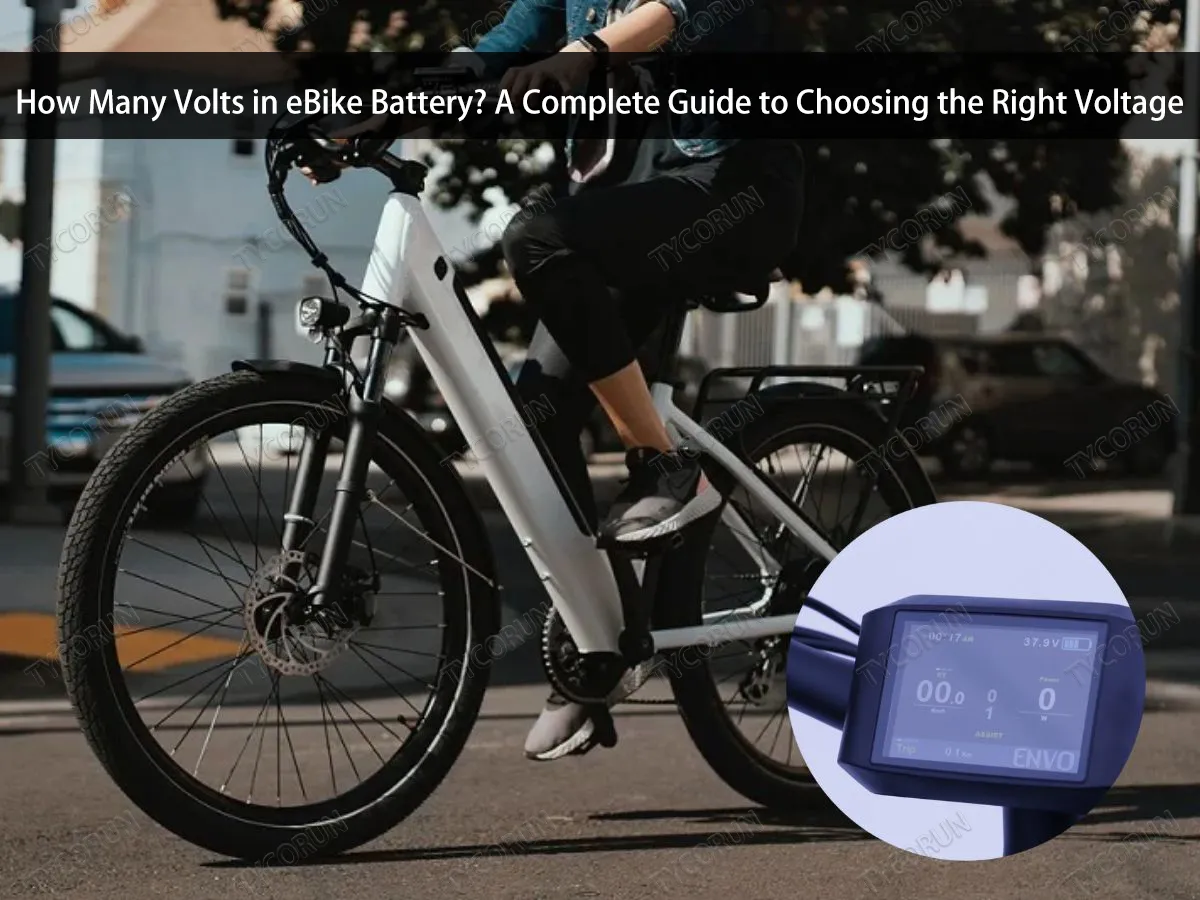
It is crucial to first understand what voltage means in an ebike battery before comparing a “48 vs 52 volt ebike battery”. Voltage, measured in volts (V), is the force that drives electric current through a circuit-much like water pressure in a pipe. This “electrical pressure” powers the motor and directly impacts how much energy is delivered to it. Higher voltage provides the motor with more power, which in turn affects the electric bike’s general performance.
48 and 52 volt Ebike Batteries Explained
After understanding what voltage is in an ebike battery, we move on to the two most commonly compared options: 48 and 52 volt ebike battery. Both are equally popular but offer different characteristics and performance. To determine which one is more suitable for your needs, l examine each option in more detail.
48 volt ebike battery
Since most riders consider 48V batteries to be standard and safe, they are the most commonly used type in e-bikes. These batteries are more readily available on the market and are more reasonably priced. Because the majority of ebike motors and controllers are made to operate with 48V systems, they are also widely compatible. 48V batteries provide sufficient stable performance for daily requirements, such as leisurely commuting or medium-distance travel. The drawback is that, unlike higher voltages, maximum power and speed are typically more constrained.
52 volt ebike battery
For riders seeking increased performance, 52V batteries are typically the preferred option. E-bikes can accelerate more quickly and reach greater speeds with higher voltage. At specific speeds, the motor can also operate more efficiently. These batteries are more costly, though, and they are only usable if the motor and controller are 52V compatible. Therefore, even though 52V batteries are more powerful, compatibility and cost still need to be carefully considered.
48 vs 52 volt ebike battery: Key Differences
Discover about “48 vs 52 volt ebike battery” may appear similar, but offer distinct experiences on e-bikes. Voltage measures electrical force, and these differences can shape comfort, performance, and usage costs. Consider the key differences between the two:
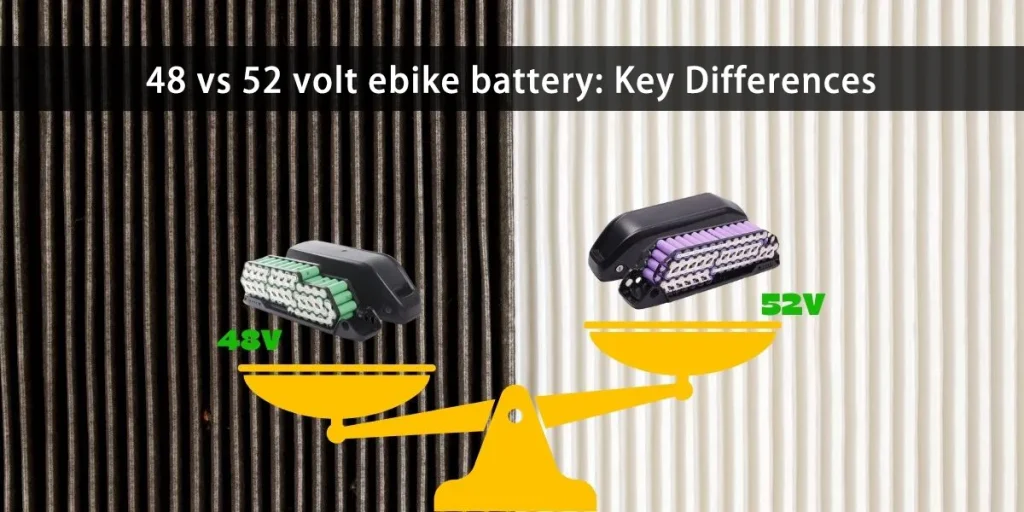
- Performance: 48V is more typical for everyday use, whereas 52V offers greater maximum speed and acceleration.
- Range and efficiency: Since the motor operates more efficiently at 52V, it tends to be more efficient; however, the battery’s capacity (Ah) still affects the outcome.
- Compatibility: 48V is compatible with the majority of motors and controllers, whereas 52V necessitates a specialized system capable of handling higher voltages.
- Maintenance and durability: Both remain equally durable with proper care; however, the 52V’s supporting systems require more attention.
Choosing the Right Battery for Your Ride
After learning about the differences in performance and characteristics, it’s time to choose which is the most suitable between 48 vs 52 volt ebike battery for your needs. This choice should take into account your riding style, the terrain you often travel on, and your budget.
- For example, if you are a beginner or plan on using your e-bike for leisurely commuting, consider choosing a 48V model because it is stable, easy to find, and more affordable.
- On the other hand, if you require higher speeds or frequently ride on rough terrain, the 52V battery is a more suitable option, offering increased power and acceleration.
- Additionally, if budget is a primary concern, the 48V battery is more cost-effective, while the 52V option involves a higher initial investment.
- Before making any future upgrades, confirm that your motor and controller are compatible with 52V to ensure a seamless transition from a 48V system.
Practical Tips for Using 48V and 52V Batteries
- Always ensure that the motor and controller are fully compatible with the voltage of the battery you are using, as incompatible use can reduce performance and even damage components.
- Use the original charger or one that is recommended for that types of battery, so that the charging current is stable and does not damage the battery cells inside.
- Avoid leaving the battery connected to the power source after it is fully charged, as overcharging can significantly shorten the battery’s lifespan.
- Store the battery in a cool, dry place, away from direct heat or high humidity, which can damage the internal components.
- Don’t wait until the battery is completely empty before charging it. It’s better to charge it while there is still some power left to reduce the charging cycle and extend the battery’s life.
You can also read these articles for more insight:
Conclusion
Choosing between 48 vs 52 volt ebike battery ultimately depends on your needs and riding style. 48V is suitable for beginners or daily users who prioritize stability, availability, and affordability. Meanwhile, 52V is more suitable for riders who are looking for extra performance, faster acceleration, and motor efficiency at certain speeds.
Whatever your choice, always consider compatibility with the motor and controller, and perform proper maintenance to ensure the battery lasts longer. This way, your riding experience will be more comfortable, safe, and in line with your expectations.
FAQS
Is 52V faster than 48V?
Yes, in general, 52V can make an e-bike faster and more responsive in acceleration than 48V. But the final result is also influenced by the motor, controller, and road conditions.
Can I upgrade from 48V to 52V without replacing the motor?
Not necessarily. You must first ensure that the motor and controller support 52V. If they are not compatible, upgrading directly can cause components to break down quickly.
Which one is more durable for long distances?
Both can be durable for long distances as long as they are properly maintained. However, 52V is usually more efficient at certain speeds, so it can feel lighter to use on long trips