Skip to content
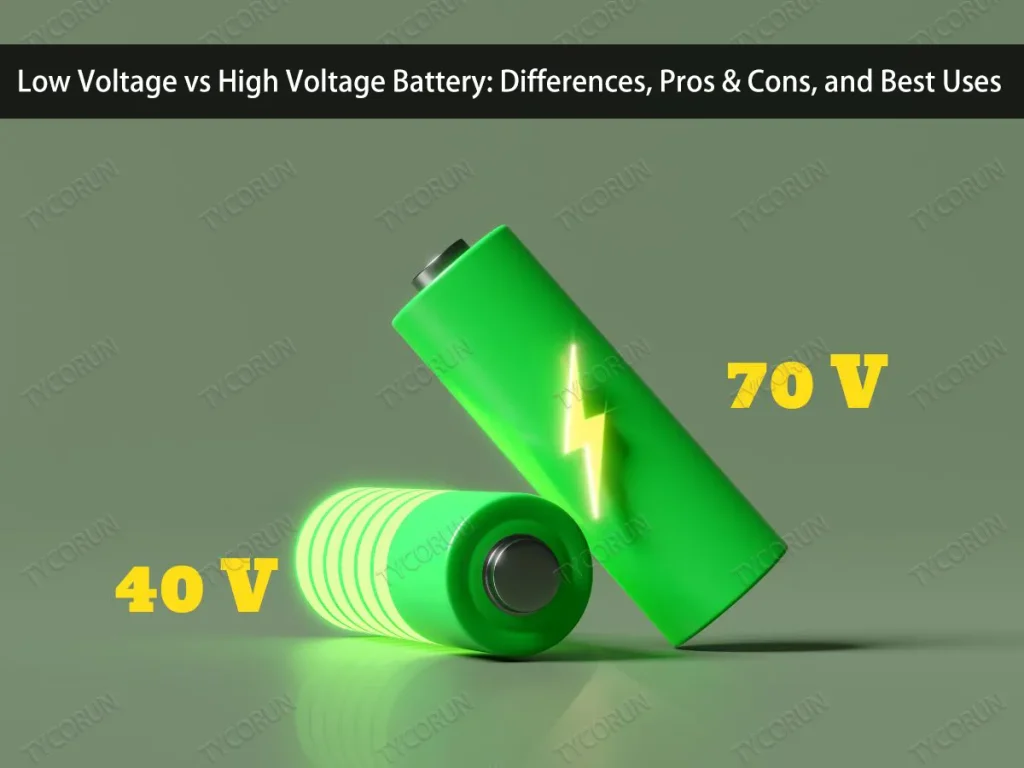
Low Voltage vs High Voltage Battery: Differences, Pros & Cons, and Best Uses
Selecting the appropriate battery voltage is one of the most important decisions when it comes to powering modern technology and electric systems. Since each alternative has different advantages and disadvantages based on the application, many people often ask what the differences between low voltage vs high voltage battery. Voltage is important for performance, efficiency, and safety in everything from electric cars and industrial machinery to consumer devices and home tools.
Understanding how high voltage and low voltage batteries work will help you choose the one that best matches your needs. High voltage batteries can provide better performance and efficiency, especially in demanding applications, even though low voltage batteries are typically safer and simpler to handle. This article will explain what its definition, how its differ, its pros and cons, and even how voltage affects especially in lithium battery.


What are Low Voltage and High Voltage Battery
Low voltage battery
High voltage battery
The Differences of Low Voltage vs High Voltage Battery

- Voltage output
Low voltage batteries are easier to use and usually safer because their voltage is lower than 60V. Meanwhile, high voltage batteries can offer more power to applications that require high performance because they are often above 60V. - Efficiency
When use for large loads, low voltage batteries often lose more energy as heat. While high voltage batteries can produce more power with less current, they are typically more efficient. - Safety
Low voltage batteries are better suited for simpler devices since they provide less of a risk of electric shock. While high voltage batteries need extra safeguards to stay safe, because they are more dangerous. - Cost and complexity
Low voltage batteries usually have a simpler system design and are less expensive. While high voltage batteries are more costly, because high voltage batteries require greater safety measures and cutting-edge technology.
Pros and Cons of Low Voltage and High Voltage Battery
When comparing low voltage vs high voltage battery, there are pros and cons of both. Understanding both will help you avoid making a wrong choice, especially if great performance or efficiency is the goal.
- Low voltage battery
Pros: low voltage batteries are safer due to their simple design, low installation costs, and less risk of electric shock. They are also suitable for everyday use or basic applications.
Cons: They are not the best for systems that need a lot of power and are less effective when used for large loads. - High voltage battery
Pros: Because high voltage batteries can provide high power for industrial and electric car applications, operate with lower currents, and offer more steady performance over time, they are more efficient.
Cons: They are more costly for both the batteries and the parts that maintain them, and they need extra security measures to stay secure.
Which One is Better: Low Voltage vs High Voltage Battery?
In addition, high voltage batteries are ideal for applications needing high power, high efficiency, and stable performance, such industrial machinery or electric cars. Even though they cost more and need more protection, the performance they provide is worth it.
Therefore, whether you value cost and safety or efficiency and excellent performance will decide which low voltage or high voltage battery is appropriate for you.
You can read these articles for more insight:
Low Voltage vs High Voltage in Lithium Battery
In the context of lithium technology, both low voltage and high voltage batteries are significant. Because of their high energy density, portable design, and steady power supply, lithium batteries are a well-liked option. However, their functionality and applications will be significantly impacted by the voltage used.
In general, low-voltage lithium batteries are better suited for beginners and simple uses, including modest energy storage systems or portable electronics. High voltage lithium battery, on the other hand, are more often seen in large-scale energy storage systems, industrial machinery, and electric cars because to their higher electrical output and efficiency.
Applications of Low Voltage and High Voltage Battery

Conclusion
Choosing between a low voltage vs high voltage battery basically comes down to what your main needs: efficiency and high performance or safety, simplicity, and cost. High voltage batteries perform exceptionally well in large applications like electric vehicles, industrial, and large-scale energy storage systems, while low voltage batteries are safer and more useful for light applications like portable electronics or home energy storage.
Voltage increasingly dictates the use of lithium. High-voltage lithium is more effective for high-power needs, while low-voltage lithium is appropriate for basic applications. You may select the ideal option for your intended application by being aware of each one’s pros, cons, and differences.
FAQS
Is high voltage more efficient?
Yes, high-voltage electrical transmission is more efficient than low-voltage transmission because it reduces power loss along transmission lines.
Does higher voltage mean better battery?
No, higher voltage does not necessarily mean a "better" battery; it means more power output and higher efficiency for a given energy capacity, but requires a higher-demand system to utilize it safely and effectively.
What voltage are most electric vehicles?
A 400-volt architecture, but a growing trend is the adoption of 800-volt systems for higher performance and faster charging times, especially in luxury and high-performance models.