Skip to content
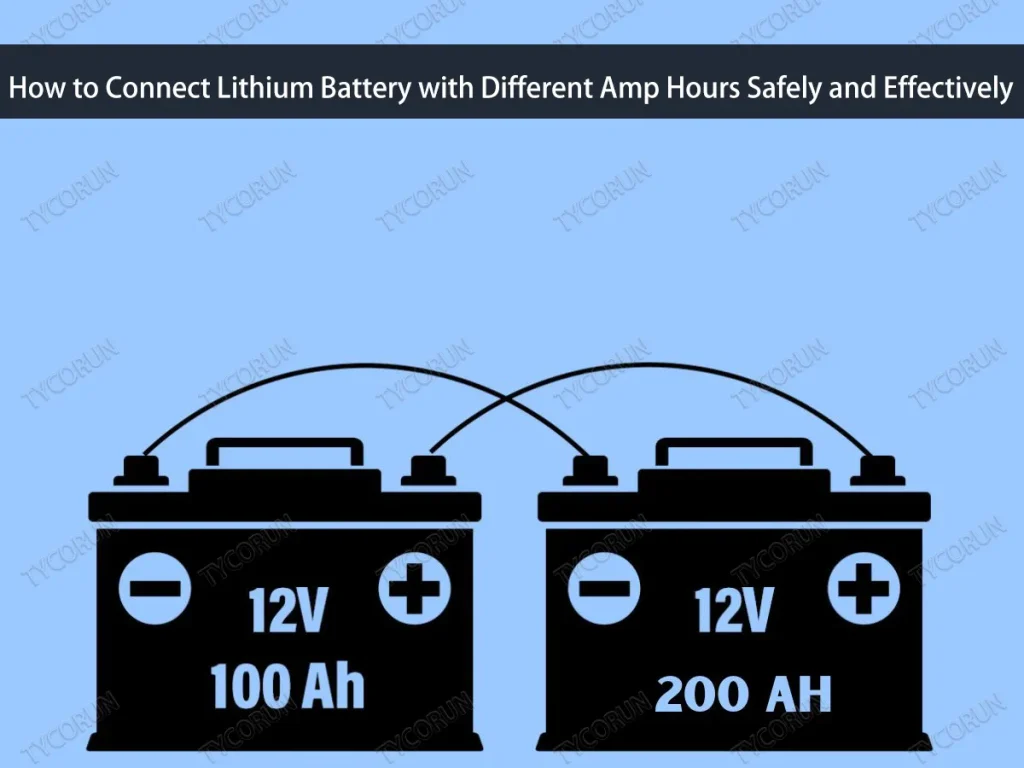
How to Connect Lithium Battery with Different Amp Hours Safely and Effectively
Connecting multiple lithium battery in a single system may seem like a simple concept, but problems arise when the batteries have different amp hours. Many people wonder how to connect lithium batteries with different amp hours safely and effectively?
Because connecting batteries with different amp hours incorrectly can result in major issues like over-discharge, current imbalance, and even irreversible battery damage.
Additionally, the success of combining batteries with varying amp hours is significantly influenced by a number of factors, including the type of connection, the use of a BMS, and routine maintenance. Understanding how to connect lithium battery with different amp hours will help you maintain steady and effective battery performance and optimize the system’s overall capacity.


Understanding Amp Hours in Lithium Batteries
It is crucial to comprehend what an amp hour (Ah) is before learning how to connect lithium battery with different amp hours. In simple terms, an amp hour is a measurement of how long a battery can run on a single full charge. For example, a 10Ah battery can deliver 10 amps of current for one hour or 5 amps for two hours. As a result, the higher the amp hour value, the longer the battery can last before needing to be recharged.

The issue is that this difference in amp hours is frequently a problem when attempting to connect lithium batteries with different amp hours. This is due to the fact that batteries with different capacities will discharge and charge at different rates. Small batteries will discharge more quickly, whereas large batteries will retain their charge. If connected without careful consideration, this can cause an imbalance in current, overheating, and even shorten the battery’s life.
In addition, you also need to know that capacity is not the only factor. he type of battery chemistry, cell quality, and physical condition of each unit all have a significant impact. Two lithium batteries with the same Ah value can perform differently depending on their type, such as Li-ion and LiFePO4. To ensure the system stays safe and effective, make sure all lithium batteries are in good condition and share similar characteristics before connecting batteries with different amp hours.
You can also read watts to amps for more insight
Can You Connect Lithium Batteries with Different Amp Hours?
Technically, batteries of different capacities can be connected as long as they have the same voltage and are controlled by a secure system such as a battery management system. However, there are serious risks if they are connected directly without careful thought, including the possibility of battery cell damage, overheating, and current imbalance.
When two lithium batteries of different capacities are connected, the current will attempt to balance between them. The battery with the lower amp-hour rating will typically have to work harder and drain more quickly. The larger-capacity battery will still have energy reserves that aren’t being used. This imbalance may result in one battery carrying a greater load, which would lower the system’s overall performance. As a result, understanding the working principles and characteristics of each battery is essential before practicing how to connect lithium battery with different amp hours.
In addition, before connecting the batteries, make sure they are all at the same voltage. A small difference in voltage can cause a large current to flow from the higher voltage battery to the low voltage battery, potentially resulting in extreme heat or a short circuit. Connecting lithium batteries with different amp hours can be done safely and without sacrificing battery life by using accurate measurements and protective devices such as battery management system or battery balancers.
Series vs Parallel Connection: What is the Difference?
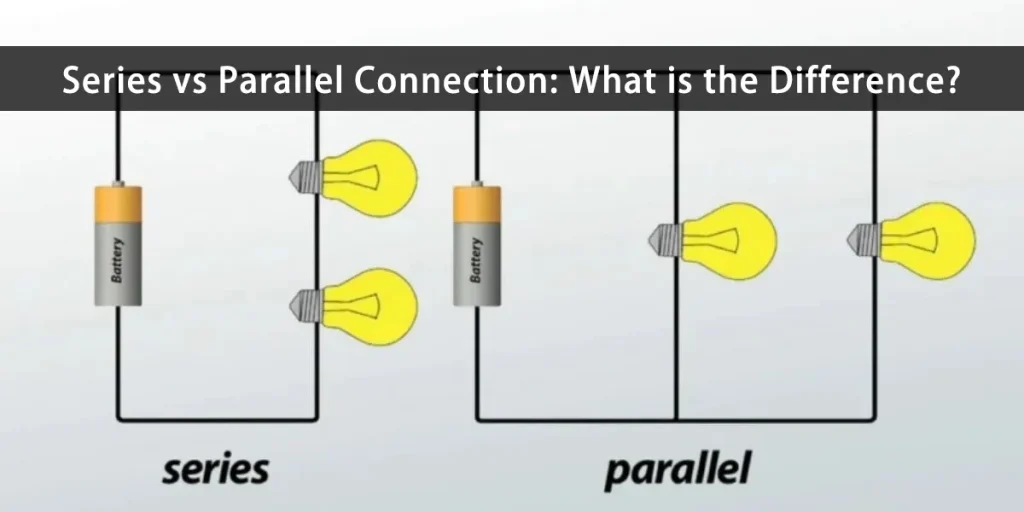
Before learning the steps on how to connect lithium battery with different amp hours, you need to understand the difference between series and parallel connections. Although batteries are combined using both techniques, the results in terms of voltage and capacity are significantly different. Knowing how each connection type operates is crucial because selecting the incorrect one can quickly harm your system.
You may also read batteries in series vs parallel for more detail
- Series connection
A series connection connects the positive terminal of one battery to the negative terminal of the next battery. The purpose is to raise the system voltage while maintaining the same capacity (amp hour) as the series’ smallest battery.
For example, connecting a 12V 10Ah battery in series with a 12V 20Ah battery produces 24V but maintains the 10Ah capacity. As a result, batteries with lower amp hours will run out quickly and may be damaged first if not monitored. Therefore, to ensure that the system’s durability stays constant when connecting lithium batteries with different amp hours in series, ensure that each battery is balanced and in good condition. - Parallel connection
In contrast, in a parallel connection, all positive and negative terminals are connected together. As a result, the voltage remains constant while the total capacity increases proportionally to the combined amp hours of each battery.
For example, connecting two 12V 10Ah and 12V 20Ah batteries in parallel will result in 12V 30Ah. This extends the system’s lifespan, but if the capacities of each battery differ too much, there is a risk. Current can flow from the larger to the smaller battery, resulting in excess heat or current imbalance. As a result, when connecting lithium batteries with different amp hours, ensure that each battery has the same voltage before connecting them in parallel.
In short, series connections are appropriate for high-voltage applications, whereas parallel connections are ideal for increasing capacity or durability. Both can be used, as long as they are properly calculated and properly safeguarded, such as with a battery management system.
Step-by-Step: How to Connect Lithium Battery with Different Amp Hours
How to connect lithium battery with different amp hours? It is not too complicated, but each step must be taken carefully to keep the battery safe and functioning properly. Minor errors like the wrong cable order or small voltage variations can permanently harm the battery. Here are the steps you can take:
- Check the voltage of each battery: before connecting anything, ensure that all batteries have identical or very similar voltages. If the difference is too great, current can flow from the battery with higher voltage to the one with lower voltage, causing overheating or damage.
- Choose the type of connection: series or parallel: select a series connection if you require a higher voltage. However, if you want your system to last longer, use a parallel connection. To prevent unbalanced current, ensure that the voltage of each battery connected in parallel is the same.
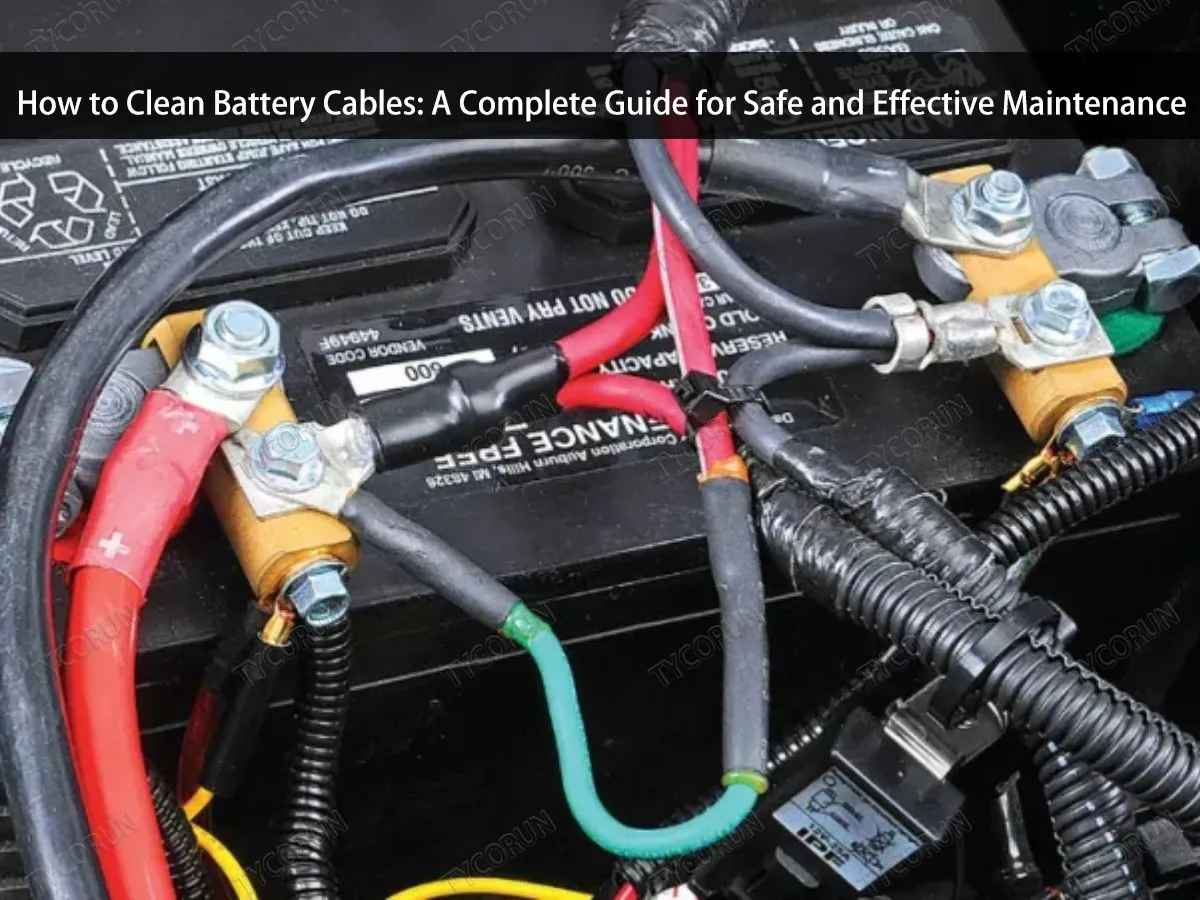
- Use high-quality cables and connectors: cables that are too small or loose can increase resistance and heat. Ensure that all connectors are firmly attached, and use cables that are appropriate for the system’s current capacity. This is an important aspect that is frequently overlooked, despite having a significant impact on safety.
- Install a Battery Management System: the battery management system ensures that all battery cells operate evenly, preventing overcharging, overdischarging, and unstable currents.
- Test after installation: after everything is connected, remeasure the total voltage and current to ensure that the results are as expected. The system voltage should rise with a series connection, and the total capacity should rise with a parallel connection. Also, monitor the battery temperature at the start of use; if any cell heats up quickly, it indicates a current imbalance that must be addressed immediately.
Common Mistakes to Avoid
Many people make minor mistakes when attempting the steps on how to connect lithium battery with different amp hours, which can cause permanent damage. Here are some common mistakes you should avoid:

- Ignoring the voltage difference between batteries: this is the most common mistake when connecting lithium batteries with different amp hours. If the voltages of the batteries are not the same, current will flow from the higher voltage battery to the lower voltage battery, generating excessive heat and potentially damaging the battery cells.
- Not using a Battery Management System: a battery management system is required to maintain current balance between batteries, especially those with different amp hours. The battery management system guards against imbalances, overcharging, and overdischarging, all of which can reduce battery life.
- Using unsuitable cables or connectors: cables that are too small or loose can increase resistance and cause the system to overheat. To guarantee a steady power flow when connecting lithium batteries with varying amp hours, use cables that are the right size and quality for the necessary current.
- Mixing old and new batteries: although it appears to be efficient, combining new and used batteries is a bad idea. When connecting lithium batteries with different amp hours, the system can become unbalanced because the old batteries will quickly run out and draw current from the new batteries, hastening the damage to both.
- Not testing after connection: many people use the system right away after connecting the batteries, without retesting. However, testing is required to ensure that the voltage and current are stable, with no loose connections or power imbalances.
You can also read overcharging battery for more insight
Best Practices for Maintaining battery with Different Amp Hours
After successfully completing the steps on how to connect lithium battery with different amp hours, the next step is to ensure the system’s safety and durability. All batteries must receive routine maintenance in order to remain balanced and effective. Here are some best practices to follow:
- Maintain power balance between batteries: charging and discharging currents in a system connected to lithium batteries of different amp hours may be unbalanced due to capacity differences. Use a battery balancer or BMS to ensure that all batteries are balanced and do not draw too much power from one another.
- Avoid overcharging and deep discharging: charging batteries to full capacity or fully discharging them can hasten cell degradation. Connecting lithium batteries with different amp hours is especially important because each battery may have different voltage tolerances. To extend the battery life, keep the power level between 20% and 80%.
- Pay attention to battery operating temperature: overheating can hasten battery deterioration. Ensure the system is kept in a well-ventilated area away from direct heat sources. System performance and safety are preserved by stable temperatures.
- Perform routine checks: at least once a month, inspect the cables, connectors, and overall system voltage. Power imbalances may eventually result from minor corrosion or loose connectors. Connecting lithium batteries to different amp hours stays safe and effective with regular maintenance.
- Use a charger that meets the system specifications: ensure that the charger you use is compatible with the system’s combined voltage and capacity. Using the incorrect charger can cause overvoltage and damage to the battery cells.
Conclusion
Understanding the steps on how to connect lithium battery with different amp hours means more than just connecting cables; it also requires an understanding of how electric current works and maintaining battery balance. It is possible to connect batteries with different amp hour capacities, as long as proper planning, accurate measurements, and regular monitoring are followed.
You can avoid risks like overdischarge, overheating, and current imbalance by ensuring that the voltage between batteries is the same, selecting the appropriate connection type (series or parallel), and using a battery management system. Additionally, to maintain the system’s stability and durability, routine maintenance is crucial, including monitoring the battery’s temperature, cables, and connectors.
FAQS
What happens if you connect batteries with different amp hours in parallel?
Current will flow from the larger capacity battery to the smaller one, which can cause heat and power imbalance. When connecting lithium batteries with different amp hours, ensure the voltage is the same and use a BMS to keep the system safe.
Do you need a BMS when connecting different lithium batteries?
Yes, it is very necessary. A BMS maintains current balance and prevents overcharging or over-discharging when you connect lithium batteries with different amp hours, so that the battery life remains long and the system is stable.
Is it better to use batteries with the same capacity?
It is better, because the system will be more balanced and efficient. But if you still want to try connecting lithium batteries with different amp hours, make sure all batteries have the same voltage and are equipped with a BMS to ensure safe use.