Skip to content
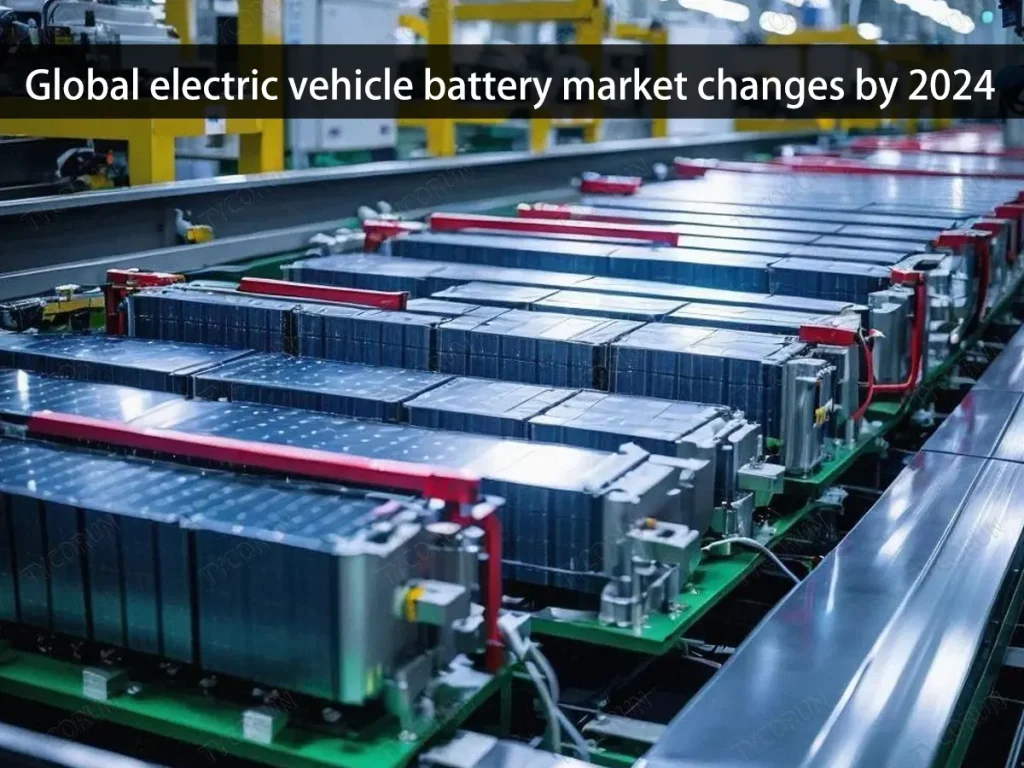

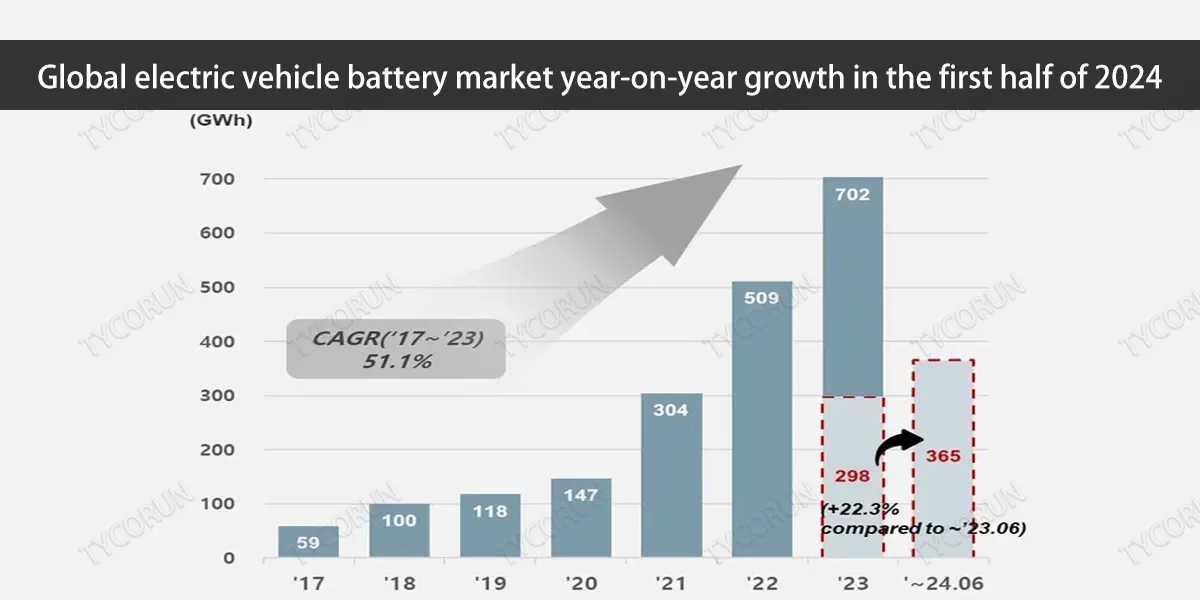
The global electric vehicle battery market grew 19% year-on-year in the first half of 2024, with China ranking first in terms of EV battery installations, followed by Europe and the US. According to Counterpoint, the global average battery capacity for BEVs reached 64.7 kWh in H1 2024 (up 6% y-o-y), while the average battery capacity for plug-in hybrids reached 23.1 kWh (up 14% y-o-y), driven by China’s growing demand for smart electric vehicles.
Chinese companies including CATL, BYD, CALB, EVE Power, Fudi and Gotion tech currently control two-thirds of the global EV battery market, and their rapid international expansion following their success in China poses a significant challenge to other suppliers.
China’s dominance has prompted the West to impose new and additional tariffs on Chinese cars, batteries, battery components, and other Chinese-made products. in the first half of 2024, the United States will raise tariffs on Chinese electric vehicles (EVs) from 25% to 100%, increase tariffs on batteries and components from 7.5% to 25%, and impose 25% tariffs on graphite and permanent magnets, which had been previously exempted from duty. the US will also raise tariffs on Chinese electric vehicles (EVs) to 100%, and on batteries and components from 7.5% to 25% in the first half of 2024.
According to SNE Research, the size of the global electric vehicle (EV) battery market (including pure electric vehicle EVs, plug-in hybrid electric vehicle PHEVs, and hybrid electric vehicle HEVs) realized significant growth from January to September this year, with total battery usage reaching 599.0 gigawatt-hours (GWh), a 23.4% increase over the same period last year.

The total market share of the three South Korean companies was 20.8 percent, down 3.4 percentage points from a year earlier, the data showed. The drop is largely attributed to aggressive overseas expansion by Chinese battery companies, which have rapidly expanded their market share.
LG EnSol maintained third place with 72.4GWh of installed capacity, up 4.3% from a year ago, for a 12.1% market share.LG EnSol’s growth was driven by steady sales in Europe and North America, such as the Tesla Model 3 and Y and the Volkswagen ID.4, as well as a significant increase in sales of the Hyundai IONIQ5 and Kona EV in Europe.
SK On achieved 28.5 GWh of installed capacity, up 12.4% from the same period last year, attributable to recovering sales of Hyundai’s IONIQ5 , EV6, EV9 and Mercedes-Benz EQA. However, its market share ranking dropped a notch to fifth place with a 4.8 percent share.
Seventh-ranked Samsung SDI achieved 23.9GWh, up 5.4%, with the result benefiting from strong sales of BMW and Rivian cars, with a market share of 4.0%.
In contrast, China’s Ningde Times (CATL) maintained its global lead with 219.6GWh of capacity, up 26.5% from a year ago, for a market share of 36.7%. BYD ranked second with 98.5GWh, up 28.0% and with a market share of 16.1%. BYD’s success is attributed to its new hybrid vehicles, which can travel up to 2,100 kilometers on a single charge, targeting both the pure electric vehicle market and the plug-in hybrid electric vehicle (PHEV) market.
AVIC Lithium CALB jumped to fourth place with 29.3GWh, up 27.0% from a year ago. Meanwhile, Japan’s Panasonic experienced negative growth, dropping 20.2% to finish at 25.7GWh and sixth place, due to falling sales of the Model 3 facelift.
According to a new report from Goldman Sachs Research (Goldman Sachs Research), electric vehicle battery prices will fall sooner than expected due to advances in battery technology and falling green metal prices. This trend could accelerate the popularity of electric vehicles and put them in a better position to compete with gasoline vehicles in terms of cost.
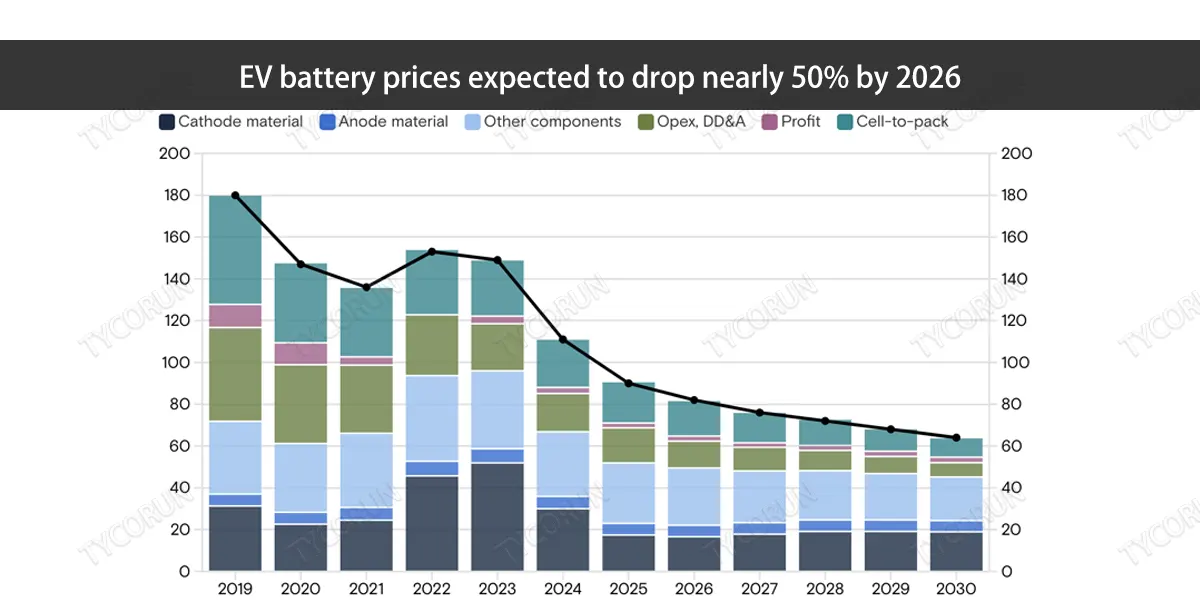
The global average battery price falls from $153 per kilowatt-hour in 2022 to $149 in 2023, and Goldman Sachs expects this figure to fall further to $111 by the end of 2024. Longer-term forecasts show that average battery prices are expected to fall to $80 per kWh by 2026, which represents a nearly 50 percent decline from 2023. At this price level, EVs are expected to achieve cost-of-ownership parity with gasoline-powered vehicles, without the need for government subsidies.