Skip to content
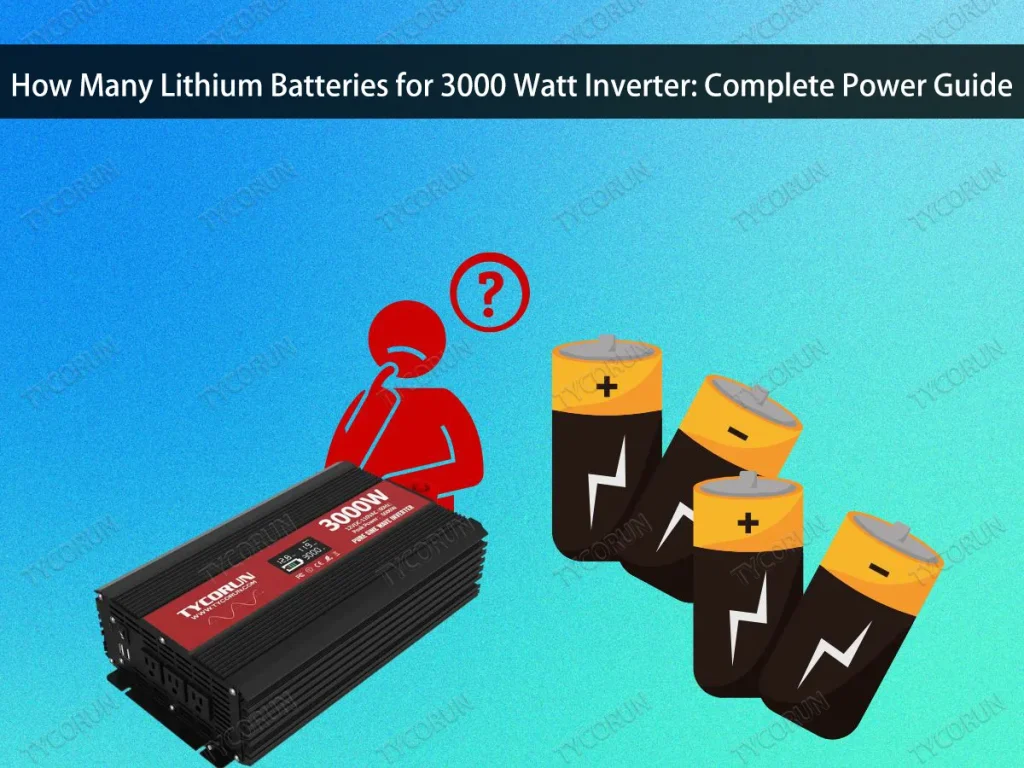
How Many Lithium Batteries for 3000 Watt Inverter: Complete Power Guide
When designing a power system for a home, recreational vehicle, or off-grid application, many people wonder how many lithium batteries for 3000 watt inverter? The answer is not as simple as a single figure because it depends on a number of variables, including battery capacity and the duration of the inverter’s use. It is critical to comprehend how inverter power and battery capacity relate to one another in order to avoid power outages, preserve efficiency, and prolong battery life.
A 3000-watt inverter has sufficient power to run a small workshop’s tools and a range of medium-power home appliances. However, you must be aware of the proper lithium battery configuration in order to optimize its performance. Determining how many lithium batteries for 3000 watt inverter will help guarantee that it operates steadily and doesn’t overload or rapidly run out of power.
Selecting the appropriate number of batteries involves more than just math; it also involves knowing the system’s overall efficiency and power needs. With the correct knowledge, you can design an energy system that is reliable, long-lasting, and reasonably priced.


How Does a 3000 Watt Inverter Work?
To answer the question, how many lithium batteries for 3000 watt inverter? You must first comprehend the operation of the inverter itself. The battery’s DC current is transformed into AC current by a 3000-watt inverter, which is then used by appliances like washing machines, TVs, and refrigerators. The more power the inverter has, the more energy the battery will need to supply. This implies that how long you want the system to continuously supply electricity will have a significant impact on how many lithium batteries are needed.
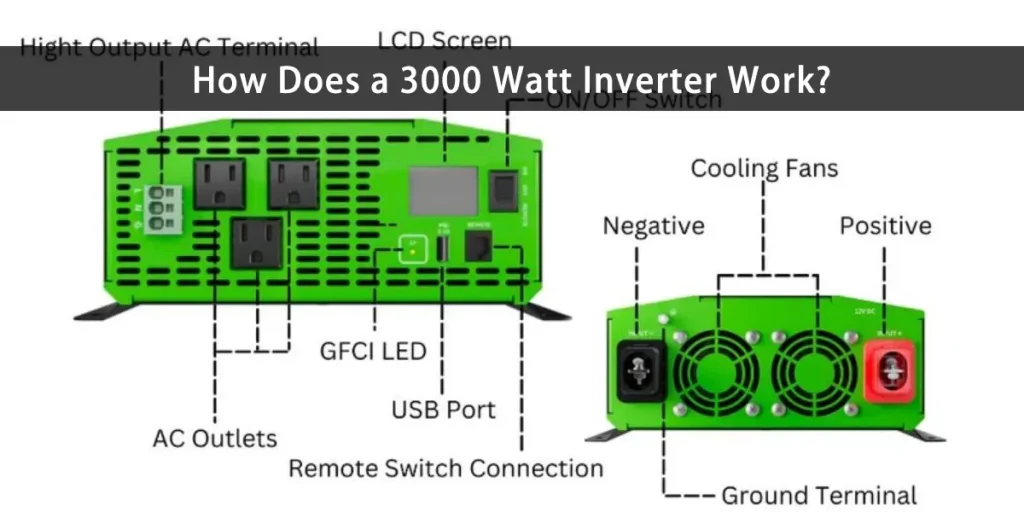
In the context of how many lithium batteries for 3000 watt inverter, it is important to note that inverters do not always operate at full capacity. The rate at which the batteries deplete will depend on the power load from the connected appliances. For example, the inverter’s energy consumption will undoubtedly be more efficient if it is only used for a 1500-watt load rather than 3000 watts when it is operating at full capacity. Therefore, determining battery requirements involves more than just the 3000-watt figure, but also takes usage patterns and device efficiency into account.
Furthermore, the inverter’s efficiency, which is typically between 85 – 95%, affects the total energy required. Therefore, you must consider the power loss resulting from the conversion process when calculating the number of lithium batteries required for a 3000-watt inverter. You can determine the optimal number of batteries and make sure your power system operates at its best by having a thorough understanding of how inverters work.
Estimating Battery Capacity for a 3000 Watt Inverter
Before you can calculate how many lithium batteries for 3000 watt inverter, you must first understand how to estimate the battery capacity. Battery capacity, which shows how much energy the inverter can store and use, is typically expressed in ampere-hours (Ah).
- The basic formula is simple: (total watts ÷ system voltage = total amperes)
For example, using a 3000 watt inverter with a 12V system requires approximately 250 amperes (3000 ÷ 12). You can then calculate how many lithium batteries are required to operate the system effectively and safely.
When calculating how many lithium batteries for 3000 watt inverter, you must also consider how long the inverter will provide power. If you want the system to run for two hours, the energy requirements will be double those calculated initially.
- For example, 250A × 2 hours = 500Ah total capacity.
Efficiency must be considered in addition to duration. Because no system is 100% efficient, there is typically a 10-15% power loss. This means you should prepare slightly more batteries than the theoretical calculation.
Understanding how to accurately estimate capacity allows you to be more confident when determining how many lithium batteries to use for a 3000 watt inverter, ensuring the system remains stable, safe, and does not run out of power.
Recommended Voltage Setup: 12V vs 24V vs 48V Systems
Before calculating how many lithium for 3000 watt inverter, it is critical to choose the appropriate voltage system. In general, there are three system voltage options: 12V, 24V, and 48V. Each has unique characteristics and efficiency levels.
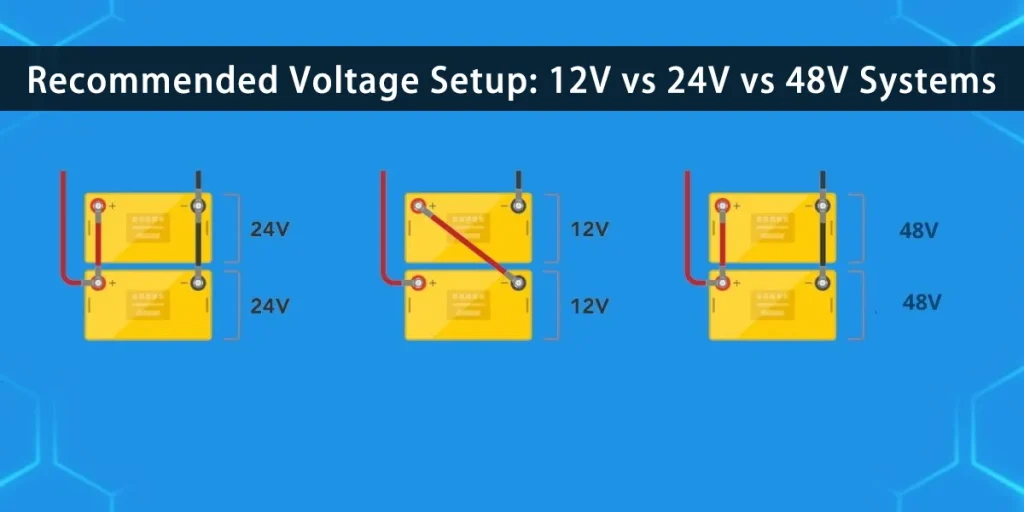
The 12V system is typically simpler and is commonly used for small applications such as vehicles or camping equipment. A 12V system will draw a significant amount of current at 3000 watts, though, which will lead to the cables overheating and the batteries depleting more quickly.
On the other hand, 24V and 48V systems are more efficient due to their lower current consumption. For example, a 3000-watt load only needs roughly 125 amperes on a 24V system, whereas it only needs roughly 62.5 amperes on a 48V system. Longer battery life, more consistent power, and less heat are all benefits of lower current. This makes 24V or 48V systems much more suitable for those wondering how many lithium batteries are required for a 3000-watt inverter to perform optimally.
The number of batteries required is also determined by the voltage chosen. For example, if you use 12V lithium batteries in a 24V system, you must connect two batteries in series to achieve the required voltage. Understanding this reasoning will help you choose the most effective setup and provide the most precise response to the question of how many lithium batteries for 3000 watt inverter given your power requirements and usage duration.
How Many Lithium Batteries For 3000 Watt Inverter
How many lithium batteries for 3000 watt inverter? The voltage system and battery capacity you choose will determine the answer. For example, a 3000 watt inverter needs roughly 250A to operate on a 12V system. If you want to run it for two hours, the total capacity is approximately 500Ah. Therefore, to provide power for an extended period of time, you will need roughly five 12V lithium batteries connected in parallel, each with a 100Ah capacity.
However, the calculation is more effective if a 24V system is used. The necessary current decreases to roughly 125A at this voltage. Over the course of two hours, a mere 250Ah is needed. That means you only need two 12V 100Ah lithium batteries connected in series to create a 24V system, and then two sets in parallel (four batteries total) to reach a 200Ah–250Ah capacity. Meanwhile, fewer batteries are needed for 48V since less current is needed.
As a result, the higher the voltage system used, the fewer batteries required to power a 3000-watt inverter. That is why, when calculating how many lithium batteries are required for a 3000-watt inverter, you must consider the required runtime, battery capacity, and voltage system. The combination of these three factors will determine whether your power system is efficient, reliable, and long-lasting.
Choosing the Right Lithium Battery Type
Determining how many lithium batteries for 3000 watt inverter depends not only on the number of batteries, but also on the type of lithium battery you choose. Each type has characteristics, benefits, and drawbacks that influence efficiency and the number of batteries needed. Here is the explanation:
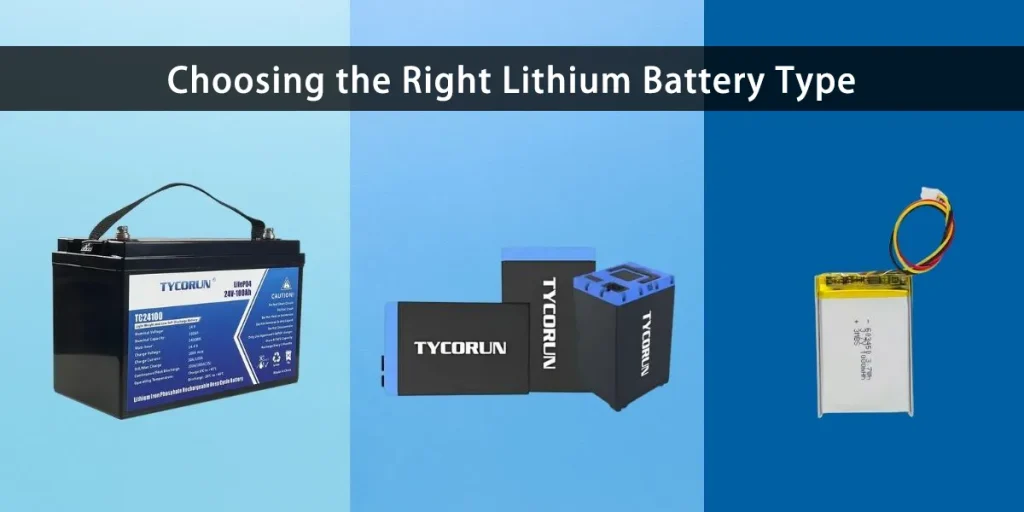
- LiFePO4 battery (Lithium Iron Phosphate)
This type is best suited for larger inverter systems, such as 3000 watts. LiFePO4 battery is renowned for its extended service life of up to 3000–5000 cycles, high safety, and heat stability. The outcomes are far more effective and long-lasting, despite the slight increase in cost. - Lithium-ion (NMC)
Because of its high energy density, it can hold more power in a smaller package. It is sensitive to high temperatures and has a shorter lifespan than LiFePO4. It can be used for a moderate amount of time, but for durability and safety, a good battery management system (BMS) is necessary. - Lithium Polymer (Li-Po)
Lithium polymer is commonly used in portable devices due to its lightweight and flexible features. However, due to its lower durability and inability to handle high currents, this type is less than ideal for a 3000-watt inverter system. Therefore, when deciding how many lithium batteries to use for a 3000-watt inverter, Li-Po is not the best option for intensive use. You can also read li polymer battery for more detail
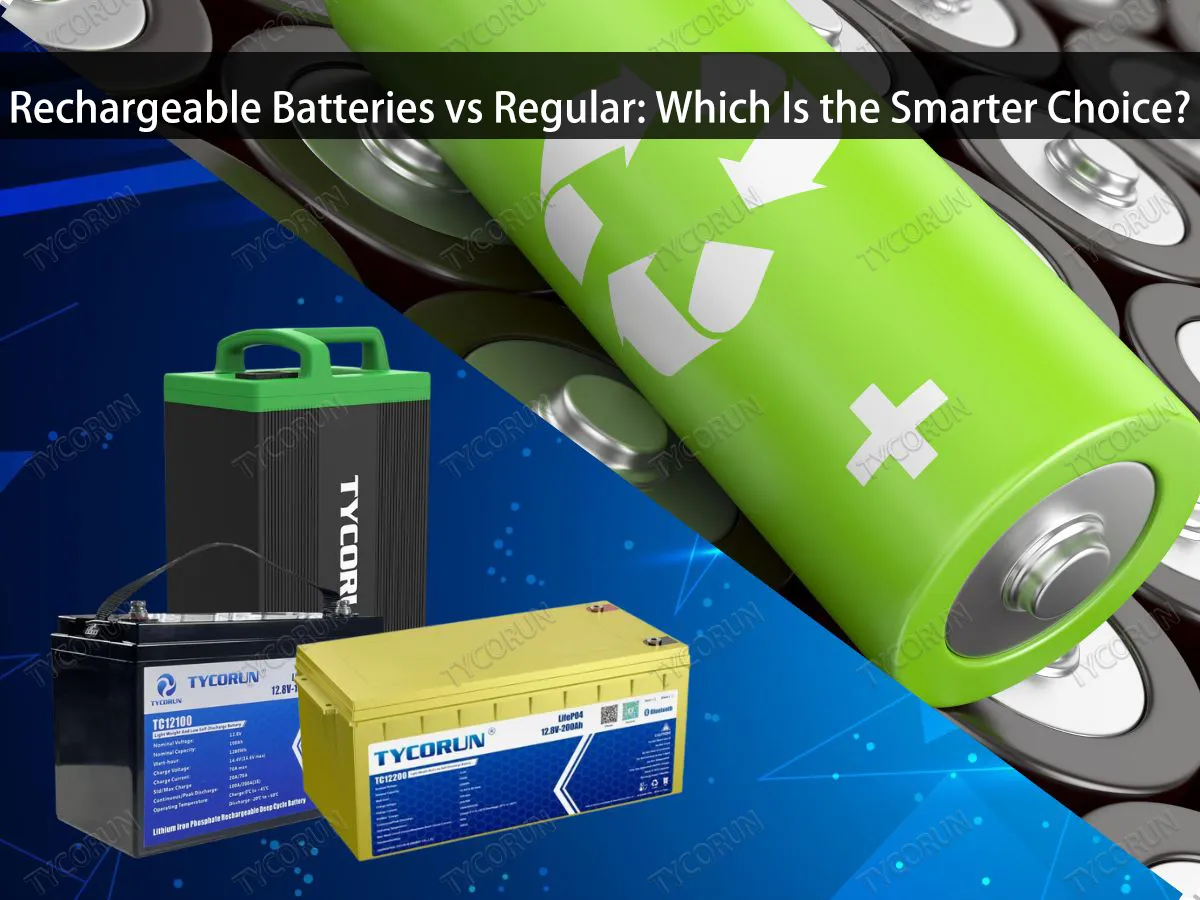
Of the three types, LiFePO4 remains the most balanced in terms of safety, efficiency, and longevity. If you want a truly dependable power system, TYCORUN LiFePO4 batteries may be the best long-term investment, as they are not only strong and durable, but also designed for maximum energy efficiency in a variety of operating conditions.
Factors That Affect Battery Performance
Lithium battery performance and longevity in inverter systems can be influenced by a number of significant factors. Even with accurate capacity and voltage calculations, actual results can differ based on usage conditions. The following are the primary things to think about in order to maintain the stability and efficiency of your power system:
- Ambient Temperature
Extremely high or low temperatures can degrade battery performance by 20-30%. Lithium batteries’ power capacity will drop faster if they are used outside of the optimal temperature range. - Electrical Load (Load Usage)
The type and size of the load connected to the inverter have a significant effect on power consumption. It is obvious that running a water pump, washing machine, or refrigerator uses more energy than turning on fans or lights. - Efficiency of Inverters
The efficiency of each inverter varies, typically ranging from 85 – 95%. When calculating the number of batteries, the energy lost during this conversion process must be considered. - Battery Quality and Age
Low-quality batteries may require more batteries because they tend to lose capacity more quickly.
Safety and Maintenance Tips for Lithium Battery Setup
When determining how many lithium batteries for 3000 watt inverter, system safety is frequently overlooked, despite its importance. Although lithium batteries are renowned for their strength and efficiency, the system may be vulnerable to overheating or even irreversible damage if safety precautions are not taken. Here are the safety aspects:
- Battery Management System (BMS) Protection
Every lithium battery should ideally have a BMS installed in order to automatically control current, temperature, and voltage. - Ventilation and Battery Placement
Despite the relative stability of lithium batteries, sufficient space for air circulation is still required. Battery life can be shortened and temperature increases accelerated by placing them in enclosed spaces without ventilation. - Prevents overcharging and overdischarging
Overcharging can cause the battery to overheat and swell, whereas overdischarging can permanently damage the cells. Under both circumstances, the battery’s effective capacity drastically drops, making the calculation of lithium batteries for a 3000 watt inverter inaccurate. You can read overcharging battery for more detail. - Connector and Cable Quality
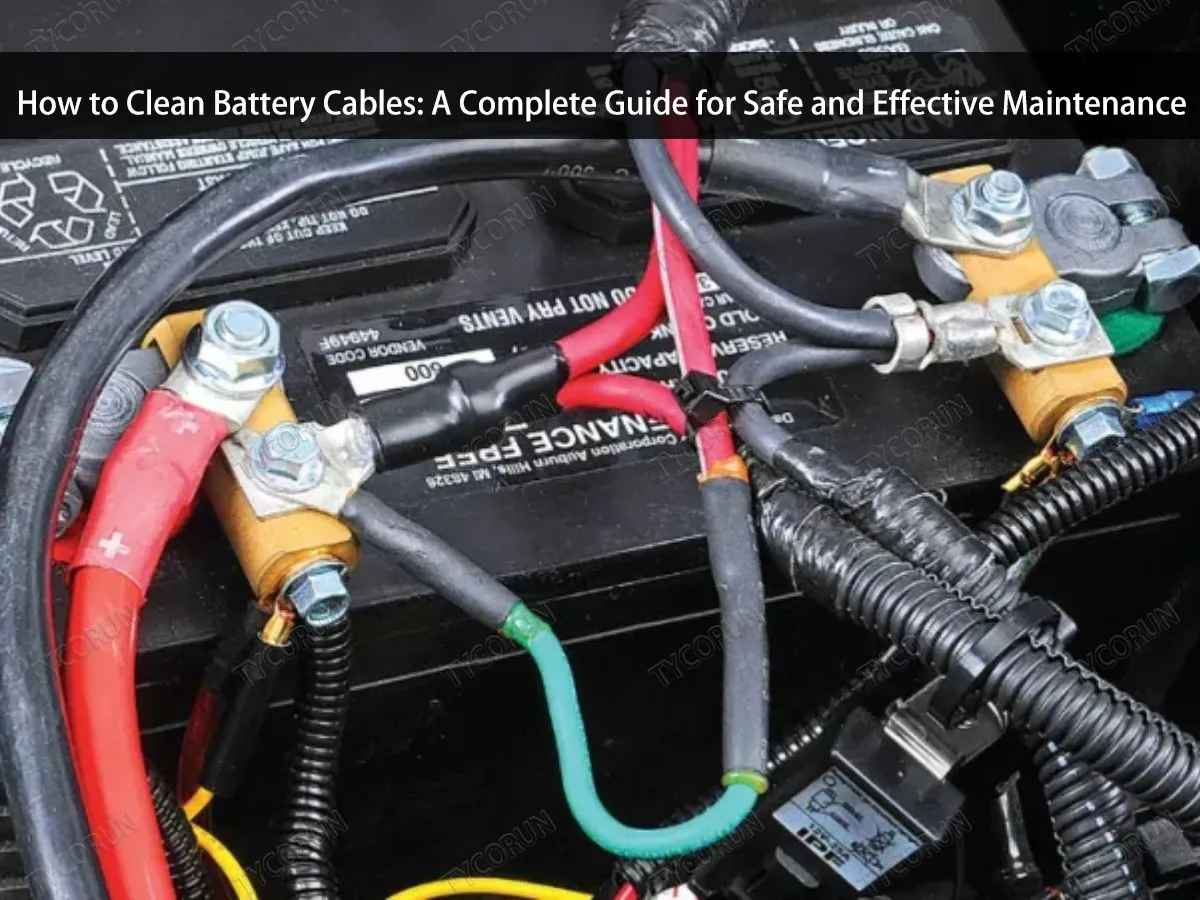
There is a chance of overheating and a reduction in power efficiency when using small cables or inexpensive connectors. To keep the system secure, use cables that are the right size and current rated.
Conclusion
In conclusion, how many lithium batteries for 3000 watt inverter? Understanding the power system as a whole is just as important as knowing the numbers. The maximum battery capacity, system voltage (12V, 24V, or 48V), and usage time all affect how many batteries are needed. With the proper calculations, you can ensure that your 3000-watt inverter operates consistently, without wasting power or running out of energy quickly.
Furthermore, the type of lithium battery used determines both performance and safety. LiFePO4 is the most effective and long-lasting option among the different kinds, particularly for large systems like 3000 watt inverters. However, external factors such as temperature, electrical load, and cable quality must also be considered in order to maintain optimal performance.
FAQS
What size battery cable do I need for a 3000 watt inverter?
The size of the battery cable depends on the voltage of the system used. For 12V, you need a 2/0 AWG cable because the current is quite high (around 250A). If you use 24V, the current drops to around 125A, so 1/0 AWG is sufficient. Meanwhile, for 48V, a 4 AWG cable is sufficient. The higher your system voltage, the smaller the cable size required.
How many amps does a 3000 watt inverter pull?
A 3000-watt inverter draws different currents depending on the system voltage. At 12V, the current is around 250 amps; at 24V, around 125 amps; and at 48V, only around 62 amps. Since inverter efficiency is generally 85–95%, the actual current may be slightly higher than these calculations.
Can 3000W inverter damage electronics?
No, as long as you use a pure sine wave inverter. This type produces a smooth current that is safe for all electronic devices. But if you use a modified sine wave inverter, there may be a risk of interference or damage to sensitive devices such as TVs, computers, or modern refrigerators.