Skip to content
How to Connect a Lithium Battery to an Inverter: Complete Step-by-Step Guide
Connecting a lithium battery to an inverter may appear complicated, but it is actually quite simple once you know the steps. Understanding how to connect a lithium battery to an inverter correctly is critical for ensuring that your power system operates efficiently and safely. The link between the lithium battery and the inverter is essential for transforming stored DC energy into usable AC electricity, whether you are installing a solar power system, an RV power source, or a backup power supply at home.
Correctly connecting a lithium battery to an inverter also helps avoid a number of issues, including overheating, power outages, and even device damage. The process entails not only connecting cables but also ensuring that the voltage is correct, safety precautions are followed, and each connection is completely secure.
To ensure the stability, effectiveness, and durability of the system you install, this article will help you comprehend how a lithium battery connects to an inverter and the safe procedures involved.


Understanding Lithium Battery and Inverter
Knowing the purpose of each part is crucial before figuring out how to connect a lithium battery to an inverter. Direct current (DC) electrical energy is stored in lithium batteries, and inverters transform DC current into alternating current (AC) that can power solar power systems or other household appliances. Lithium battery energy cannot be used to its full potential without an inverter.
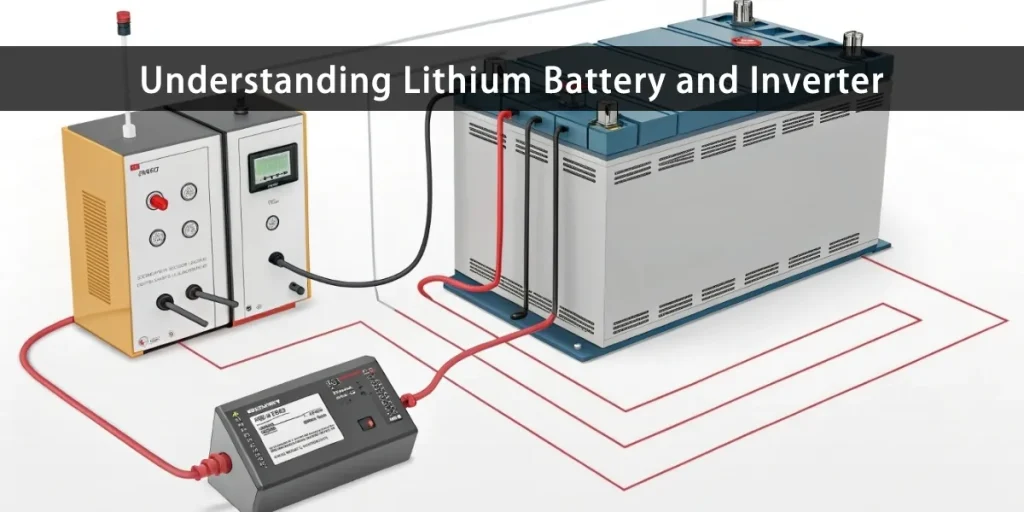
When connecting a lithium battery to an inverter, it is critical to comprehend the specifications of both devices. While the inverter has input voltage and output power limits that need to be adjusted, each battery has a unique capacity and voltage. In addition to decreasing performance, incompatibility between the two may also harm the system.
Following the instructions for safely and effectively connecting a lithium battery to an inverter will be simpler if you are aware of the fundamental relationship between the two devices. Before beginning to install or connect a lithium battery-based power system, this fundamental understanding serves as the cornerstone.
Why Use Lithium Batteries with an Inverter?
Many people want to know how to connect a lithium battery to an inverter because the combination has proven to be more efficient and durable than traditional battery systems. Because of their high energy density, lithium batteries can hold more power in a smaller package. Because it receives a steady energy supply free from sharp voltage drops, the inverter can operate more steadily.
In practice, connecting lithium batteries to inverters has the advantage of faster charging and higher power conversion efficiency. Lithium batteries also have a low self-discharge rate, ensuring that stored energy is not wasted. Because it does not contain lead and has a much longer recharge cycle, this kind of battery is also more environmentally friendly.
Therefore, knowing how to connect a lithium battery to an inverter involves more than just knowing how to connect two devices; it also entails knowing why this combination is the best option for contemporary power systems, whether they are used for high-power portable devices, home power backups, or solar panels.
Preparation and Safety Before Connecting Lithium Battery to an Inverter
When beginning the process of connecting a lithium battery to an inverter, it is critical to realize that the first step in the installation process is preparation. Many people frequently connect the cables without checking the devices’ compatibility and condition, despite the fact that even a minor error can have deadly results. With careful preparation, you can safely, efficiently, and permanently connect a lithium battery to an inverter. Here are some important things you need to consider before starting the connection:
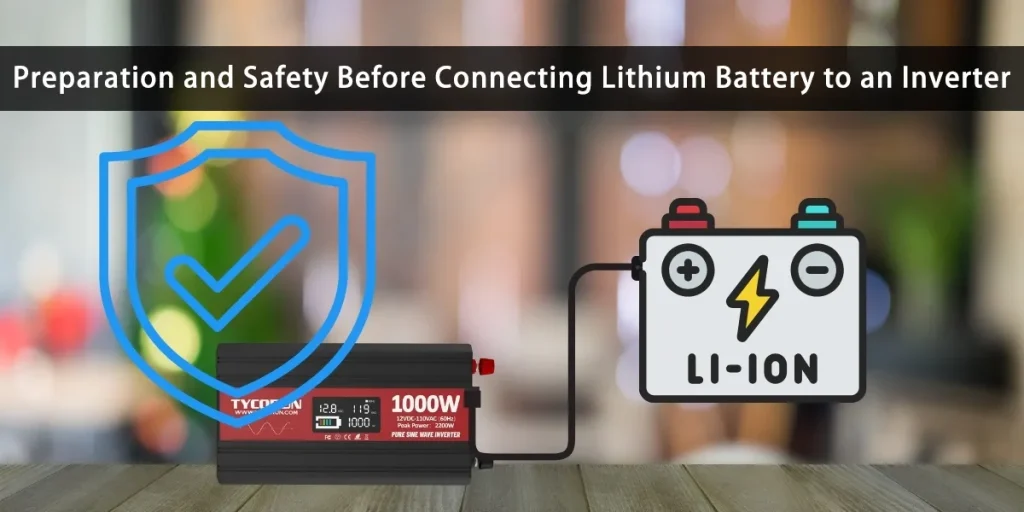
- Check voltage compatibility: ensure that the battery voltage matches the inverter input (for example, a 12V battery and a 12V inverter). The inverter may malfunction or fail due to voltage incompatibility.
- Use high-quality cables of the correct size: choosing the right cable is crucial when connecting a lithium battery to an inverter. Too-small cables have the potential to short circuit and overheat. Select cables that are the right size for the output current of the battery.
- Add a fuse or protective circuit breaker: put a fuse between the inverter and the battery to guard against damage from short circuits or unexpected current surges.
- Use personal protective equipment: always wear safety glasses and gloves when connecting a lithium battery to an inverter to prevent direct contact with terminals or electrical sparks.
- Turn off all power sources before connecting: cables should never be connected when the inverter is operating. This could harm the system and result in electrical sparks.
- Pay attention to cable polarity: ensure that the cables marked “positive” and “negative” are not inverted. Errors in polarity can harm the battery and inverter and result in short circuits.
- Choose a location with good ventilation: place it where there is enough airflow to allow the heat produced to escape appropriately.
Step-by-Step Guide: How to Connect Lithium Battery to Inverter
Here are some practical steps to help you understand how to connect a lithium battery to an inverter safely and efficiently. Although this procedure appears straightforward, each step is crucial to guaranteeing a steady power supply without causing any harm to the device. Ensure all tools and components are ready before you begin.
- Turn off all power sources first: ensure the battery and inverter are off before proceeding. In order to prevent electrical sparks or short circuits, this is the most crucial step in connecting a lithium battery to an inverter.
- Identify which terminals are positive and negative: check the inverter and lithium battery for the (+) and (-) symbols. Errors at this point could harm the system as a whole. Always connect the cables in the correct polarity when connecting a lithium battery to an inverter.
- Attach the positive cable first: attach the battery’s positive cable to the inverter’s positive terminal. To keep it from overheating, use a cable that is the right size for the current capacity.
- Double-check each connection: check for loose or confused cables before turning on the system. To make sure the lithium battery is properly connected to the inverter, this step is crucial.
- Test the inverter after turning it on: check the power indicator and turn on the inverter after everything is installed. The successful connection of the lithium battery to the inverter is indicated by the inverter turning on normally. To confirm that the power flow is steady, you can carry out additional testing by connecting a tiny electrical load.
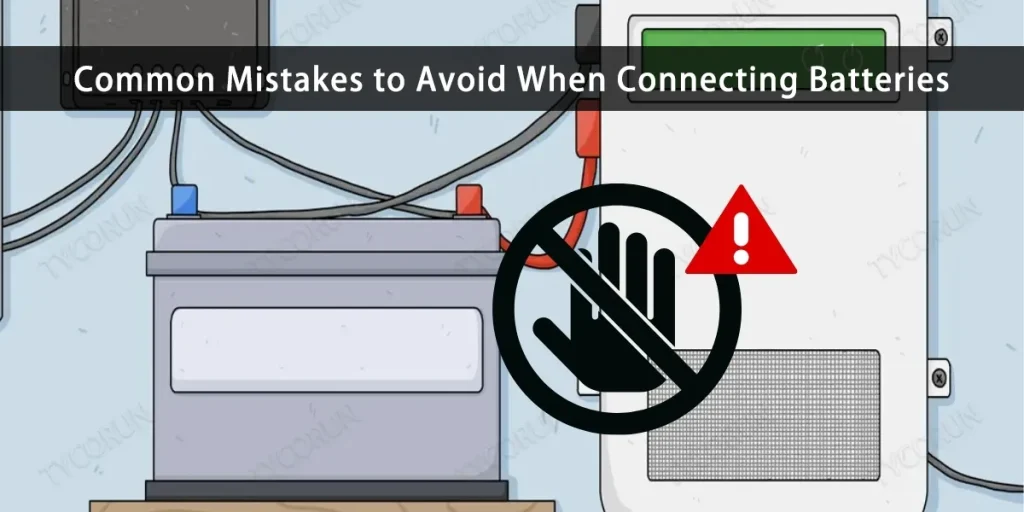
Common Mistakes to Avoid When Connecting Batteries
In practice how to connect a lithium battery to an inverter, even minor errors can significantly affect the device’s lifespan and performance. The technical aspects of the connection are often overlooked by users, but this is actually where the danger is. Knowing these typical errors can help you prevent damage and ensure the system operates effectively and safely.
- Connecting the cables with the wrong polarity
This is the most typical error made when connecting an inverter to a lithium battery. A severe short circuit that damages the inverter and possibly renders the battery unusable can result from switching the positive and negative cables. Prior to tightening the terminals, make sure the (+) and (-) signs are in good condition. - Using the wrong size cables
Too-small cables result in high resistance, which overheats the system and cuts power. To ensure a steady flow of electricity when connecting a lithium battery to an inverter, use cables with the proper current capacity. - Failure to install a fuse or protective circuit breaker
Even though installing a fuse is crucial for preventing damage from current surges, many people forget to do so. In a system that connects a lithium battery to an inverter, fuses are the primary safety feature. - Ignoring the working temperature and ventilation
It is not recommended to keep lithium batteries in enclosed areas without adequate ventilation. Overheating can shorten battery life and lower inverter efficiency. - Ignoring Battery Management System (BMS)
To prevent overcharging, overdischarging, and overheating of individual cells, it is crucial to make sure that a lithium battery has a BMS before connecting it to an inverter.
You can also read overcharging battery for more insight
Testing and Monitoring the Connection
Following the instructions for connecting a lithium battery to an inverter, testing and monitoring are necessary to make sure the system is operating correctly. This phase is critical to guarantee that the device is operating as intended, that all connections are safe, and that the power is steady. Here are the steps you need to take:
- Use a multimeter to check the voltage: measure the battery and inverter’s output voltage with a multimeter. This check is important when connecting a lithium battery to an inverter because it determines whether the connection is stable and meets specifications.
You can also read how to check battery voltage with a multimeter for more insight - Ensure that no connections are loose: check all of the terminals again if the measurement results indicate an abnormal voltage. Loose connections can result in power outages and overheating risks.
- Turn on the inverter and monitor the power indicator: after all connections are secure, turn on the inverter. ensure that there are no warning indicators, such as error indicator lights, buzzing sounds, or overheating. This guarantees that the lithium battery and inverter have been connected correctly.
- Start with a low load: connect fans or lamps or other small electrical devices to make sure the inverter can continuously power the load. This easy test makes sure the current flows consistently.
- Consistently check the system’s performance: monitor battery capacity, voltage, and temperature on a regular basis over the long run. In order to maintain the effectiveness and safety of connecting a lithium battery to an inverter, this monitoring is crucial.
Maintenance Tips for Long-Lasting Performance
After understanding how to connect a lithium battery to an inverter, the next critical step is to ensure the system’s durability and optimal performance. Technical compatibility is only one aspect of the battery-inverter connection; another is how to guarantee system stability over time. If done carelessly, not only will the battery’s performance suffer, but it may also result in serious risks such as short circuits or overheating.
To ensure safety after connecting a lithium battery to an inverter, consider the following:
- Use high-quality cables that meet the specifications. Too-small cables can shorten the system’s lifespan and produce excessive heat.
- Ensure proper ventilation. Poor ventilation in a system can raise the inverter and battery’s operating temperatures, which eventually reduces efficiency.
- Avoid contact with water or moisture. Because of their extreme sensitivity to moisture, lithium batteries may corrode or experience circuit problems.
- Conduct regular checks on the inverter’s connections and performance. Frequent inspections aid in the early detection of possible issues before they cause significant harm.
- Use a reliable BMS (Battery Management System). To maintain safety during extended use, the BMS will assist in controlling voltage, temperature, and current.
Maintaining all of these safety aspects not only ensures the success of connecting a lithium battery to an inverter, but also extends the battery and inverter’s life. To achieve optimal performance, TYCORUN provides premium lithium battery solutions with a multi-layered safety system that guarantees a more secure, reliable, and efficient connection with the inverter under all circumstances.
Conclusion
In conclusion, although connecting a lithium battery to an inverter may appear difficult at first, it is actually simple if you know the steps and fundamental ideas. Understanding how to connect a lithium battery to an inverter entails more than just connecting cables; it also involves creating an efficient, safe, and long-lasting power system.
Lithium batteries and inverters work together to create a reliable, energy-efficient power source that can be used for a range of purposes, from industrial applications to homes and solar power systems.
Without having to worry about hazards like short circuits, overheating, or decreased efficiency, you can optimize the performance of your power system by following the right procedures, paying attention to voltage compatibility, and ensuring every connection is secure.
FAQS
Do I need a special inverter for lithium batteries?
Ideally, yes. Special inverters for lithium batteries have more precise voltage settings and protection, so that the batteries work more efficiently and are safer from the risk of overcharging or over-discharging.
Is 12v AC or DC
Will a 100Ah lithium battery run a 2000W inverter?
Yes, but only for a short time. A 12V 100Ah battery (approximately 1200Wh) can run a 2000W inverter for about 30–40 minutes, depending on the load and system efficiency.
What size lithium battery do I need to run a 2000W inverter?
Use at least a 12V 200Ah or 24V 100Ah battery so that the 2000W inverter can run stably for about an hour. The capacity can be adjusted again according to the desired runtime and load.