
Market size
The German home energy storage market has huge growth potential. You can click our top 10 lithium battery manufacturers in Germany to get some information.
According to the data of solar photovoltaic installed capacity in Germany in 2022, the total installed capacity is 7.3GW, of which the installed capacity of 0-30kWp accounts for 33%.
The total installed capacity of 0-30kWp installed projects is 2.4GW.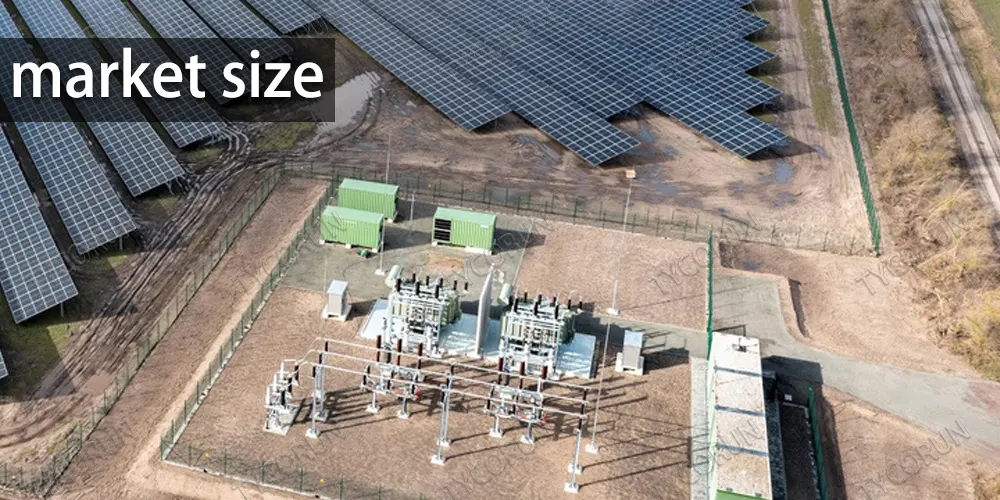
If it is assumed that each project has an installed capacity of 10kWp, then 240,000 households will install solar energy in 2022. Of these, 86% had energy storage installed, meaning nearly 206,400 households had energy storage installed.
In 2023, the installed capacity is expected to be 9GW, and 250,000-300,000 households will install solar energy. It is estimated that the installed capacity will reach 22GW/year by 2025.
In terms of household energy storage, Germany’s annual installed capacity in 2022 will be 197,000 units, and it is expected that the total installed capacity will reach 526,000 units by the end of the year. By 2024, the number of vehicles in Germany will reach 1 million.
Competitive landscape of German household energy storage market
The German home energy storage market is highly competitive, with several major players occupying dominant positions in the market. According to the installed capacity of the German market in 2022:
| BYD | 26% |
| Sonnen | 23% |
| Senec | 15% |
| E3/DC | 14% |
The above four companies account for about three-quarters of the installations in the German market.
BYD among the top 10 energy storage battery companies in China has outstanding performance in the German household energy storage market.
In 2022, only 40,000 household energy storage units will be products other than these four or three brands.
Sales channels of mainstream household energy storage brands
When it comes to the sales channels of mainstream household energy storage brands in the German market, it is observed that large-scale distributors in the German market, such as Baywa, IBC, and Krannich, have many small and medium-sized distributors.
However, after 2022, none of the Chinese companies entering the European household energy storage market has entered these major distributor systems.
As a result of this situation, new entrants can only gradually establish their own small distribution system through a bottom-up approach. And this way, you need a large number of sales staff to support.
Challenges faced by new Chinese brands
The lack of after-sales service system is one of the main reasons why it is difficult for new Chinese household energy storage brands to enter the mainstream German dealer system.
There is a big difference between energy storage + inverter and solar panels, and customers have a very high demand for after-sales service.
There are many Chinese companies that can guarantee the production capacity of household energy storage equipment, but there are too few companies that can establish a complete after-sales service system in Germany.
Most of them are relying on Chinese after-sales and technical teams or German local distributors to realize this business field.
In 2022, a total of 230,000 households in Germany will install solar energy equipment, of which about 197,000 households will be equipped with energy storage. 11,500 installers are needed just to meet the market demand for installing private user homes.
However, among the more than 10,000 installers, there is no experience in installing new energy storage brands.
To meet this part of the business, companies need to provide a lot of training on products, technologies and after-sales processes in advance. These aspects are undoubtedly a difficult challenge for Chinese energy storage companies.
There is no mature and complete pre-sales training system, after-sales service system, and local German after-sales personnel. These three points make it difficult for new Chinese energy storage brands to achieve large-scale sales in Europe.
What is the current status of local photovoltaic installers in Germany?
Medium and large installers in Germany are currently focusing most of their energy on the development of industrial and commercial projects and large-scale projects.
By 2025, Germany’s installed capacity is estimated to be nearly three times that of today’s level, and a large number of large-scale projects will appear in the German market, and these projects are currently in the early stage of development.
At present, the companies that can complete the installation of private user projects are basically small installation companies with 3-5 people as a unit, and even an electrician will independently take over the project.
To a certain extent, it can be said that the current photovoltaic installation market is uneven. Most small installation companies have a very poor level of digitalization, and many even claim that they will not accept orders by the end of the year. But if you look at their installed capacity this year, that is 60 roofs/year.
Another reason why the private user market cannot meet the actual installation needs is that large and mature solar photovoltaic EPC companies are not willing to set foot in this field, because private users have a large number of inquiries and the service content is fragmented.
Individual private users also need custom lithium battery manufacturers to provide customized services to meet their needs, which further increases the difficulty of photovoltaic energy storage.
To sum up, if we want to increase the installation of the private user market, there must be companies that integrate this market. This difficulty is still great.
What is the rate of return on investment for private users?
Taking a scenario simulation example of a family of four in Baden-Württemberg, Germany, the specific analysis is as follows: (The following is a rough calculation, for reference only)
1 family of four + 1 electric car
Household annual electricity consumption: 6000kWh (degrees)
Current electricity tariff: 0.39€/kWh (degrees)
Photovoltaic system equipment power: 10kWp
Energy storage equipment capacity: 5kWh (degrees)
Annual power generation of photovoltaic equipment: 10280kW (degrees)
Annual self-consumption electricity: 4800kW (degrees)
Photovoltaic system cost: 26,000 Euros (including equipment purchase + installation)
Feed price: 8.2 Cent/kWh
The annual cash profit of the system (if the set of equipment is 100% paid):
Annual electricity savings: 4800kW x 0.39€ = 1872€
Annual feed income: (10280-4800) x 0.082€=449€
Investment income: 1872+449=2321€
Simple calculation, the return on investment for private users to install solar energy equipment can reach 8.9%.
If the set of equipment is 10% down payment, bank financing is 90% (most of the current private households in Germany are realized through bank financing). Private users pay 2,600 euros, and the rest of the funds are obtained through bank loans. The down payment will be recovered in 2-3 years.
Summary
To sum up, the German household energy storage market has huge growth potential, and the demand for energy storage will only continue to rise.
Top 10 solar battery manufacturers in China have to overcome some challenges if they want to gain a place in the German market.
The support of the German government for renewable energy and the growing demand for energy storage systems in households will continue to drive the growth of the market.