Skip to content
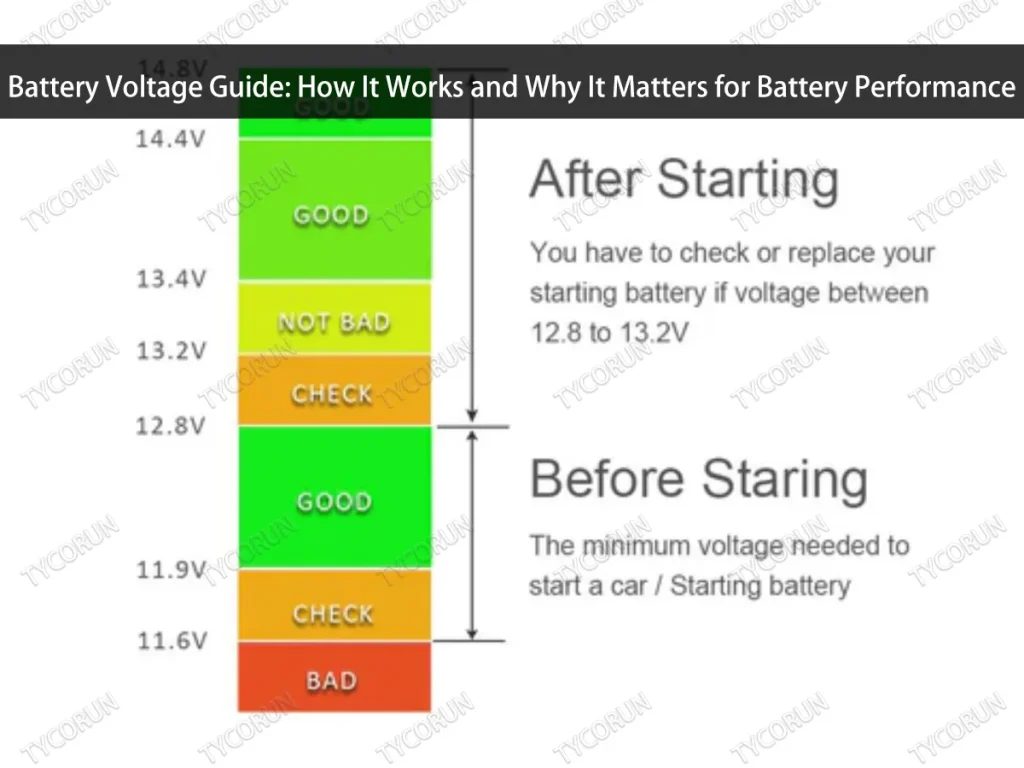
Battery Voltage Guide: How It Works and Why It Matters for Battery Performance
Battery voltage is one of the most important indicators used to assess a battery’s condition and performance. Knowing the battery voltage enables users to determine whether maintenance is necessary or if the battery is operating correctly. Every battery, from basic household batteries to cutting-edge lithium-ion cells, has a particular voltage range that corresponds to its overall health and power level.
Monitoring battery voltage is essential for systems that need steady power as well as for commonplace devices. While an abnormally high battery voltage may indicate overcharging or possible damage, a drop in battery voltage may indicate the battery is deteriorating. Users can increase battery life, guarantee safe operation, and achieve peak performance by regularly monitoring battery voltage.
Understanding battery voltage clearly enables users to make wise choices about charging, use, and maintenance for both portable electronics and vehicle batteries.


What Battery Voltage Means?
Battery voltage is a measurement of a battery’s electrical potential for driving current through a circuit. To put it another way, battery voltage shows how well a battery can power the system or device that uses it. Because battery voltage is a crucial indicator of the battery’s health, available energy capacity, and long-term performance, it is crucial to understand this value. Knowing the ideal battery voltage range for each battery helps users prevent damage or performance deterioration.

An excessively high or low battery voltage may indicate that the battery is beginning to weaken or is in danger of permanent damage, whereas a battery voltage that falls within the normal range indicates that the battery is in good condition. By regularly checking the battery’s voltage, users can take preventative actions, like modifying the charging or fixing the system, to ensure that the battery keeps performing at its best and lasts longer.
How Battery Voltage Works?
Battery voltage measures the electrical potential difference between a battery’s positive and negative terminals. The battery’s capacity to drive electrical current through a circuit increases with the size of this difference. Battery voltage also varies depending on the battery’s charge level and condition; for example, when the battery is charged, it increases in voltage and decreases when it is used. Users can forecast battery performance and steer clear of potentially damaging situations like overdischarge or overvoltage by being aware of how battery voltage fluctuates.
Furthermore, battery voltage is influenced not only by charging and usage but also by internal battery characteristics such as chemical composition, age, and ambient temperature. While large variations in battery voltage may indicate issues with the battery or the system that uses it, stable battery voltage shows that the battery is healthy and capable of delivering steady energy. Users can make better decisions about battery charging, use, and maintenance if they have a better understanding of how battery voltage operates.
Types of Battery Voltage
There are various types of battery voltage that can be used to help users understand the battery’s performance and condition. Every kind of battery voltage serves a distinct purpose, from revealing the battery’s basic capacity to signalling when it needs to be recharged.
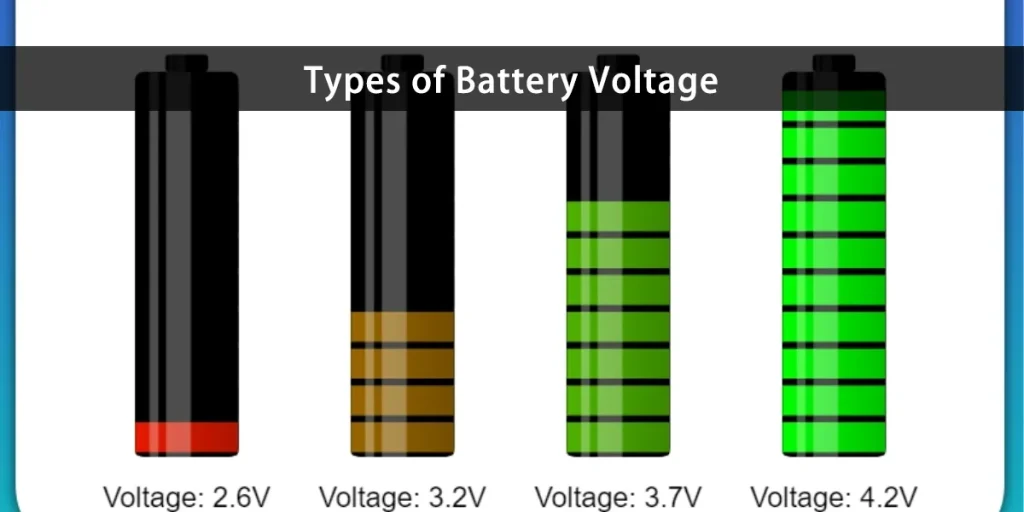
The following are the types of battery voltage that should be known:
- Nominal voltage: typically found in battery specifications, this average voltage value represents the battery’s fundamental capacity.
- Cut-off voltage: the lowest safe battery voltage level that must be reached before the battery needs to be recharged in order to avoid overdischarge damage.
- Fully charged voltage: the maximum battery voltage when fully charged, which is critical to avoid overcharging.
- Differences based on battery type: lithium-ion batteries have a narrower voltage range, necessitating more careful monitoring. Lead-acid batteries have a broader voltage range, which allows for greater tolerance to fluctuations.
Knowing the different types of battery voltages can help users control maintenance, charging, and use to guarantee consistent performance and a longer lifespan.
Battery Voltage in Lithium Batteries
Compared to other battery types like lead-acid or nickel-based batteries, lithium ion battery has distinct battery voltage characteristics. Lithium batteries are sensitive to voltage fluctuations and typically have a smaller battery voltage range. It is critical to comprehend lithium battery voltage because even slight variations can have an impact on the longevity, safety, and performance of the battery. While an excessively high or low battery voltage can increase the risk of overcharging or overdischarging, a stable battery voltage shows that the battery is in good condition.
Furthermore, in lithium batteries, a battery management system (BMS) that actively monitors and balances the voltage between cells typically helps with battery voltage management. Users can guarantee that lithium batteries are charged and used as efficiently as possible, preserving maximum performance and avoiding damage from unstable battery voltage, by having a thorough understanding of battery voltage. Understanding battery voltage also aids in choosing when to recharge batteries and how to store them to prolong their life.
Ideal Battery Charging Voltage
Battery charging voltage is the electrical voltage that is applied to a battery in order to recharge it; this voltage needs to be adjusted according to the battery’s specifications in order to maintain a stable battery voltage. It’s critical to comprehend battery charging voltage since improper charging can result in overvoltage or undervoltage, which compromises battery life and performance.

- Recommended charging voltage for different battery types:
– Lithium ion battery: approximately 4.1–4.2 V per cell when fully charged.
– Lead acid battery: approximately 2.4–2.45 V per cell when fully charged.
– NiMH battery: typically, 1.4–1.5 V per cell when fully charged.
Understanding and adhering to the optimal battery charging voltage values allows users to preserve battery voltage stability, enhance safety, and greatly increase battery life.
How to Measure Battery Voltage Accurately
To maintain the battery’s ideal performance and condition, it is crucial to measure battery voltage accurately. With precise measurements, you can determine whether the battery voltage has dropped as a result of issues like damaged cells or decreased capacity, or if it is still within normal bounds. Here are the steps and tips to ensure that battery voltage measurements remain accurate:
- Use the right measuring tool: the most common tool for checking battery voltage is a digital multimeter, as the results are more stable and easier to read.
- Ensure clean connections: battery voltage readings may be impacted by corroded or dirty battery terminals. Prior to measuring, clean them.
- Consider the measurement mode: select the DC Voltage mode on the multimeter and modify the scale to suit the battery type being examined. For example, 20V for a 12V battery.
- Take measurements without a load: measure the battery’s voltage when it is not being used or charged to determine its true value.
- Compare the results to the manufacturer’s specifications: each battery has a normal voltage range. To determine whether the battery is still in good condition or requires additional examination, compare the measurement results with the standard values.
This allows you to regularly monitor the battery voltage and detect problems before they affect the performance of the device or system that is powered by the battery.
How to Maintain Stable Battery Voltage
Maintaining a stable battery voltage is crucial for extending battery life and guaranteeing reliable performance. Severe variations in battery voltage can lead to rapid battery deterioration, capacity loss, and possibly irreversible damage. As a result, stable battery voltage is largely dependent on appropriate maintenance and usage practices. Here are some ways to keep battery voltage stable:
- Use the appropriate charger: ensure the charger has the correct output voltage and current for the battery specifications to prevent the battery voltage from spiking or dropping dramatically.
- Avoid overcharging and deep discharging: these are the two most common causes of battery voltage fluctuations, which can harm battery cell.
- Store the battery at an ideal temperature: extreme temperatures, can cause instability in the battery’s voltage and hasten its deterioration.
- Make routine checks: ensure the battery voltage stays within a safe range, check it occasionally with a multimeter.
- Use a protection system such as a BMS (Battery Management System): it maintains cell balance and ensures battery voltage stability throughout the system.
Maintaining these elements will keep battery voltage stable, effective, and able to provide long-term peak performance.
You can also read overcharging battery for more insight
Conclusion
It can be concluded, battery voltage is the most crucial metric for determining a battery’s health, performance, and condition. Users can guarantee that the battery runs within a safe voltage range, preventing the risk of overcharging or overdischarging, and has a longer service life by being aware of and routinely checking the battery voltage.
The efficiency and safety of the system are significantly impacted by battery voltage stability, whether in conventional or lithium-ion batteries. Using precise measuring tools, putting protection systems like BMS in place, and maintaining a steady voltage through appropriate charging are all essential components of preserving peak performance.
Comprehending the characteristics and operation of battery voltage not only facilitates maintenance but also empowers users to make more informed choices about battery storage and usage. As a result, batteries can operate more safely, for longer periods of time, and consistently supply power based on the requirements of the system or device.
FAQS
What is normal battery voltage?
Normal battery voltage depends on the type of battery. For example, lithium-ion batteries typically have a voltage of around 3.6–3.7V per cell when normal, while lead-acid batteries are around 12.6V when fully charged. If the battery voltage drops significantly below these figures, it could be a sign that the battery is starting to weaken.
Is 12.2 volts a dead battery?
Not completely “dead,” but 12.2V indicates that the battery is partially discharged, at about 50–60% of its capacity. If the battery voltage continues to drop below 12.0V, the battery needs to be recharged immediately to prevent permanent damage.
Why is my battery only charging to 12.4 V?
If the battery voltage only reaches 12.4V after a full charge, it could be because the charger is not providing optimal voltage, the battery cells are starting to deteriorate, or there is high resistance in the connector. Make sure the charger matches the battery specifications and check the terminal connections so that the battery voltage can reach the normal level when fully charged.